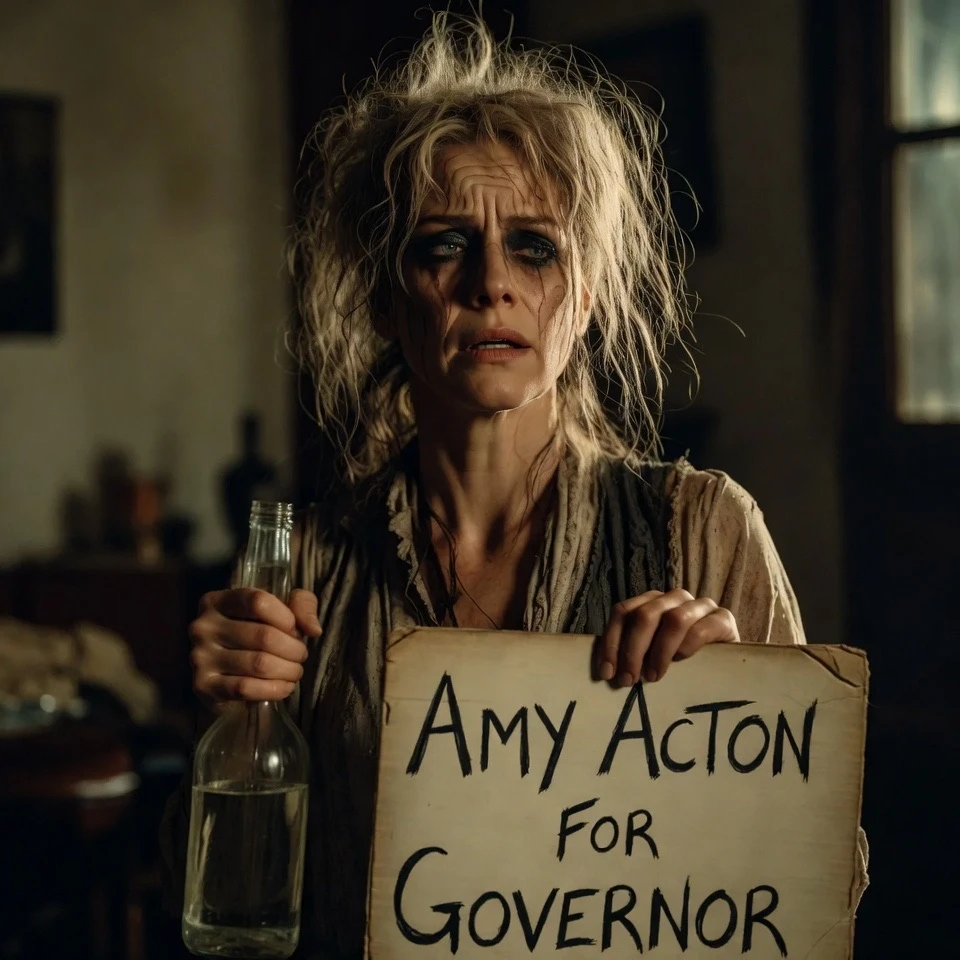
The Ohio governor’s race has turned into a bare-knuckle contest over whether character still matters in public life, and Vivek Ramaswamy’s campaign has forced the question into the open. With less than two weeks until Election Day, his side has spent millions airing an ad in which Amy Acton’s own estranged mother calls her a lifelong liar who “needs help” and urges voters not to hand her the keys to the statehouse. The mother, Donna Arthur, has been absent from her daughter’s life since Acton was twelve, the year her stepfather was indicted for raping the girl and then fled. Court records confirm the charges and the subsequent removal of the children; the mother remained with the man until his death years later. Ramaswamy’s team argues that a candidate who has built a public story around hardship must face the contrary testimony of the person who raised her. Ohio’s Republican establishment recoiled. Governor Mike DeWine, who had endorsed Ramaswamy, called the spot “deeply, deeply troubling” and demanded it come down. Other party figures joined the chorus. President Trump and Vice President Vance did the opposite: Trump labeled Acton a “DISASTER” who “uncontrollably lies” and told Ramaswamy to keep the ad running; Vance said he was disgusted by Republicans who were more upset about one commercial than about the policies Democrats intend to impose. The split is not merely tactical. It reveals two different judgments about what the voters of a state once called the heart of the country are entitled to know before they choose their executive.
That judgment turns on the record Acton herself has placed before the public. She has spoken for years of sexual abuse by her stepfather between the ages of roughly ten and twelve, of instability that included periods of homelessness, and of a childhood that left lasting scars. Those claims are not inventions of the Ramaswamy campaign; they appear in her own interviews and are supported by contemporaneous legal proceedings. The same record, however, raises ordinary questions of fitness that any serious electorate has the right to examine. A 1994 medical-license application shows she answered yes to having been treated for emotional or mental illness, drug addiction or abuse, or an alcohol problem; her campaign attributes the answer to outpatient therapy following the childhood abuse, and she answered no to a separate question about dependency. In 2019, while she served as Ohio’s health director, police responded to a domestic dispute at her home in which she had been drinking and had taken prescription medication; her husband later accepted responsibility for starting the argument, and no charges were filed. These are not exotic revelations. They are the kinds of facts that appear in the personnel files of ordinary citizens and that citizens routinely weigh when they decide who should manage the public purse, the public health apparatus, and the state’s relationship with the federal government. The deeper issue is whether a person whose adult life still carries the visible marks of unresolved trauma, and who has shown a capacity for intense personal conflict under stress, is the figure best suited to steady a large industrial state through the next economic and cultural shocks.
The establishment’s instinct is to declare such inquiries out of bounds once a candidate has wrapped herself in the language of survival. That instinct has become common in American politics: biography is treated as an unassailable credential rather than one fact among many. Trump and Vance have rejected the premise. They treat the ad as a legitimate, if harsh, instrument for testing whether Acton’s self-presentation matches the testimony of those who knew her longest. Ohio has spent two decades moving away from the progressive governance that once defined its industrial cities; the state has supported Trump by comfortable margins and has watched neighboring jurisdictions experiment with policies that treat family breakdown, public disorder, and institutional distrust as secondary concerns. Voters who still live with the consequences of those experiments may conclude that a candidate’s private history of instability is not irrelevant to the public duties she seeks. Whether they reach that conclusion is their business. What the last fortnight has clarified is that the national Republican leadership and the state’s traditional party apparatus no longer share the same view of how much of a candidate’s past the public is allowed to see.
Additional ADNN Articles:
Ohio Republicans Defy Citizens to Shield Haitian Migrants from Deportation
Replacing Vance with H1-b Foregner Blocked By Constitution: Ramaswamy Under Consideration
GOP Advances SAVE America Act 51-48 to Restore Election Faith
Republican Donors Outspend Democrats Nearly Three to One, Signaling Sweep

Trump, Vance Back Ramaswamy Ad as Ohio GOP Recoils
Trump, Vance Back Ramaswamy Ad as Ohio GOP Recoils

Russian Diesel Tanker Heads to New York Under Trump Deal
Russians In NYC? Moscow Rules Apply! But This Friendly Exchange Is the Beginning Of The End. But Of What? Time Till Tell.


Scientists Clear Alzheimer’s Plaques From Brain in Minutes Without Drugs
Bones: "For God's Sake I Am A Doctor, Man!" - The Future Is Now!

DOJ Filing Names Omar as Ilhan Nur Said Elmi, Alias Omar
Gotcha Bitch!
Virginia Senate Leader Surrendered in RICO Drug Trafficking Conspiracy
It Just Writes Itself. Niggers...


Musk Warns Democrats: Live By The Sword, Die By The Sword
There Will Be Blood!

White House Reveals Middle Class Paid Half Life for Fraudsters
Fraud Is Real! Justice Is Coming...Trust Trump!