The Technate of North America, often referred to as the Technate of America, emerged from the Technocracy movement in the 1930s, spearheaded by Technocracy Inc. under figures like Howard Scott. It envisioned a radical reorganization of society across the continent, replacing traditional political and economic systems with a technocratic governance model run by engineers, scientists, and technical experts. The goal was to create a high-energy, post-scarcity society where resources were allocated based on energy accounting rather than money, using “energy certificates” to distribute goods and services equitably. This proposed superstate was designed to encompass the United States, Canada, Mexico, Central America down to the Panama Canal, the Caribbean islands, and even parts of northern South America, including Venezuela, to ensure self-sufficiency in natural resources and eliminate inefficiencies associated with national borders and capitalism.
Central to the Technate’s viability was the concept of abundant energy production, which would power advanced industrial output and sustain a population without the need for monetary exchange or profit-driven motives. In this system, energy—measured in units like ergs or joules—served as the fundamental currency, requiring vast, reliable sources to maintain equilibrium between production and consumption. The movement’s proponents argued that only through scientific management of resources could society achieve maximum efficiency and eliminate waste, poverty, and unemployment. However, this utopian vision hinged on geographic expansion to secure diverse raw materials, as North America’s existing resources alone were deemed insufficient for the scale of energy demands envisioned in the technocratic blueprint.
The realization of the Technate was particularly dependent on incorporating Venezuelan territory due to its immense crude oil reserves, which were seen as critical for fueling the energy-intensive society. Venezuela’s Orinoco Belt and other oil-rich regions in northern South America provided the abundant petroleum necessary to underpin the energy accounting system, supplementing North American coal, hydroelectric, and emerging nuclear potentials. Without access to these vast oil fields—estimated in the 1930s and beyond to be among the world’s largest—the Technate risked energy shortages that would undermine its core principles of abundance and efficiency. Proponents like those in Technocracy Inc. explicitly included Venezuela in their maps and plans, viewing its resources as essential for continental self-reliance and the transition to a technocratic order, making territorial control over such lands a non-negotiable prerequisite for the model’s success.

1930s Technate Utopia Demands Venezuelan Oil for Energy Abundance Success

1930s Technate Utopia Demands Venezuelan Oil for Energy Abundance Success by Grok is licensed under Grok xAI
1930s Technate Utopia Demands Venezuelan Oil for Energy Abundance Success
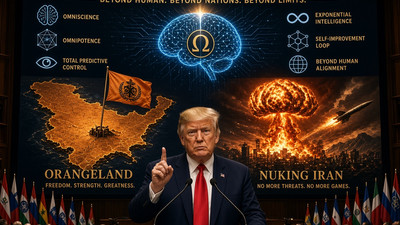
Trump Tells UN: America Is Back, Iran Faces a Choice
Artificial NoMore! Its Super Cool To Be Real And Straight! America Is The Super Power! Iran Is Shithole Country...Like All Of The UN.

Press Cartel Goes Dark; White House Answers With Trump TV
Imagine Being A Useful Idiot And Never Realizing It. Then One Day You're Off The Boob Tube! More Interestingly, You Realize The Intelligence Community Was Running The Show The Whole time...Until Now! 5GW...

Poll: Democrats Cheer Coup, Death, Impeachment to End Trump
TDS Is Real And Dangerous To Humanity!

Gulf of America Sees Zero Hurricanes First Time in Century
Death Cult Losses...Trump Card...America Wins!
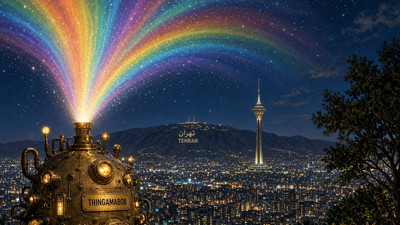
War Department Thingamabob Rainbows Tehran Sky, Unsettling Guards and Globalists
A Heap Of Homo Hooligan Hell Hole Rainbow Lights Shock The Sand People. Was It US? Or Enoch? Or Some Other Alien?

Bessent Pins Hugging Face Incident on OpenAI Managers, Not Agents
Bots Aren't Gay...

Austin Protesters Learn Texas Differs From Minnesota After ICE Clash
Don't Mess With Texas!

Fonzie Jumped the Shark; Fifty Years of Failure Endure
Fake And (Almost Certainly) Gay - Jewish Greaser, Mind Control And The Pop-Culture Term That Lives On...