
The United States federal government collects roughly $2.4 trillion annually in individual income taxes, representing the largest single source of revenue and funding a significant portion of mandatory programs like Social Security, Medicare, and interest on the debt. However, a staggering amount of federal spending is lost to fraud and improper payments—estimated by the Government Accountability Office (GAO) at around $162 billion in reported improper payments for FY 2024, with broader fraud losses potentially ranging from $233 billion to $521 billion annually based on recent analyses. Proponents of aggressive waste reduction argue that eliminating even a hypothetical $1.5 trillion in annual fraud (a figure far exceeding current estimates but often cited in discussions of cumulative waste and pandemic-era losses) could dramatically lower the revenue needed to balance essential spending.
If the government could hypothetically cut $1.5 trillion in fraudulent or improper outlays, the remaining “legitimate” spending could theoretically be funded with just $900 billion in income tax collections—less than half of current levels. This scenario fuels claims that middle-income Americans earning under $500,000 (who pay the bulk of income taxes below the top brackets) could see their federal income tax burden reduced to zero, freeing up trillions in private economic activity. Advocates point to programs like Medicare, Medicaid, and unemployment insurance as major sources of overpayments, insisting that better verification, data analytics, and accountability could achieve massive savings without cutting benefits.
Ultimately, the debate underscores a key point: the U.S. doesn’t necessarily need higher taxes to fund government operations, but rather ruthless efficiency in eliminating fraud, waste, and abuse. With GAO reporting nearly $2.8 trillion in cumulative improper payments since 2003, cracking down on these leaks—through AI tools, stronger internal controls, and congressional oversight—could provide fiscal relief equivalent to major tax cuts, allowing hardworking Americans to keep more of their earnings while preserving core programs.

Cut $1.5T Fraud, Zero Income Tax for Under $500K Earners
Cut $1.5T Fraud, Zero Income Tax for Under $500K Earners

War Department Thingamabob Rainbows Tehran Sky, Unsettling Guards and Globalists
A Heap Of Homo Hooligan Hell Hole Rainbow Lights Shock The Sand People. Was It US? Or Enoch? Or Some Other Alien?

Bessent Pins Hugging Face Incident on OpenAI Managers, Not Agents
Bots Aren't Gay...

Austin Protesters Learn Texas Differs From Minnesota After ICE Clash
Don't Mess With Texas!

Fonzie Jumped the Shark; Fifty Years of Failure Endure
Fake And (Almost Certainly) Gay - Jewish Greaser, Mind Control And The Pop-Culture Term That Lives On...

Ukraine’s Swarm Hits Moscow Refinery as Russia Warns Retaliation
World War Three, Anyone?

Iran Issues Code 100 as Trump and Netanyahu Rush Home
Turn Up The Volume!

Trump Forms AI Force and Czar; Will Not Stifle Industry
May The Force Be With You! Superior Intelligence Is The New AI!
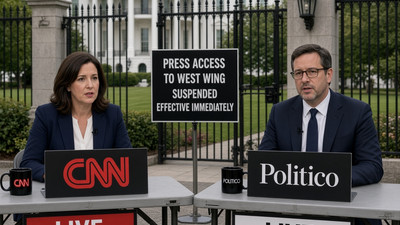
No First Amendment Right To A Seat In West Wing
Mockingbird Press Pissed At Being Locked Out As They Are The "Deep-State-Run-Media" - The Propaganda Arm Of The Intelligence Community Driving Mind Control - Fucking Commies! God To Hell You Sickos!