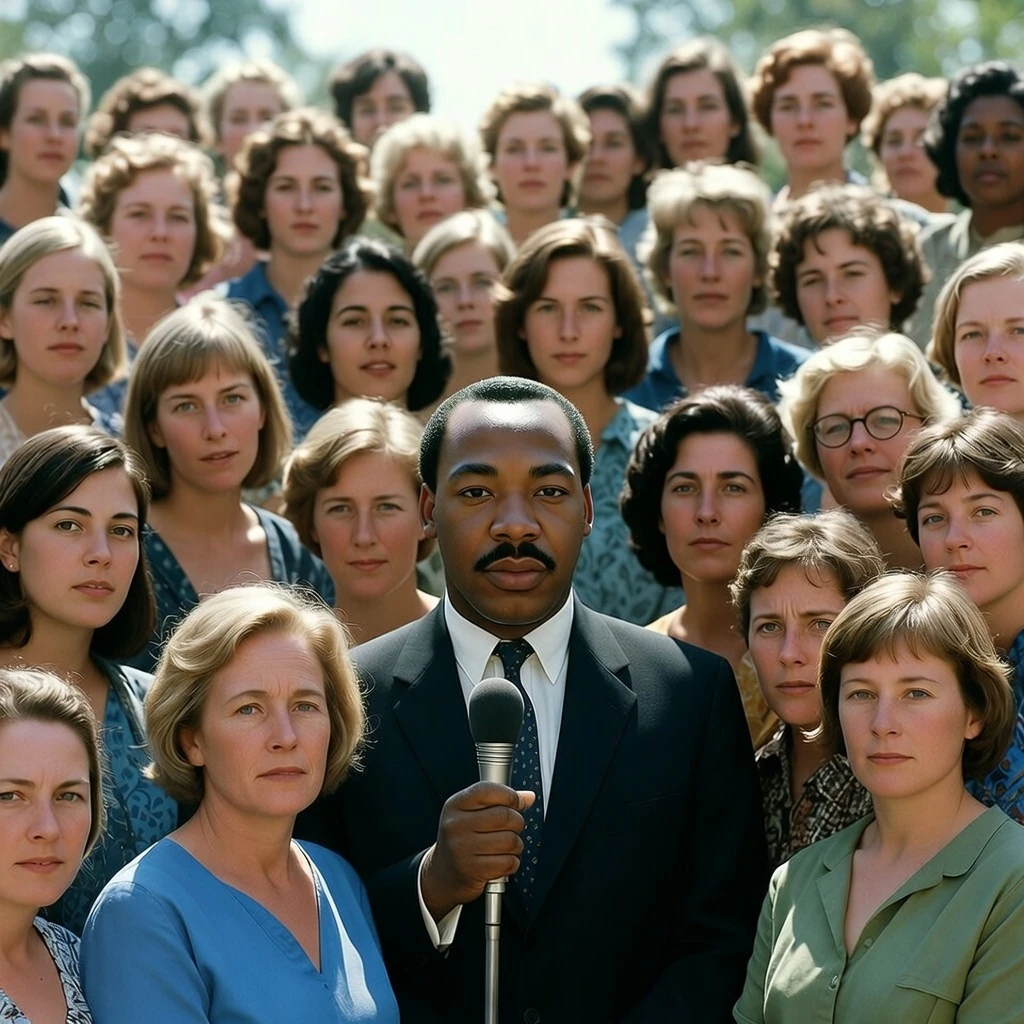
The declassified FBI dossiers, stemming from extensive wiretaps and informants under J. Edgar Hoover’s directive, detail King’s involvement with over 40 women, many of them white, in hotel rooms across the country. These encounters, documented with explicit audio and summaries, illustrate how King’s civil rights efforts aligned conveniently with his private life, aiming to overturn miscegenation laws that stood in the way of his relationships. For instance, his alliances with white activists and folk singers like Joan Baez weren’t just strategic but personal, fueling a campaign that culminated in decisions like Loving v. Virginia in 1967, which struck down bans on interracial marriage—though King himself was assassinated before fully benefiting. The files portray this as no coincidence, suggesting King’s moral authority was a facade for self-interest, with the FBI’s surveillance initially targeting communist ties but uncovering a deeper, self-serving agenda tied to his sexual freedoms.
This reinterpretation casts a shadow over MLK Day celebrations, prompting calls to reassess King’s sainthood and the holiday’s focus on selfless heroism. Historians, drawing from scholars like David Garrow, argue that acknowledging these motivations doesn’t erase the positive outcomes of his work but humanizes the movement as one intertwined with personal gain. As sealed tapes are set for release in 2027, more details may emerge, but for now, the files compel a nuanced view: King’s fight against inequality inadvertently—or intentionally—served his desires, reminding us that even monumental legacies can stem from complex, earthly impulses.
Additional ADNN Articles:
- Released FBI Files On MLKJr Reveal A Drugged Commie Whoremaster
- Trump Drops Info Bomb On MLK Day With Declasification Of FBI Files
- JFK Murder Timing: Trauma Weaponized for Civil Rights, Open Borders
- NAACP Lawyer Admits White Democrats Shun Black Candidates, Signals Failure of Civil Rights Laws as SCOTUS Eyes Ending Race-Based Districts