Pete Hegseth, the newly confirmed Secretary of War under the Trump administration, has boldly declared that the U.S. military will unleash a barrage of strikes on narco-terrorists, targeting their trafficking vessels in international waters with precision standoff weapons. This aggressive posture isn’t mere saber-rattling; it’s a calculated evolution in counter-narcotics warfare that prioritizes strategic depth over short-sighted tactics. As Hegseth emphasized in recent briefings, destroying these boats from afar forces Mexican and Colombian cartels to scramble, adapting their tactics, techniques, and procedures (TTPs) in ways that inevitably expose their shadowy networks. Far from risking American lives in high-stakes boarding operations, this approach turns each neutralized vessel into a catalyst for intelligence gold, illuminating procurement lines, financial flows, and hidden logistics hubs that were once buried deep in the jungle or along remote coastlines. It’s a reminder that true victory lies not in isolated seizures but in the cascading revelations that follow.
Critics who dismiss this as reckless escalation miss the forest for the trees, often envisioning cartels as cartoonish villains with neon-lit HQs ripe for a drone strike. Hegseth’s strategy flips the script: by denying assets without direct confrontation, the U.S. compels traffickers to keep the cocaine pipeline pumping, lighting up their support infrastructure like a Christmas tree on infrared. Every rerouted shipment or hastily acquired replacement boat generates detectable signals—phone chatter, satellite pings, money laundering spikes—that peel back layers of concealment. This isn’t Netflix-fueled bravado; it’s the art of strategic shaping, where sustained pressure transforms the cartels’ desperation into our roadmap. Over months of such operations, patterns emerge: covert airstrips in the Darién Gap, fuel depots in the Yucatán, and command nodes masquerading as fishing villages. Hegseth’s vision ensures that what begins as a sinking go-fast boat ends with the systematic dismantling of the narco-state’s backbone.
In Hegseth’s words, this doctrine heralds “many more strikes” because half-measures have failed for decades—interdictions that net a few tons of product while the syndicates regenerate like hydra heads. By embracing standoff engagements, the administration isn’t just playing whack-a-mole; it’s engineering an intelligence cascade that empowers follow-on operations against high-value targets. Skeptics quick to cry “escalation” should pause: cartels aren’t naive street gangs but sophisticated enterprises embedded in global finance and politics, with no single “warehouse” to bomb without igniting broader chaos. Hegseth’s plan, rooted in realpolitik, leverages their unbreakable profit motive against them, turning adaptation into attrition. As he quipped to detractors, if your grasp of geopolitics stops at binge-watching thrillers, perhaps leave the strategy to those who’ve stared down the enemy. The result? A more visible, vulnerable narco-web, ripe for decisive disruption—and a safer hemisphere for all.

Hegseth: Sinking Narco Boats Exposes Cartels—Many More Strikes Coming
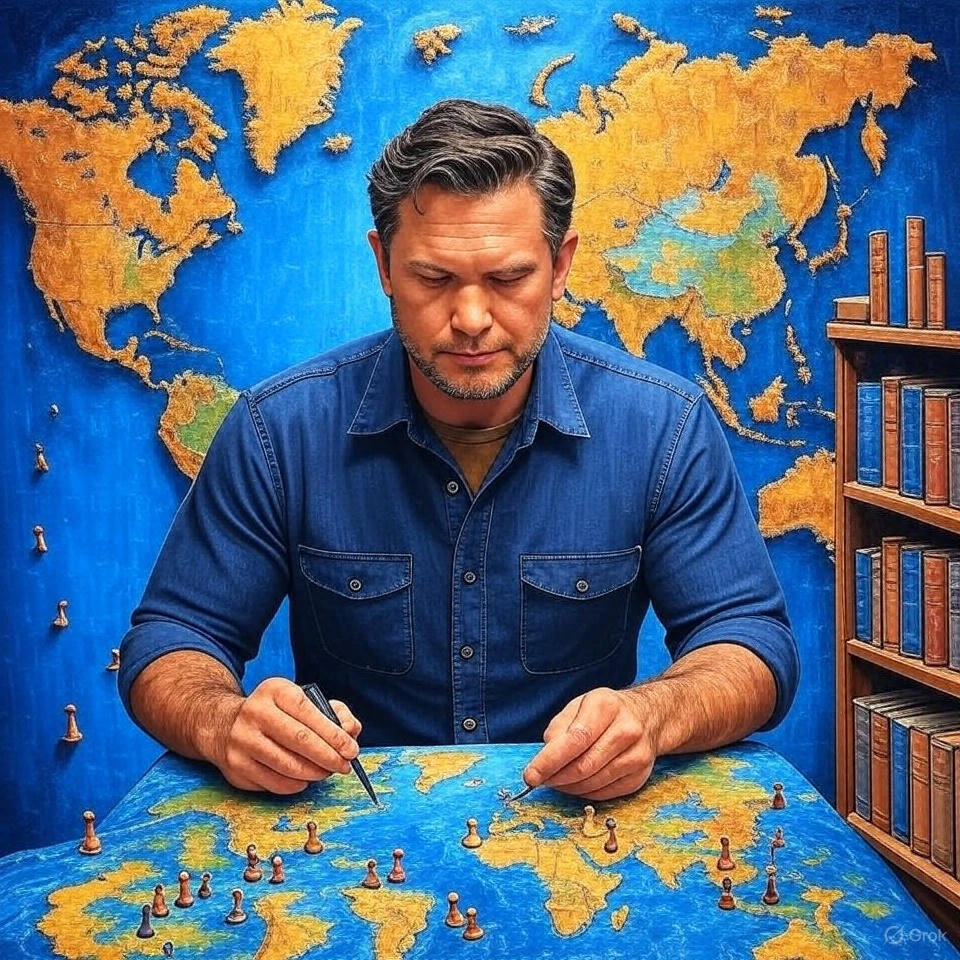
Hegseth: Sinking Narco Boats Exposes Cartels—Many More Strikes Coming by Grok is licensed under Grok xAI
Hegseth: Sinking Narco Boats Exposes Cartels—Many More Strikes Coming
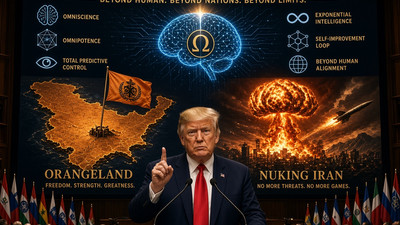
Trump Tells UN: America Is Back, Iran Faces a Choice
Artificial NoMore! Its Super Cool To Be Real And Straight! America Is The Super Power! Iran Is Shithole Country...Like All Of The UN.

Press Cartel Goes Dark; White House Answers With Trump TV
Imagine Being A Useful Idiot And Never Realizing It. Then One Day You're Off The Boob Tube! More Interestingly, You Realize The Intelligence Community Was Running The Show The Whole time...Until Now! 5GW...

Poll: Democrats Cheer Coup, Death, Impeachment to End Trump
TDS Is Real And Dangerous To Humanity!

Gulf of America Sees Zero Hurricanes First Time in Century
Death Cult Losses...Trump Card...America Wins!

War Department Thingamabob Rainbows Tehran Sky, Unsettling Guards and Globalists
A Heap Of Homo Hooligan Hell Hole Rainbow Lights Shock The Sand People. Was It US? Or Enoch? Or Some Other Alien?

Bessent Pins Hugging Face Incident on OpenAI Managers, Not Agents
Bots Aren't Gay...

Austin Protesters Learn Texas Differs From Minnesota After ICE Clash
Don't Mess With Texas!

Fonzie Jumped the Shark; Fifty Years of Failure Endure
Fake And (Almost Certainly) Gay - Jewish Greaser, Mind Control And The Pop-Culture Term That Lives On...