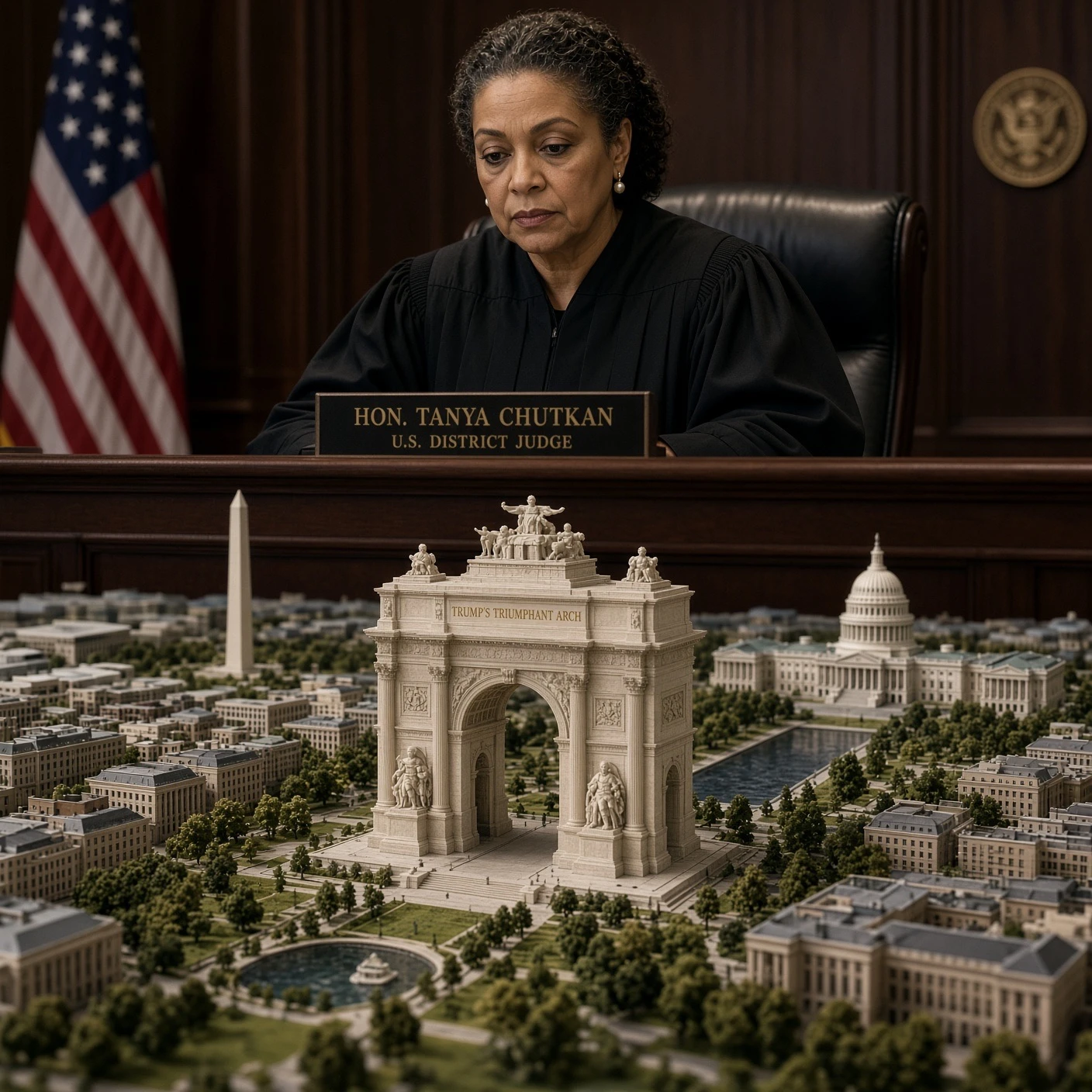
I’ll confirm the ruling and related cases first so the three paragraphs stay accurate and in the requested register.On Friday, September 4, U.S. District Judge Tanya Chutkan ordered the Trump administration to give the court forty-eight hours’ notice before undertaking any activity at Memorial Circle—the site of the planned two-hundred-fifty-foot triumphal arch near Arlington National Cemetery—save the limited archaeological work required by the National Historic Preservation Act. The order followed Interior Secretary Doug Burgum’s announcement that excavation for the Great Triumphal Arch and Military Observation Deck would begin within two weeks. The government answered that the forthcoming work consisted of four test pits, not construction; Chutkan nevertheless tightened the April consent order that already demanded fourteen days’ notice before groundbreaking and reminded the parties that any demolition or construction without National Park Service authorization would violate both decrees.
This is not Judge Chutkan’s first intervention against the administration’s design for the capital. It belongs to a larger pattern in which a single district judge, by means of an injunction framed as mere process, arrests a national project before the political branches have finished their work. The same method has lately been used to keep the Postal Service from imposing order on mail-in ballots and to halt above-ground construction of the White House ballroom. In each instance the court does not merely require notice; it substitutes its timetable and its aesthetic for the elected government’s. The result is government by preliminary order: policy that the public has chosen is paused indefinitely while the litigation proceeds at the pace of discovery.
What presents itself as procedural caution is, in practice, a veto. A district judge who personally rejects a monument, a ballroom, or a ballot-security rule can freeze the project under the banner of historic preservation or standing, leaving the executive to litigate while the window for action closes. Whether the motive is conviction or the pressure of forces that never appear on the docket, the effect is the same: the ordinary machinery of administration is treated as presumptively unlawful until a court says otherwise. A republic that cannot raise an arch, finish a room, or secure its mail without forty-eight hours’ leave of a single judge has inverted the relation between law and self-government. The arch may yet rise; the precedent of judicial preemption will stand longer.
Additional ADNN Articles:
Trump Announces World’s Greatest Triumphal Arch for Washington D.C.
Progressive Judge Rules Government Cannot Enforce Laws Using Own Data
The New White House Ballroom: A Modern Echo of Ancient Temples
Secret Service Locks Down Ellipse As Trump Razes FDR’s East Wing—NEW DEAL Buried, MAGA Ballroom Rises

Judge Chutkan Imposes Forty-Eight Hour Notice on Trump Arch Site
Judge Chutkan Imposes Forty-Eight Hour Notice on Trump Arch Site
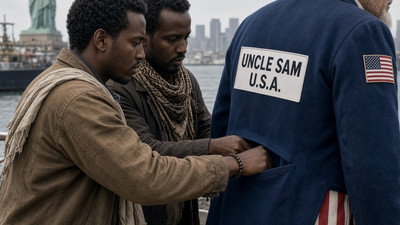
White House Reveals Middle Class Paid Half Life for Fraudsters
Fraud Is Real! Justice Is Coming...Trust Trump!

Europe’s Women Cradle Dogs Where Their Aborted Children Should Be
European Irony...Can't Live With 'Em, Can't Kill 'Em And Can't Reproduce With 'Em.
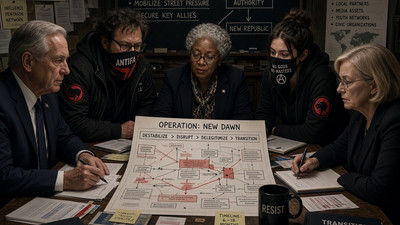
Retired Admirals and Bureaucrats Caught Defining When America Is Illegitimate
TDS Is Real! You Know What Else Is Real...Treason & Sedition! Time For Heads To Roll!

Descendants of Redskins Logo Chief Demand Trump Restore the Name
Hail To The Redskins! Hail Trump! Hail Redskin Nation! Heal America!

Trump Defies Captured Senate, Prioritizes Peace and Trade With Russia
Dictate This! Congress Is Feckless, Weak And Whacked! Trump Is In Charge! We Think...Who Knows??? Aliens, Simulation, Fate?
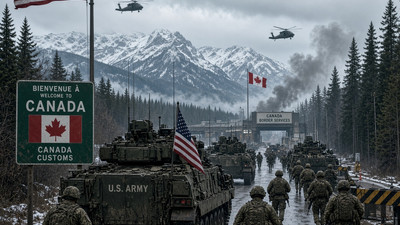
Alberta Remains Canadian, Forcing Full Scale American Invasion and Annexation
The War Of Southern Aggression Is Coming! Prepare Thyself!

Nationalist Compact Replaces Debt Slavery as Senate Fate Decides Shift
Set Yourself Free!

Former CIA Governor Installs Soros Operative in Virginia Congress Seat
White Hats Vs. Black Hats...Spy War Continues. Question Is Who They Really Working For? Time Will Tell!