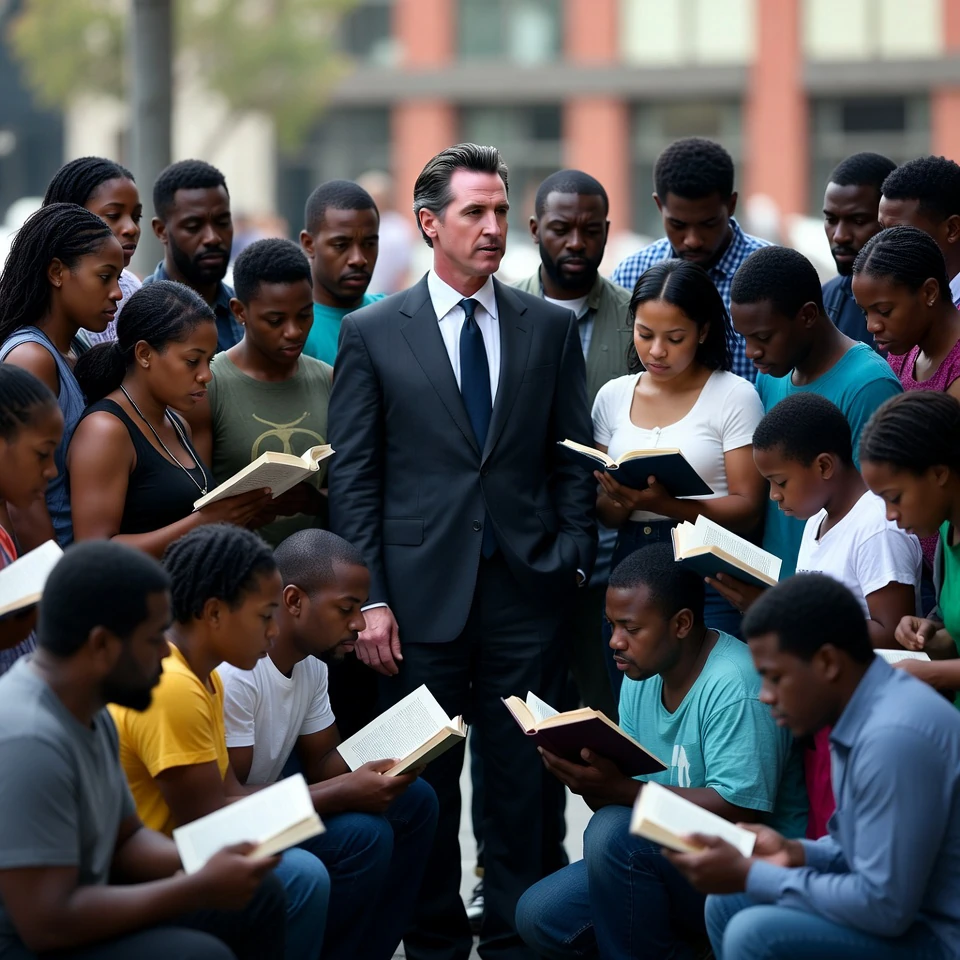
In a recent speech to a predominantly Black audience in Georgia, California Governor Gavin Newsom attempted to forge a connection by drawing parallels between his personal struggles and those of the crowd. He declared, “I am like you. I’m a 960 SAT guy. I can’t read,” referencing his dyslexia and low standardized test scores as a way to humanize himself. This remark, intended to convey humility, instead sparked widespread criticism for its tone-deaf implications, suggesting an equivalence based on perceived intellectual shortcomings. Newsom’s delivery, captured on video and shared across social media platforms, highlighted his ongoing challenges with reading speeches, which he attributes to his learning disability. The audience’s mixed reactions, including laughter and unease, underscored the awkwardness of the moment, as many interpreted it as an inadvertent stereotype reinforcement rather than genuine relatability.
Newsom elaborated on his self-deprecating theme by insisting he is “no better than you,” emphasizing that his position in politics might be ill-suited given his difficulties with reading and public speaking. He openly admitted that dyslexia has plagued him since childhood, making tasks like delivering prepared remarks a persistent hurdle, and joked that perhaps he should reconsider his career path. This vulnerability, while perhaps authentic, came across as an odd choice in a setting aimed at rallying support for Democratic causes in a key swing state. Critics argue that such admissions reveal a lack of polish expected from a high-profile leader, especially one eyed for national office, and question whether his candor masks deeper insecurities or a calculated attempt to appeal to underrepresented voters through shared “flaws.”
This candid admission of mediocrity has fueled longstanding suspicions that Newsom serves as a figurehead for powerful elites rather than a competent independent leader. Detractors point to his affluent background, family ties to influential figures like the Getty oil heirs, and his rapid political ascent despite these self-acknowledged limitations as evidence of manipulation by “soulless oligarchs.” By placing someone they view as unqualified in such a prominent role, these shadowy backers allegedly demonstrate disdain for California’s governance and broader American democracy. Newsom’s gaffe in Georgia thus not only amplifies doubts about his fitness for office but also reinforces narratives of elite control, where merit takes a backseat to connections and compliance.
Additional ADNN Articles:

Newsom’s Tone-Deaf Gaffe: “Can’t Read” Claim to Black Crowd
Newsom’s Tone-Deaf Gaffe: “Can’t Read” Claim to Black Crowd

War Department Thingamabob Rainbows Tehran Sky, Unsettling Guards and Globalists
A Heap Of Homo Hooligan Hell Hole Rainbow Lights Shock The Sand People. Was It US? Or Enoch? Or Some Other Alien?

Bessent Pins Hugging Face Incident on OpenAI Managers, Not Agents
Bots Aren't Gay...

Austin Protesters Learn Texas Differs From Minnesota After ICE Clash
Don't Mess With Texas!

Fonzie Jumped the Shark; Fifty Years of Failure Endure
Fake And (Almost Certainly) Gay - Jewish Greaser, Mind Control And The Pop-Culture Term That Lives On...

Ukraine’s Swarm Hits Moscow Refinery as Russia Warns Retaliation
World War Three, Anyone?

Iran Issues Code 100 as Trump and Netanyahu Rush Home
Turn Up The Volume!

Trump Forms AI Force and Czar; Will Not Stifle Industry
May The Force Be With You! Superior Intelligence Is The New AI!

No First Amendment Right To A Seat In West Wing
Mockingbird Press Pissed At Being Locked Out As They Are The "Deep-State-Run-Media" - The Propaganda Arm Of The Intelligence Community Driving Mind Control - Fucking Commies! God To Hell You Sickos!