
In a recent episode of her podcast “Going Rogue,” investigative journalist Lara Logan delivers a chilling exposé through her interview with Dr. Timothy V. Shindelar, a retired U.S. Marine Corps Colonel and federal whistleblower who has spent nearly a decade unraveling the mechanics of government corruption. Logan challenges the nebulous notion of the “deep state” by pinpointing its operational core: the Council of the Inspectors General on Integrity and Efficiency (CIGIE). Far from a shadowy conspiracy theory, Shindelar describes CIGIE as a centralized command structure that ostensibly oversees the integrity of federal agencies but instead functions as an impenetrable shield for misconduct. Established during the Obama administration with bipartisan backing, CIGIE coordinates the 70-plus Inspectors General (IGs) across the executive branch, funneling every whistleblower complaint, audit, and investigation through its tightly controlled network. Logan’s report underscores how this “watchdog” system, meant to promote accountability, has devolved into a self-policing fortress where dissent is systematically erased.
At the heart of Shindelar’s revelations, as detailed in Logan’s episode, is the chilling efficiency with which CIGIE neutralizes threats to its inner circle. Every allegation of wrongdoing reported to an IG—whether involving high-profile figures like Anthony Fauci or routine agency abuses—routes directly back to CIGIE, where it vanishes into a black hole of non-disclosure. Records are exempt from Freedom of Information Act (FOIA) requests, creating an unaccountable void that Logan likens to a “rear guard” operation: a loyal cadre of insiders who filter information to protect allies and sabotage reform efforts. Shindelar, drawing from his exhaustive archive of over 700 documented cases, names key architects of this system—long-serving officials who have embedded themselves across administrations—and illustrates how symbolic gestures, such as honoring Fauci at CIGIE events, signal untouchability. This tiny elite, Logan argues, wields outsized power over 2.3 million federal employees, burying investigations into election irregularities, classified leaks, and even seditious activities while retaliating against whistleblowers through coordinated reprisals. The result is a government where oversight serves the overseers, perpetuating a cycle of impunity that undermines democratic will.
Logan’s unflinching narrative culminates in a stark warning: this is not merely a component of the deep state—it is the deep state incarnate, a mechanism engineered to evade accountability and enable subversion. Shindelar’s testimony, backed by years of filings, correspondence, and internal analyses shared in the episode, exposes how CIGIE’s structure ensures that even presidential directives against corruption are quietly derailed by mid-level operatives acting on cues from the council. From thwarting probes into foreign aid programs to shielding participants in alleged seditious conspiracies, the system’s resilience transcends elections, promising to persist unless radically dismantled—perhaps through midterm electoral overhauls or legislative reforms. As Logan presses, the question looms: in a republic founded on checks and balances, how long can a self-exempt oversight body dictate the nation’s fate? Her report, raw and evidence-driven, demands action, reminding viewers that exposure without consequence is just another layer of the trap.

The "Deep State" Is Real With The CIGIA As Central Command
The "Deep State" Is Real With The CIGIA As Central Command
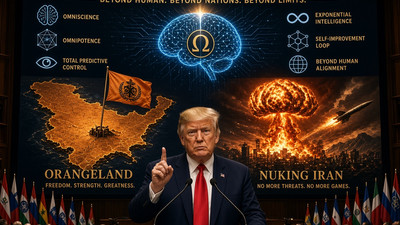
Trump Tells UN: America Is Back, Iran Faces a Choice
Artificial NoMore! Its Super Cool To Be Real And Straight! America Is The Super Power! Iran Is Shithole Country...Like All Of The UN.

Press Cartel Goes Dark; White House Answers With Trump TV
Imagine Being A Useful Idiot And Never Realizing It. Then One Day You're Off The Boob Tube! More Interestingly, You Realize The Intelligence Community Was Running The Show The Whole time...Until Now! 5GW...

Poll: Democrats Cheer Coup, Death, Impeachment to End Trump
TDS Is Real And Dangerous To Humanity!
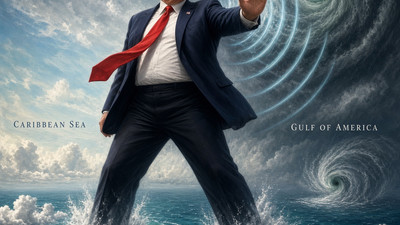
Gulf of America Sees Zero Hurricanes First Time in Century
Death Cult Losses...Trump Card...America Wins!

War Department Thingamabob Rainbows Tehran Sky, Unsettling Guards and Globalists
A Heap Of Homo Hooligan Hell Hole Rainbow Lights Shock The Sand People. Was It US? Or Enoch? Or Some Other Alien?

Bessent Pins Hugging Face Incident on OpenAI Managers, Not Agents
Bots Aren't Gay...

Austin Protesters Learn Texas Differs From Minnesota After ICE Clash
Don't Mess With Texas!

Fonzie Jumped the Shark; Fifty Years of Failure Endure
Fake And (Almost Certainly) Gay - Jewish Greaser, Mind Control And The Pop-Culture Term That Lives On...