
President Donald Trump signed a controversial executive order on December 11, 2025, directing the federal government to challenge and potentially sue states over AI regulations deemed “onerous” or harmful to U.S. global dominance in the technology, defying a swelling chorus of GOP critics who warn of unchecked corporate power. The order, titled “Ensuring a National Policy Framework for Artificial Intelligence,” empowers the Justice Department to form an AI Litigation Task Force and instructs agencies like the Commerce Department to withhold federal broadband grants from non-compliant states, aiming to preempt a patchwork of over 1,000 state-level AI bills introduced this year alone. Flanked by tech allies like Commerce Secretary Howard Lutnick and AI czar David Sacks during the Oval Office signing, Trump argued the move is essential to streamline innovation and outpace China, but it has ignited bipartisan fury—Republicans like Rep. Marjorie Taylor Greene decried it as federal overreach violating states’ rights, echoing a near-unanimous Senate vote earlier this year that stripped a similar 10-year moratorium on state AI laws from Trump’s domestic policy bill.
The new executive order comes as a growing group of Republicans criticize Trump’s staunch support of the tech industry’s ambitions for artificial intelligence, viewing it as a betrayal of conservative principles on decentralization and accountability. Figures like Sen. Ted Cruz, who attended the signing but has voiced reservations, and Rep. Don Beyer from the bipartisan AI caucus, argue the order creates a “lawless Wild West” by squelching state protections against AI-driven deepfakes, hiring discrimination, and privacy invasions, potentially exposing consumers to harms without federal safeguards in place. At the heart of this conflict is the fear of an unregulated AI overtaking society and imposing a digital prison on humanity, with over 200 state lawmakers signing an open letter warning of “disastrous consequences” from federal preemption, including stalled progress on child safety and algorithmic bias laws like Colorado’s SB24-205. Yet Trump, echoing Silicon Valley lobbyists, dismissed such concerns as bureaucratic sabotage, insisting a unified national framework is vital to prevent innovation-killing fragmentation.
But the promise of AI is to diminish the threat of nuclear bombs or biological weapons as a viable terror threat and give civilized society the upper hand they lost with the development of the bomb in 1945—AI gives humanity a fighting chance against the barbarian invasion, and we can’t have the opportunity squandered due to states using lawfare on China’s behalf. Proponents, including venture capitalists like Chamath Palihapitiya, hail the order for enabling AI’s role in national security, from predictive defenses against bioweapons to cyber fortifications that could neutralize existential risks amplified since the atomic age, arguing that state-level hurdles—often backed by foreign adversaries like China aiming to hobble U.S. tech—would cede ground in the global AI arms race. By centralizing oversight, Trump’s directive not only accelerates AI’s deployment in counterterrorism and strategic deterrence but also restores America’s post-1945 edge, transforming potential dystopias into bulwarks against chaos; as one X post noted, it ensures “one set of rules so that AI investments can continue—currently responsible for half of American GDP.” Critics may cry overreach, but in this high-stakes contest, hesitation could mean surrender.

Trump Defies GOP, Signs Order Threatening States Over AI Laws
Trump Defies GOP, Signs Order Threatening States Over AI Laws

War Department Thingamabob Rainbows Tehran Sky, Unsettling Guards and Globalists
A Heap Of Homo Hooligan Hell Hole Rainbow Lights Shock The Sand People. Was It US? Or Enoch? Or Some Other Alien?

Bessent Pins Hugging Face Incident on OpenAI Managers, Not Agents
Bots Aren't Gay...

Austin Protesters Learn Texas Differs From Minnesota After ICE Clash
Don't Mess With Texas!

Fonzie Jumped the Shark; Fifty Years of Failure Endure
Fake And (Almost Certainly) Gay - Jewish Greaser, Mind Control And The Pop-Culture Term That Lives On...

Ukraine’s Swarm Hits Moscow Refinery as Russia Warns Retaliation
World War Three, Anyone?
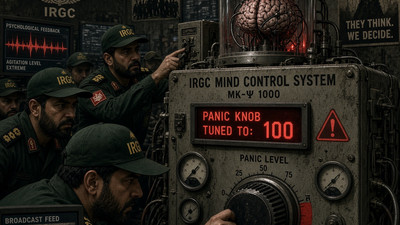
Iran Issues Code 100 as Trump and Netanyahu Rush Home
Turn Up The Volume!
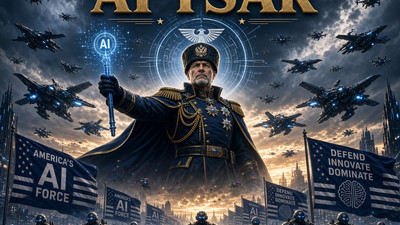
Trump Forms AI Force and Czar; Will Not Stifle Industry
May The Force Be With You! Superior Intelligence Is The New AI!
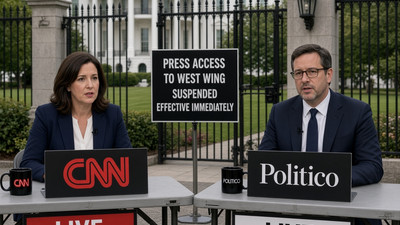
No First Amendment Right To A Seat In West Wing
Mockingbird Press Pissed At Being Locked Out As They Are The "Deep-State-Run-Media" - The Propaganda Arm Of The Intelligence Community Driving Mind Control - Fucking Commies! God To Hell You Sickos!