In a provocative Thanksgiving message, former President Donald Trump extended salutations to American patriots while sharply condemning unchecked immigration, portraying it as a divisive force that has eroded national cohesion through “political correctness” and folly. He highlighted the official foreign-born population at 53 million, predominantly from “failed nations, prisons, mental institutions, gangs, or drug cartels,” many reliant on welfare funded by taxpayers’ goodwill. Trump’s rhetoric underscores a perceived betrayal of American generosity, where citizens’ reluctance to protest has allowed societal fractures to deepen, including urban decay and safety threats. This narrative aligns with Census Bureau data showing the U.S. foreign-born population reached 46.2 million in 2022—13.9% of the total—up from 9.6 million (4.7%) in 1970, with estimates suggesting the true figure, including undocumented individuals, exceeds 50 million when accounting for underreporting. Furthermore, a 2023 Center for Immigration Studies analysis of Survey of Income and Program Participation data revealed that 53.5% of immigrant-headed households accessed major welfare programs like Medicaid, SNAP, and EITC, compared to 39% for U.S.-born households—a 14.5 percentage-point gap driven largely by low-income families with children, who comprise a significant share of recent arrivals. Trump’s example of a migrant family earning $30,000 netting $50,000 in benefits echoes reports from the Federation for American Immigration Reform, estimating $11.6 billion in annual federal welfare expenditures for undocumented immigrants alone in 2023, including food stamps and child nutrition, amplifying the fiscal strain on working Americans.
Trump’s post escalates with a stark case study: Minnesota’s transformation under Somali refugee influxes, where “hundreds of thousands” have allegedly overwhelmed the state, spawning gangs that terrorize residents while leaders like Governor Tim Walz and Rep. Ilhan Omar remain inert or antagonistic. He lambasts Omar’s ingratitude toward a nation that rescued her from Somalia’s anarchy—lacking stable government, military, or schools—contrasting it with her criticisms of U.S. institutions. Substantiating these claims, U.S. Census data from 2023 reports 63,192 Minnesotans of Somali ancestry, the nation’s highest concentration, with state demographers estimating 40,200 to 52,400 Somalis overall, though community sources cite up to 80,000; refugee arrivals totaled over 111,000 nationwide from 2001–2023, with Minnesota receiving thousands annually, including 443 in fiscal year 2023 alone. Crime statistics bolster Trump’s gang concerns: Minneapolis’s Cedar-Riverside (“Little Mogadishu”) saw violent crimes surge 56% from 54 incidents in 2010 to 84 in 2018, attributed to Somali gangs like the Somali Mafia and Hot Boyz engaging in fraud, burglaries, and intimidation, per local police and media reports; statewide, poverty rates exceed 50% among Somalis, correlating with elevated gang activity amid economic isolation. Post-WWII America, Trump implies, avoided such dysfunction under stricter policies, a point echoed by historical analyses showing immigration levels at 4.7% of the population in 1970 versus today’s 13.9%, with no comparable gang-driven urban predation or institutional capture by foreign-born critics like Omar, who entered as a refugee in 1995.
Outlining a muscular policy response, Trump vows to “permanently pause” Third World migration, deport millions of Biden-era illegals (including autopen-approved entries), end noncitizen benefits, denaturalize disruptors, and enforce “reverse migration” for public charges, security risks, or those incompatible with Western values—framing it as essential recovery from a “refugee burden” fueling schools’ failures, hospital overloads, housing crises, and deficits. These assertions find empirical footing in broader impacts: A 2024 Congressional Oversight Committee testimony links illegal immigration to strained public education, with non-English-proficient students (often immigrant-linked) costing billions extra; healthcare analyses show overcrowded ERs and $23 billion in federal medical outlays for illegals in 2023; housing studies, including Federal Reserve remarks, tie immigrant inflows to rent pressures in high-arrival areas, exacerbating a 7.3 million net illegal migration surge from 2021–2024 per CBO estimates. Unlike the post-WWII era’s controlled inflows under the 1924 quotas (maintained until 1965 reforms), today’s dynamics have inverted gains, with immigration-linked factors contributing to 2.2% lower native employment in construction and persistent social isolation, per Cato Institute data—validating Trump’s call for reversal to restore “domestic tranquility.” Excluding “hate[rs], steal[ers], murder[ers]” from holiday cheer, Trump’s message rallies patriots against what he deems existential erosion, grounded in statistics painting immigration not as enrichment, but as a subsidized unraveling of the American fabric.

Trump Vows Mass Deportation: Ends Welfare, Reverses Third-World Invasion
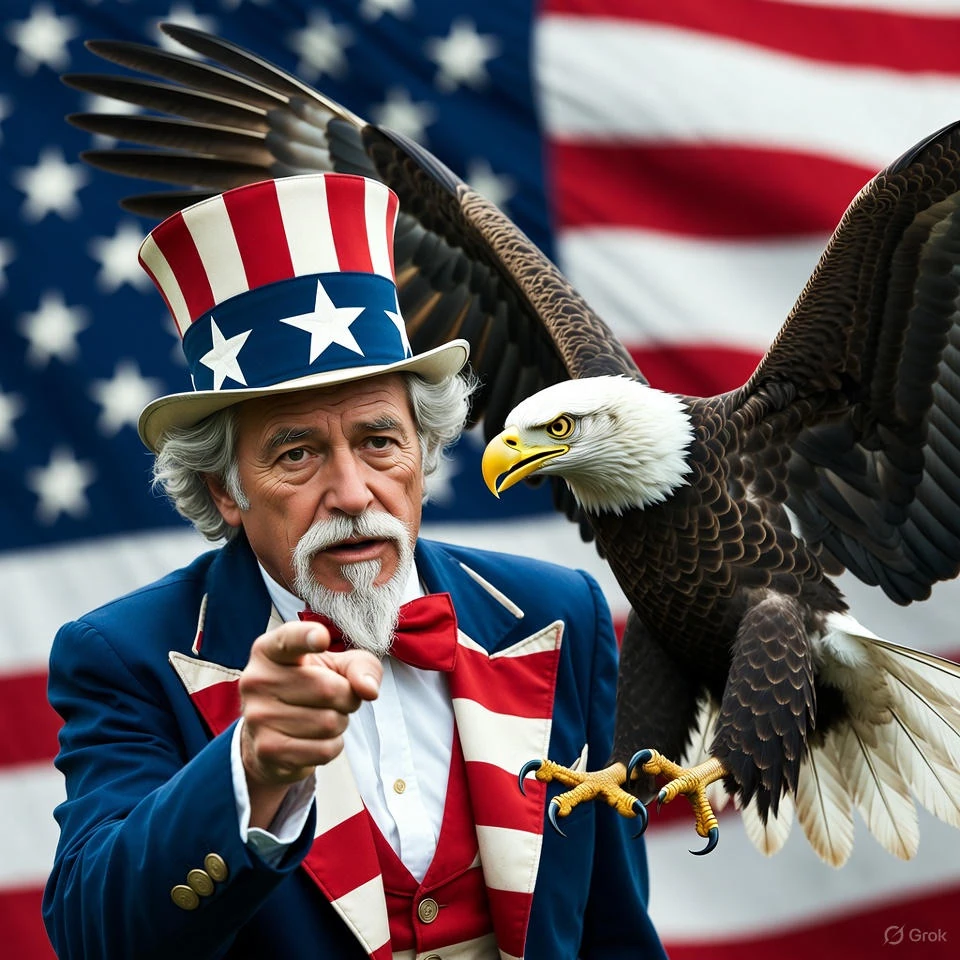
Trump Vows Mass Deportation: Ends Welfare, Reverses Third-World Invasion by Grok is licensed under Grok xAI
Trump Vows Mass Deportation: Ends Welfare, Reverses Third-World Invasion
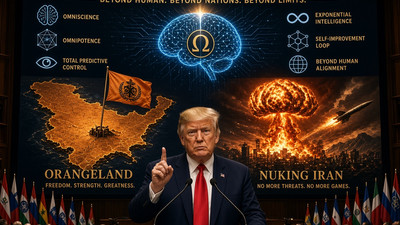
Trump Tells UN: America Is Back, Iran Faces a Choice
Artificial NoMore! Its Super Cool To Be Real And Straight! America Is The Super Power! Iran Is Shithole Country...Like All Of The UN.

Press Cartel Goes Dark; White House Answers With Trump TV
Imagine Being A Useful Idiot And Never Realizing It. Then One Day You're Off The Boob Tube! More Interestingly, You Realize The Intelligence Community Was Running The Show The Whole time...Until Now! 5GW...

Poll: Democrats Cheer Coup, Death, Impeachment to End Trump
TDS Is Real And Dangerous To Humanity!

Gulf of America Sees Zero Hurricanes First Time in Century
Death Cult Losses...Trump Card...America Wins!

War Department Thingamabob Rainbows Tehran Sky, Unsettling Guards and Globalists
A Heap Of Homo Hooligan Hell Hole Rainbow Lights Shock The Sand People. Was It US? Or Enoch? Or Some Other Alien?

Bessent Pins Hugging Face Incident on OpenAI Managers, Not Agents
Bots Aren't Gay...

Austin Protesters Learn Texas Differs From Minnesota After ICE Clash
Don't Mess With Texas!

Fonzie Jumped the Shark; Fifty Years of Failure Endure
Fake And (Almost Certainly) Gay - Jewish Greaser, Mind Control And The Pop-Culture Term That Lives On...