In the guise of a growth plan, Trump’s economic blueprint reveals itself as a war economy, meticulously designed to intertwine fiscal strategies with geopolitical dominance. By merging monetary policy with aggressive trade tactics and ramped-up industrial output, the system prioritizes military supremacy as its core objective. Tariffs, often portrayed as protective measures for domestic jobs, function as de facto capital controls, restricting foreign influence while channeling resources inward. Defense spending, ballooning under the banner of national security, doubles as a massive employment stimulus, absorbing surplus labor and injecting capital into key sectors. Debt, traditionally viewed as a burden, transforms into a strategic weapon, leveraged to fund expansive military endeavors without immediate fiscal restraint. Even inflation, once a red flag for economic instability, is reframed as an acceptable byproduct of projecting sovereign power globally.
This doctrine thrives on disorder rather than seeking to quell it, monetizing chaos to fuel American resurgence. The military emerges as a multifaceted engine: it deters external threats while fostering internal unity, converting economic inefficiencies into symbols of strength. By absorbing idle resources—be it unemployed workers or underutilized factories—the armed forces become a stabilizing force for the domestic economy, masking underlying vulnerabilities with a veneer of invincibility. This approach rejects the postwar consensus of global stability through open markets and multilateral institutions, instead embracing a zero-sum worldview where American interests are advanced through enforced compliance. Energy dominance, secured via domestic production and strategic alliances, underpins this framework, ensuring that the U.S. can wield influence over adversaries dependent on imported resources.
Ultimately, this is a calculated resistance to hegemonic decline, encoded through fiscal-military synergy, streamlined narratives, and deliberate escalations. Trump’s strategy isn’t haphazard; it’s a deliberate embedding of coercive power into the very fabric of monetary policy, redefining the dollar’s strength not by prudent budgets or free trade, but by unmatched deterrence and trade enforcement. Neutrality evaporates in this paradigm—nations and entities must align within the American sphere or face exclusion from its protective arc. As borders realign and the empire rearms, the countdown to this new order underscores a pivotal shift: from economic liberalism to militarized sovereignty, where growth is merely the facade for enduring imperial reboot.

Trump’s Growth Plan Unveils War Economy Blueprint for Empire Reboot

Trump’s Growth Plan Unveils War Economy Blueprint for Empire Reboot by Grok is licensed under Grok xAI
Trump’s Growth Plan Unveils War Economy Blueprint for Empire Reboot

Bailey Quits FBI Deputy Post Nobody Really Wants Anymore
Deep State Is Dying!
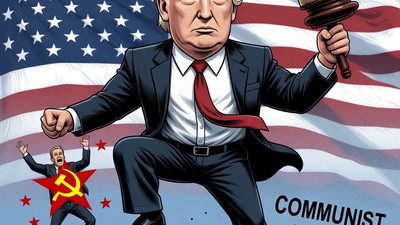
U.S. Government Declares Final Battle During National NFL Games
Trust The Plan...Maybe?

WSJ Poll Puts Trump at Lowest Midterm Mark Since 1990
Enemy Of The People!

Harvard’s Own AI Tutor Doubles Learning, Exposes Classroom Bubble
Principles Over Personalities...

Farmer’s Call Forces Rearrest of Five Over Fairford Plot
Arrest Them All!


You Built Pattern Recognition. What Did You Expect Would Happen?
Racism Is Real...Not Artificial.

USC Celebrates Illegal Hit on Top Prospect Dante Moore
Gridiron Games...