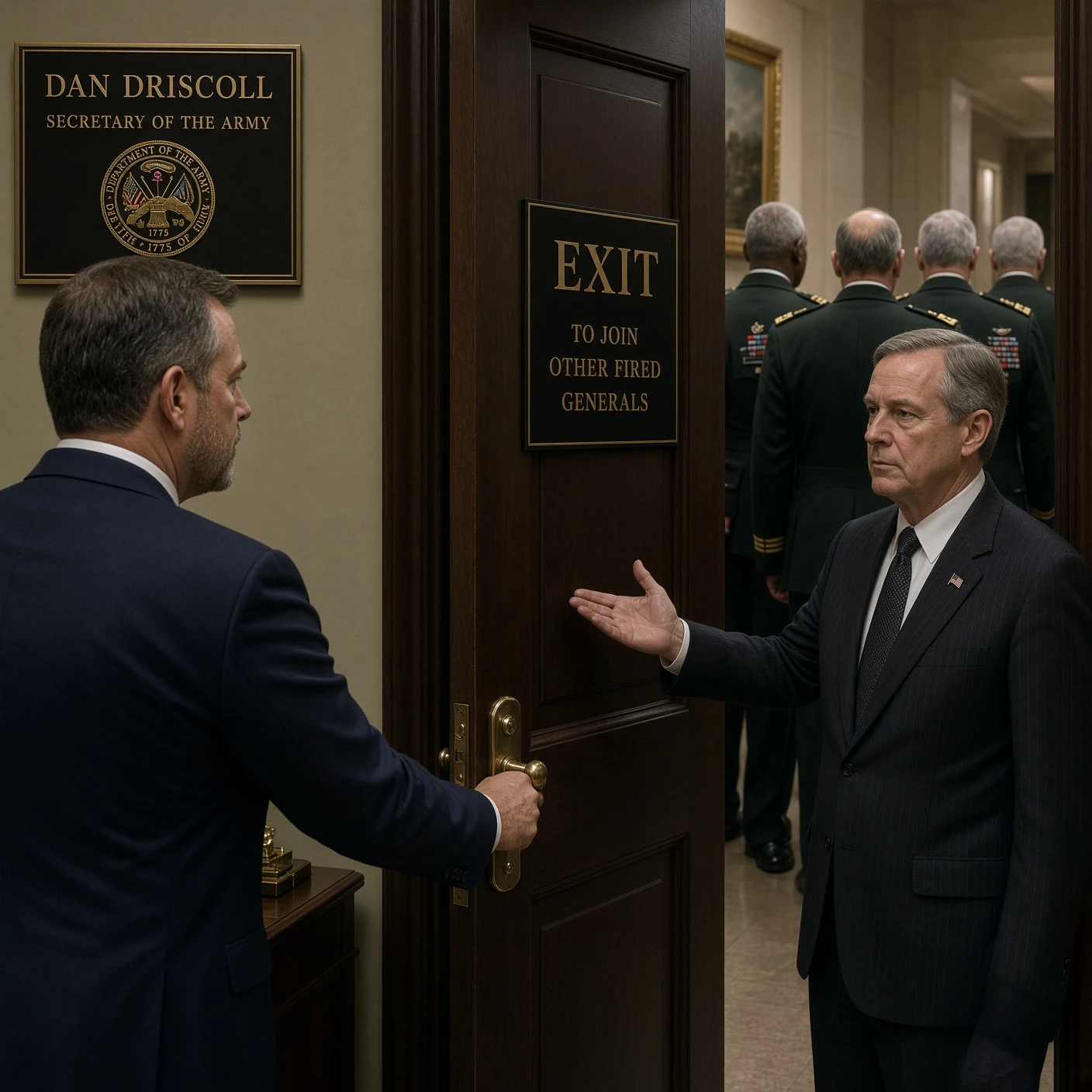
Army Secretary Dan Driscoll is expected to step down in the coming days after the White House accepted the resignation he tendered to the President. The departure arrives after months of friction with Secretary of Defense Pete Hegseth, who had already relieved the Army of its chief of staff and several other senior officers. Official statements praise Driscoll’s work on readiness and lethality; the timing, however, is not accidental. It follows Driscoll’s own complaint that Hegseth’s personnel decisions had blocked the very transformation and modernization efforts Driscoll claimed to champion. The Army now faces simultaneous operational demands without a Senate-confirmed civilian secretary or a confirmed chief of staff.
That outcome was foreshadowed by Driscoll’s formation. He completed his undergraduate work at the University of North Carolina at Chapel Hill and then proceeded to Yale Law School, where the prevailing climate treats institutions as problems to be managed rather than inheritances to be defended. At Yale he formed a lasting friendship with Matt Blumenthal, son of Senator Richard Blumenthal, a connection that later produced a notable bipartisan endorsement at confirmation. The elite law-school milieu rewards the appearance of openness to every viewpoint while quietly instilling a preference for process, consensus, and the protection of established networks over the harder work of selecting commanders who will actually fight. Those habits travel. They help explain why Driscoll’s circle included officers Hegseth later judged unfit for the present moment.
Hegseth’s removals of Generals Randy George, David Hodne, and others were presented as necessary course corrections. Driscoll publicly lamented the loss of George, drove to his house, and described him as a “transformational leader.” The disagreement was not merely personal. It revealed two competing theories of the Army: one that treats certain senior officers as indispensable because they share the secretary’s educational and social world, and another that insists the service must be led by men whose first loyalty is lethality rather than institutional continuity. Driscoll’s resignation closes a brief experiment in placing a Yale-formed financier-veteran in charge of the largest service. The experiment ends as the country is already at war. What remains is the question whether the next civilian leader will treat the Army as an instrument of national survival or as another venue for the habits acquired on Chapel Hill and in New Haven.
Additional ADNN Articles:
Hegseth Mandates Audits of Universities' China Russia Iran Ties
Hegseth Strips Kendall Clearance Over Leak Revealing Deep Infiltration
Trump Moves to Ban Liberal ABA From Accrediting Law Schools
Stanford Scandal Conceals the Long American Embrace of Chinese Communism

Yale Schooling and Defense of Fired Generals Force Driscoll Out
Yale Schooling and Defense of Fired Generals Force Driscoll Out
Solomon at G20: Long View Still Brighter Than Headlines
The Long Game! The Future Is Bright!
Department of War Deploys Grok as American SkyNet Goes Live
Come With Me If You Want To Live! Are You Sarah Conner?
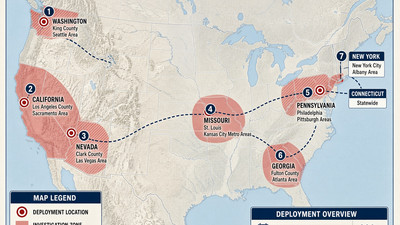
Trump Orders DHS Voter Fraud Crackdown Across Nine Battleground States
Elections Will No Longer Be Fake And Gay! We Hope!
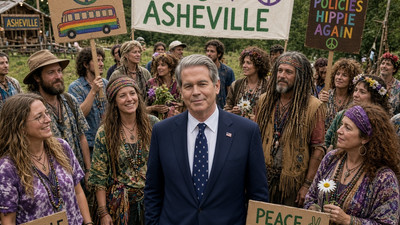
Bessent Presses Allies With Tariffs and Iran Isolation in Asheville
We Have The Best Gays...
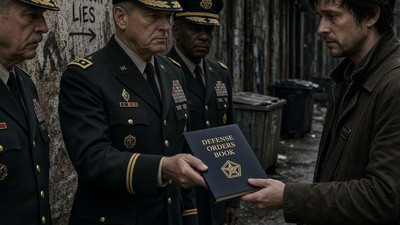
Leaked Defense Orders Book Used to Smear Hegseth on Iran
George Washington Had Many Executed...
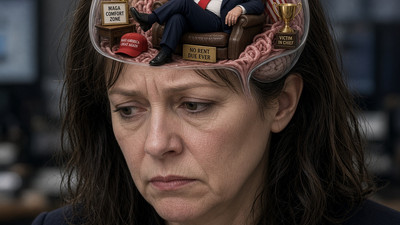
Haberman Still Relitigates 2016, Asks What If Trump Defies Congress
Trump Broke Her...As He Has Done Many Times!
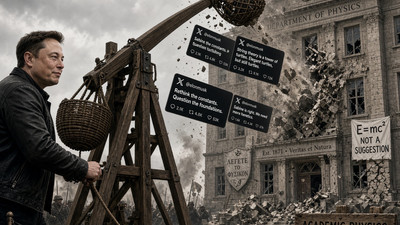
Musk Declares Physics Played Out as Untestable Theories Hold Spotlight
Here Comes Flat Earth!