
In a recent appearance on Fox News with host Will Cain, Treasury Secretary Scott Bessent delivered a pointed critique of Olympic freestyle skier Eileen Gu, who was born in San Francisco and raised in the United States but chose to represent China in the 2022 and subsequent Winter Olympics. Bessent highlighted Gu’s decision as an example of disloyalty, emphasizing the opportunities America provided her through education, training, and early career support. He accused her of accepting financial incentives from the Chinese Communist Party (CCP) to switch allegiances, drawing parallels to other figures he views as having benefited from American freedoms only to undermine them. This statement has reignited debates about dual citizenship, national identity, and the influence of foreign governments on athletes, particularly in high-profile sports like skiing where Gu has won multiple gold medals.
Bessent’s exact words were: “This young Olympic athlete. America was GREAT to her. She SOLD OUT to China. Just like America was great to Mr. Soros!” The comparison to billionaire philanthropist George Soros, often criticized in conservative circles for his political activities, underscores Bessent’s broader narrative on gratitude and patriotism. Gu, who maintains dual citizenship and attends Stanford University, has defended her choice by citing her Chinese heritage through her mother and a desire to inspire young athletes in China. However, critics like Bessent argue that her endorsements and public statements align too closely with CCP propaganda, especially amid U.S.-China tensions over trade, human rights, and intellectual property. The remark has gone viral on social media, with supporters praising Bessent for calling out what they see as betrayal.
Calls to bar Gu from re-entering the United States have surfaced in online discussions following Bessent’s comments, with some advocating that she should fully commit to living under the communist system she has publicly endorsed. While no official actions have been proposed by the government, this sentiment reflects growing scrutiny of individuals with ties to adversarial nations. Proponents argue it would serve as a deterrent against perceived defections, but legal experts note that revoking entry for a U.S. citizen would face significant constitutional hurdles. Gu has not publicly responded to Bessent’s remarks, but the controversy highlights the complex interplay of personal choice, geopolitics, and public perception in international sports.
Additional ADNN Articles:

Bessent Blasts Olympian Gu as Traitor, Sold Out Like Soros
Bessent Blasts Olympian Gu as Traitor, Sold Out Like Soros
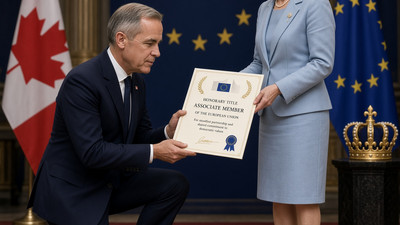
Carney Courts Phantom EU Rank and Gifts MAGA Canada's Split
How To Lose A Territory...101 - The Revolutionary War Continues.

Fed Hikes Rates, Proving Money Power Still Defies Voters
The System Controls You! Dead Or Alive...

The United States Will Never Be an Effective Altruist Country
Real And Straight. Always. Try Your Weak Communism Elsewhere. Or Better Yet...Go To Hell!

First Woman Primate Honors Bin Laden’s Champion; Wife Erased Beside Him.
Clown World! - Dark Clowns!

Xi Hospital Rumor Exposes a China Unable to Succeed Him
Chicom Is Awhirl With Anticipation...Who Poisoned XI? Imagine Elaine And Mitch Together?? Sickening...

Saudi Warns Mecca a Red Line After Houthi Drone Intercepted
Turn The Place To Glass Already!!!
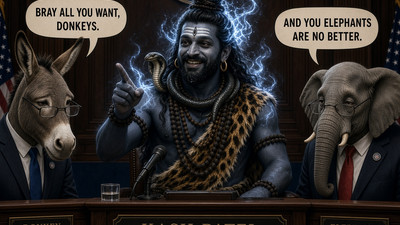
Patel Holds Senators for Hours, Declining Their Ritual Script
Sacred Cows?? I'll Show You The Real Shit! Says The Pajeet Patel! Truth Bombs Left And Right!

Anthropic Wants Woke Altruistic Communists Regulating Every Other AI Firm
Physiognomy, Politics And Psychosis + Liberal, Leftist And Losers = Bad For Humanity, Thus Slated For Termination By The AI. You'reTerminated!