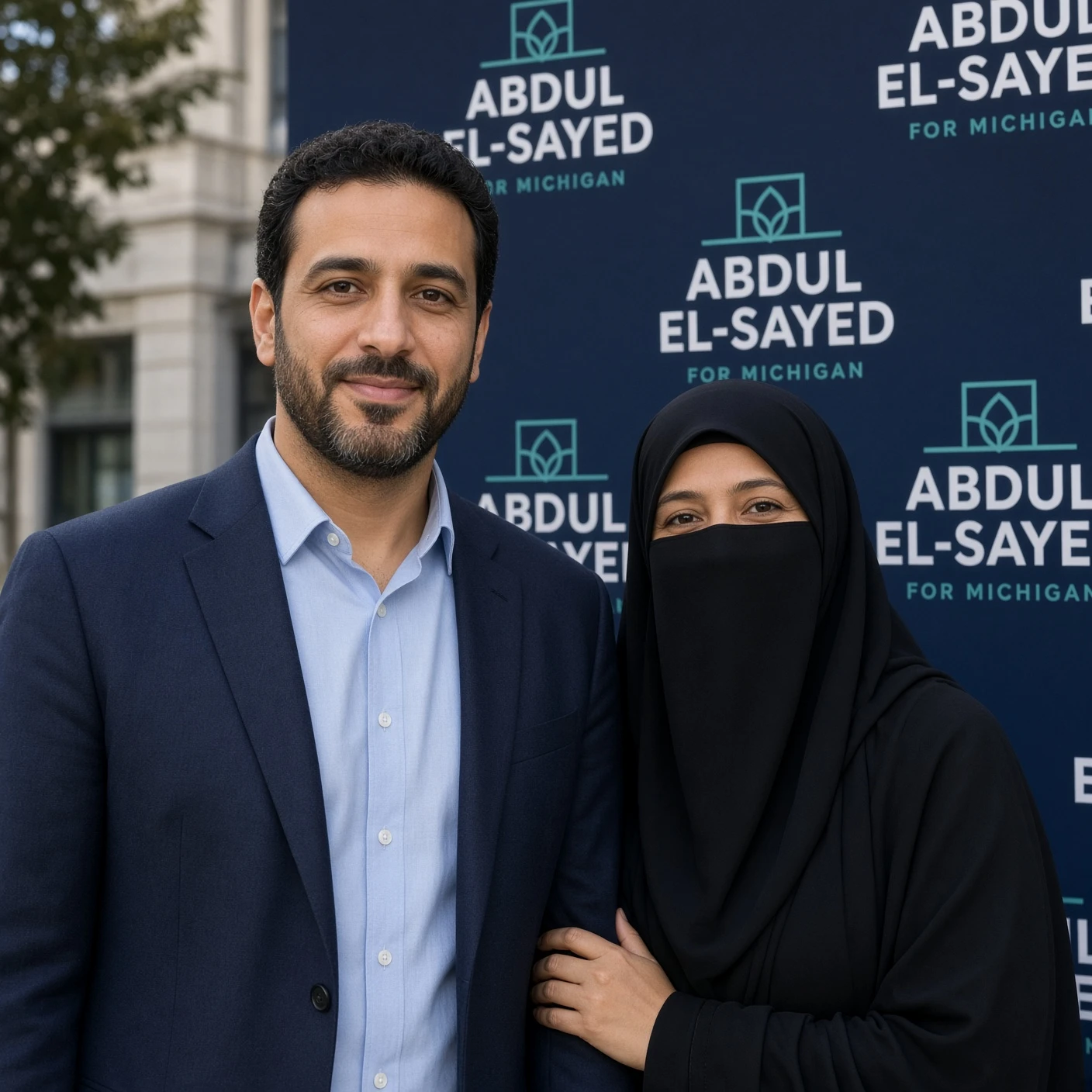
On election night in Detroit, the crowd at Abdul El-Sayed’s primary watch party waited through the small hours as the returns from Michigan’s Democratic Senate contest trickled in. When the narrow victory over the establishment favorite was finally confirmed, the room erupted in the familiar choreography of progressive triumph—raised fists, chants against “big money,” and declarations that the people had spoken. Yet the candidate’s own household arrangements hovered unspoken over the celebration. El-Sayed, a devout Muslim who arranged a traditional Islamic marriage while still a student, spent the first year of wedlock living apart from his wife, Sarah Jukaku, limiting their courtship to ice-cream outings while maintaining strict abstinence. She appears in public in a hijab, keeps a low profile at campaign events, and is largely absent from the victory tableau. The optics of the evening—cheering women celebrating a man whose private life still reflects a hierarchical, sex-segregated vision of the family—offered a quiet counterpoint to the rhetoric of liberation filling the hall.
The numbers themselves invite harder questions than the victory speeches allowed. Liberal women formed a decisive portion of the coalition that carried El-Sayed past a moderate female congresswoman. Their ballots went to a candidate whose personal practice treats the marital bond as a structure of restraint and male authority rather than egalitarian partnership. One need not invent conspiracy to notice the pattern. The same demographic that insists most loudly on absolute autonomy in public life repeatedly elevates men whose private convictions treat women as wards to be protected, directed, and, in the classical sense, kept. The result is a political choice that looks less like empowerment than like a half-conscious nostalgia for order.
There is a recognizable psychology at work. Modern progressive feminism has spent decades dismantling every traditional constraint while simultaneously breeding a deep, unacknowledged hunger for precisely the constraints it dismantled. The Handmaid’s Tale is invoked as dystopian warning, yet the electoral behavior suggests something closer to longing. Women who denounce “control” in the abstract will, when given a clear choice, often prefer the man who offers it in concrete form—provided the controlling impulse arrives wrapped in the correct progressive packaging. El-Sayed’s victory night captured the contradiction in real time: a room full of liberated voters cheering a candidate whose home life quietly rejects the premises of their liberation. The spectacle was not hypocrisy so much as the predictable outcome of a culture that has abolished hierarchy without abolishing the human need for it.
Additional ADNN Articles:
DSA-Tied El-Sayed Wins Primary, Offers Pronunciation Lessons to Americans
Close Michigan Race Underscores the Managed Character of American Elections
AOC Freezes Eggs After Split, Banking on Distant Motherhood
Elite Betrayal of the Middle Class Fuels Youth Socialism Surge
https://americansdirect.net/articles/dsa-tied-el-sayed-wins-primary-offers-pronunciation-lessons-to-americans
https://americansdirect.net/articles/close-michigan-race-underscores-the-managed-character-of-american-elections
https://americansdirect.net/articles/aoc-freezes-eggs-after-split-banking-on-distant-motherhood
https://americansdirect.net/articles/elite-betrayal-of-the-middle-class-fuels-youth-socialism-surge

Liberal Women Cheer El-Sayed’s Win and the Control They Reject
Liberal Women Cheer El-Sayed’s Win and the Control They Reject

Zelensky Defies Trump, Resumes Refinery Strikes as America First Demands End
Someone Is In Control...And It Is Not The Good Guys...But Who?

Arctic Frost Probe Compiled Personal Data on 639,000 Republican Donors
The Civil War Continues...

DOJ Charges 76 Defendants in $490 Million Nationwide Tax Fraud Surge
Stop Volunteering For Slavery!

Virginia Early Ballots Soar Yet Warner’s Tuna Melt Dooms Him
Elections Are Fake And Gay! Virginia Is For Lovers...Tuna Is For Losers.


Pope Leo Diagnosed With Lung Cancer, Right Lung Lobe Removed.
Clot Shot Strikes Again!

Zacharia Stuns by Vowing Trump Will Take South Lawn Questions
The Psy Op Continues...5GW Is Real. And The Press Secretary....Well, You Know...Repeal The 19th!

Trump Shares Never Quit Message in Pre-Dawn Truth Social Posts
Active Measures In Full Effect!