The whistleblower materials that surfaced from the Arctic Frost inquiry into matters touching Donald Trump laid bare a data haul of startling breadth: the names, addresses, email accounts, contribution records stretching back to 2005, and credit-card particulars of some 639,000 Republican donors and voters. What began as an examination of election-related conduct had, on the evidence of these documents, expanded into a systematic compilation of private financial and personal details belonging to citizens whose principal offense appears to have been their support for a particular candidate and party. The subpoenas that produced this archive were later shared with the Senate Judiciary Committee, allowing members to inspect the raw scope of what had been gathered under the special counsel’s authority.
Senator Chuck Grassley, reviewing the same materials, characterized the collection as invasive and plainly in excess of any legitimate investigative mandate. He described the resulting inventory as an “enemies list” that recorded not merely political donations but the purchase of ordinary campaign merchandise—red MAGA hats, T-shirts, and mugs—thereby converting everyday expressions of political preference into data points in a government dossier. The distinction between scrutinizing specific allegations of misconduct and mapping the habits and associations of hundreds of thousands of citizens is not a technical quibble; it is the difference between ordinary law enforcement and the construction of a political surveillance file.
Critics of the probe argue that the practical effect was to chart the Republican base itself, assembling a ready-made registry of individuals who had given time or money to one side of a contested election. Defenders reply that the inquiry remained within the bounds of examining electoral conduct and that the breadth of the subpoenas simply reflected the scale of the underlying questions. Yet the presence of routine consumer purchases alongside decades of contribution histories suggests that the net was cast far wider than any discrete allegation of wrongdoing would require, leaving open the question of whether the apparatus of federal investigation had been turned, once again, toward the political opposition rather than toward discrete and provable offenses.
Additional ADNN Articles:
Grassley Shows Smith Mapped a Party, Indicted Only Trump
DOJ’s Arctic Frost Overreach Spies on 44 Lawmakers’ Private Texts
Jack Smith’s Arctic Frost Subpoenas 400 GOP: 2-Hop Spying on Millions, 4th Amendment Violation – If Trump Were a Dictator, They’d All Be Arrested
BOMBSHELL: Biden FBI Caught Spying on 8 GOP Senators in Weaponized “Arctic Frost” Probe Against Trump

Arctic Frost Probe Compiled Personal Data on 639,000 Republican Donors

Arctic Frost Probe Compiled Personal Data On 639 000 Republican Donors by Grok is licensed under Grok xAI
Arctic Frost Probe Compiled Personal Data on 639,000 Republican Donors
Zelensky Defies Trump, Resumes Refinery Strikes as America First Demands End
Someone Is In Control...And It Is Not The Good Guys...But Who?
DOJ Charges 76 Defendants in $490 Million Nationwide Tax Fraud Surge
Stop Volunteering For Slavery!

Virginia Early Ballots Soar Yet Warner’s Tuna Melt Dooms Him
Elections Are Fake And Gay! Virginia Is For Lovers...Tuna Is For Losers.

Pope Leo Diagnosed With Lung Cancer, Right Lung Lobe Removed.
Clot Shot Strikes Again!
Zacharia Stuns by Vowing Trump Will Take South Lawn Questions
The Psy Op Continues...5GW Is Real. And The Press Secretary....Well, You Know...Repeal The 19th!
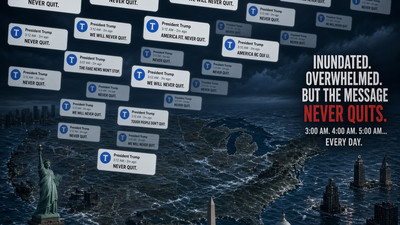
Trump Shares Never Quit Message in Pre-Dawn Truth Social Posts
Active Measures In Full Effect!

Vatican Declares Death Penalty Inadmissible to Fracture American Resolve
A Religious War Never Ends...Can't...Otherwise Would The Control System Go?