The long contest between Maryland and New York for command of the Democratic Party is older than the Republic’s present form, a rivalry that once pitted the planter-merchant interests of the Chesapeake against the commercial and immigrant machines of the Hudson. Before Fort Sumter, Maryland Democrats still spoke the language of states’ rights and limited federal power while New York’s already treated the national government as an instrument for patronage and urban majorities. That difference never disappeared; it merely changed costume. Van Hollen’s claim of fifteen locked votes is the latest expression of the older Maryland tradition—an attempt to reassert a more deliberate, less theatrical style of leadership against the perpetual motion of the New York apparatus. Whether those fifteen votes will hold once the caucus meets is another matter; claims of this kind have been made before and have melted under pressure.
Van Hollen remains the clear underdog, and the caution of his supporters is the most revealing fact of the contest. In a party that has grown accustomed to treating internal disagreement as a form of disloyalty, open backing for the Marylander carries immediate cost. The quiet campaign therefore proceeds by indirection—private assurances, carefully worded non-denials, and a studied absence from the public skirmishes that now dominate the leadership struggle. This reticence is not strategy so much as self-preservation. The New York machine has long practice in converting dissent into isolation, and Van Hollen’s allies have no desire to become exhibits in that process. The result is a strange spectacle: a candidate who claims majority support yet whose advocates prefer not to be seen supporting him.
Schumer’s advantage rests less on institutional loyalty than on the personal channel he has maintained with President Trump across years of public opposition. In an era when Democratic leaders have treated any contact with the former president as contamination, Schumer’s long-standing acquaintance has become a practical asset—an ability to communicate, to gauge intent, and, when useful, to trade. That relationship does not erase the older Maryland-New York tension, but it does tilt the present balance. A party already fractured by ideology and electoral setback may decide that the man who can still speak to the other side is preferable to the man who merely promises a more orderly version of the same internal order. History suggests the contest will not end with a single vote; the two power centers have been at this longer than either senator has been alive.
Additional ADNN Articles:
Schumer Survives Base Fury, Reclaims Senate Majority Leadership After Midterms
Senator Demands Freedom For Barabbas To Punish MAGA
Schumer Flees Senate Floor to Dodge Moreno Grilling on Obamacare Fraud
Trump Warns of One Million Fake Mail-In Ballots in Maryland

Maryland’s Van Hollen Claims Fifteen Votes Against Schumer’s Trump Edge
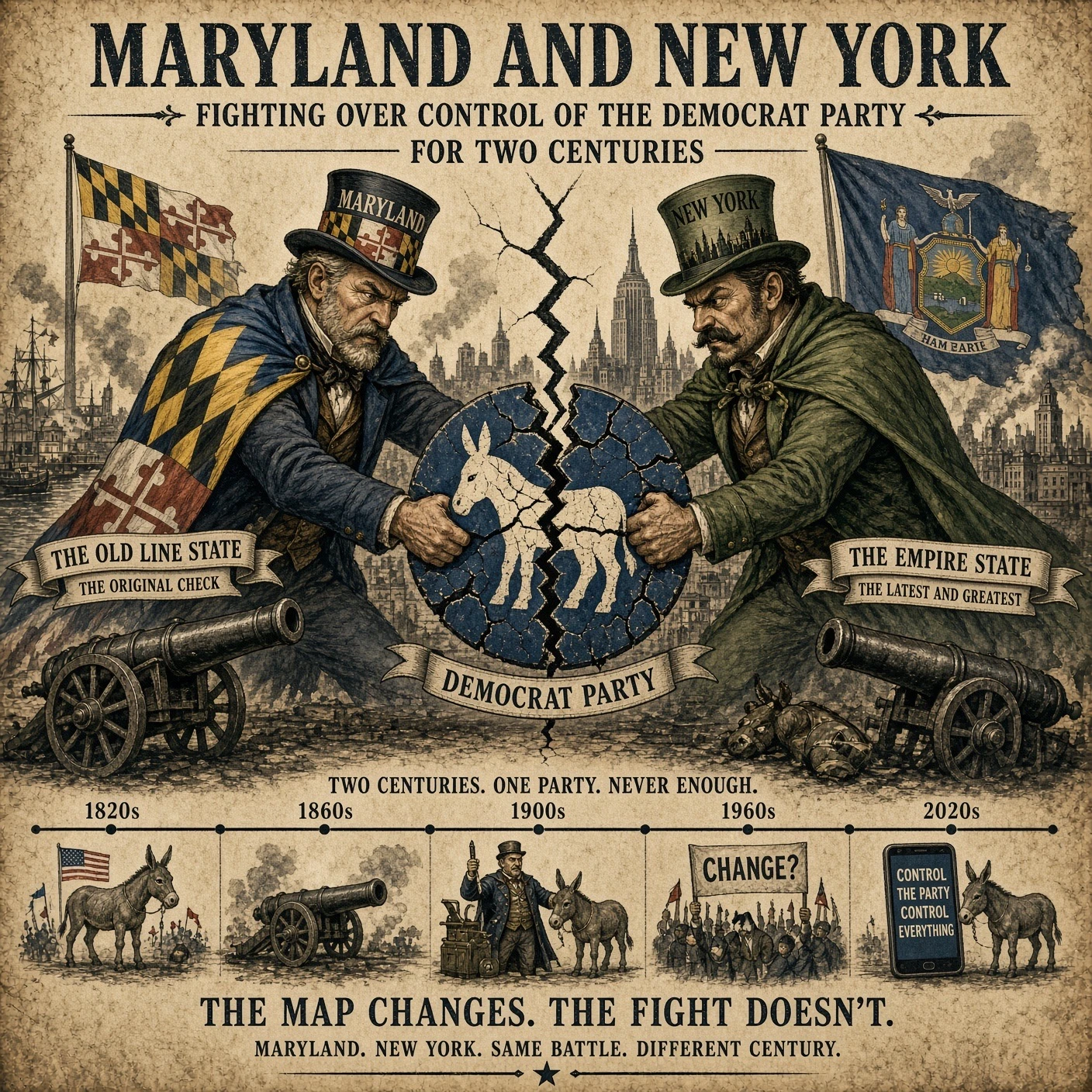
Maryland S Van Hollen Claims Fifteen Votes Against Schumer S Trump Edge by Grok is licensed under Grok xAI
|
Maryland’s Van Hollen Claims Fifteen Votes Against Schumer’s Trump Edge

Trump Lands in Manila for Red-Carpet YMCA Welcome Before Putin-Xi Talks
Art Of The Deal...May It Work Out...As We Freak Out! Dancing, Dancing, Dancing...Dance The Night Away!

Techno-Fascist Imperium Damages Kerch Bridge to Force American War
The Golden Age Is Upon Us...Building Bridges, Not Blowing Them Up...Be Patient! Hopium Is Real.

Mamdani Disbands NYPD Tactical Unit Amid Global Crisis: Leave New York.
Escape From New York! Where Are You Snake?
Trump Asia Tour Unleashes Japan, Reorients Order with Xi Putin
Risk...Art Of The Deal...World Domination!

Heritage American Rejects Lectures from Illegal Immigrants Who Hate Nation
Racism Is Real. Embrace It...Don't Hate It. Heritage Is Also Real. Love It Or Leave It!
AI Ends the Classroom Charade: No One Reads or Grades.
The End Of Education...The Beginning Of The Golden Age!

SpaceX Catches Rocket, Reuse Slashes Costs, Opens Space Frontier
Flat Earth Is Ours! So Are The Stars...
Trump’s Golf Tip Meets Judge’s Block: This Will Not Stand
Dropped In The Drink! Potomac Put Put...