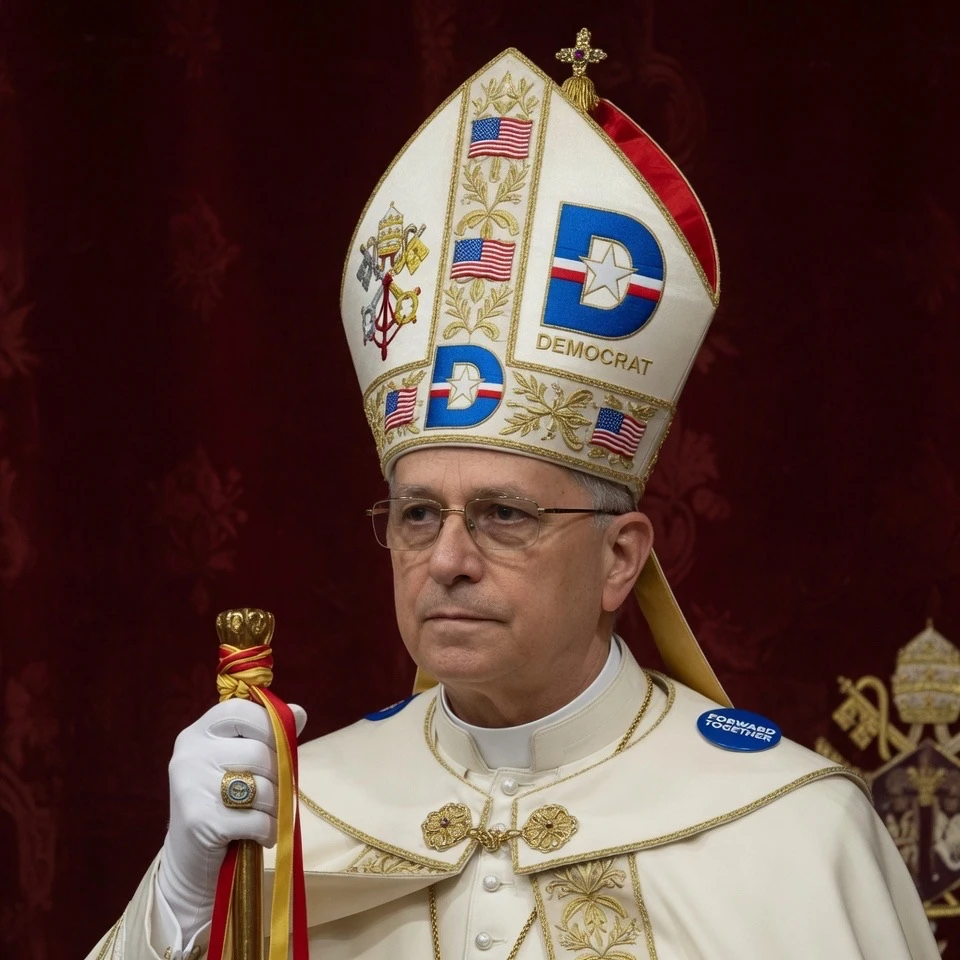
It is patently obvious that the recent tweets from Pope Leo XIV, which read like scripted DNC talking points on peace, dialogue, and opposition to “fake news” without any substantive invocation of Christ or core Gospel teachings, were either drafted in the immediate aftermath of or directly influenced by his closed-door meeting with David Axelrod on April 9. The timing is too precise to dismiss as coincidence: Axelrod, Barack Obama’s longtime chief strategist and a fixture in Democratic political machinery, sat with the Chicago-born pontiff for a session that ran over by nearly half an hour, according to Vatican records. Within days, the Pope’s X account (@Pontifex) fired off messages emphasizing “reasonable, sincere, and responsible dialogue” over weapons in the Middle East and Iran, alongside condemnations of lies and insinuations—language that mirrors progressive campaign rhetoric far more than traditional papal encyclicals. These posts sideline evangelization or calls to repentance, focusing instead on geopolitical bromides that align seamlessly with leftist critiques of current U.S. foreign policy, suggesting the encounter served as a messaging alignment session rather than a purely spiritual exchange.
People don’t seem to remember how closely intertwined the Catholic Church and the Democratic Party have been for the entire lives of Boomers and generations prior, a partnership forged in the urban machines of the 20th century where Irish, Italian, and Polish Catholic immigrants formed the backbone of Democratic strongholds from Boston to Chicago. Figures like Joe Biden built entire political careers as proud Democrats while publicly professing devotion to the faith, all while navigating—or outright defying—Church stances on life issues and traditional marriage through careful rhetorical gymnastics that satisfied party bosses without alienating the base. This alliance wasn’t fringe; it was the default for Catholic voters who saw the Democrats as the party of working families, labor unions, and social welfare, with bishops and cardinals often turning a blind eye to doctrinal inconsistencies in exchange for cultural influence and federal funding streams. The historical record shows Catholic voters reliably tilting Democratic through the New Deal era and beyond, embedding the Church’s institutional interests within the party’s orbit long before any modern realignment.
That the GOP could usurp a significant portion of the Catholic base is a distinctly recent phenomenon, driven in large measure by the explicitly leftist ideological drift of Church leaders in the post-Vatican II era and the devastating exposure of widespread sexual abuse scandals that eroded trust among the faithful. As septuagenarians in both the Vatican hierarchy and Democratic leadership circles watch their coalitions fracture—younger Catholics drifting toward conservative values on family and morality, while the party hemorrhages working-class support—there’s an unmistakable push to reinforce the old alliance and stem the narrative bleed. The Axelrod meeting, paired with Pope Leo’s rapid pivot to tweets that echo DNC priorities, signals a coordinated effort among these aging power brokers to reclaim psychopolitical control, rebranding the Church’s voice as a counterweight to populist shifts and preventing further erosion of a once-ironclad voting bloc that sustained both institutions for decades.
Additional ADNN Articles:

Pope Leo’s Axelrod Meeting Yields DNC-Style Tweets
Pope Leo’s Axelrod Meeting Yields DNC-Style Tweets

War Department Thingamabob Rainbows Tehran Sky, Unsettling Guards and Globalists
A Heap Of Homo Hooligan Hell Hole Rainbow Lights Shock The Sand People. Was It US? Or Enoch? Or Some Other Alien?

Bessent Pins Hugging Face Incident on OpenAI Managers, Not Agents
Bots Aren't Gay...

Austin Protesters Learn Texas Differs From Minnesota After ICE Clash
Don't Mess With Texas!

Fonzie Jumped the Shark; Fifty Years of Failure Endure
Fake And (Almost Certainly) Gay - Jewish Greaser, Mind Control And The Pop-Culture Term That Lives On...

Ukraine’s Swarm Hits Moscow Refinery as Russia Warns Retaliation
World War Three, Anyone?
Iran Issues Code 100 as Trump and Netanyahu Rush Home
Turn Up The Volume!
Trump Forms AI Force and Czar; Will Not Stifle Industry
May The Force Be With You! Superior Intelligence Is The New AI!
No First Amendment Right To A Seat In West Wing
Mockingbird Press Pissed At Being Locked Out As They Are The "Deep-State-Run-Media" - The Propaganda Arm Of The Intelligence Community Driving Mind Control - Fucking Commies! God To Hell You Sickos!