President Putin and President Trump stand as the two most consequential political figures of the present age precisely because both have refused the West’s post-Cold War settlement of managed decline. Each has insisted that a nation is not a hotel, a marketplace, or a therapy session, but a particular people with a particular history, a particular faith, and a particular duty to transmit both to their children. In place of the universal solvent of human rights discourse and open-border economics, they have reasserted the older vocabulary of sovereignty, borders, and the state’s first obligation to its own citizens. Their public language returns, again and again, to family formation, religious inheritance, and the elementary requirement that laws be enforced rather than selectively ignored. This is not nostalgia; it is the recognition that civilizations that cease to prefer themselves cease to exist.
Against this restoration stands a coherent opposing project whose premises are now familiar: that demographic replacement is both inevitable and desirable, that criminality is largely a social construction to be managed rather than punished, and that traditional religious and sexual norms constitute a form of oppression requiring administrative correction. Open borders are not an accidental policy failure; they are the practical expression of a belief that national particularity is itself illegitimate. Soft-on-crime regimes and the systematic defamation of law enforcement follow from the same source, as does the institutional campaign to treat ordinary religious belief and ordinary family structure as suspect. The result is not greater justice but a progressive hollowing-out of the social trust on which any ordered liberty depends. Where Trump and Putin have treated the nation as a going concern that must be defended, their critics have treated it as a problem to be solved by dissolution.
The contest is therefore not merely electoral or geopolitical. It is a struggle between the preservation of ordered civilizational life and the deliberate acceleration of its unraveling. Light, in this older sense, is the transmission of faith, the protection of the family, the maintenance of borders, and the enforcement of law; darkness is the systematic preference for the stranger over the citizen, for the criminal over the victim, and for ideological fashion over inherited form. Whether the present age will recover the will to choose the former over the latter remains the decisive question of the century.
Additional ADNN Articles:
Trump Alone Unites Xi and Putin on Reform, Fuel, Nuclear Risks
Trump Defies Captured Senate, Prioritizes Peace and Trade With Russia
Bound by History, Faith: Europe-US Must Fix WW2 Mistakes
Trump Forges Russian Diesel Pact After Zelensky Ignores Six Requests

Putin and Trump Defend Civilization Against the Woke Dark
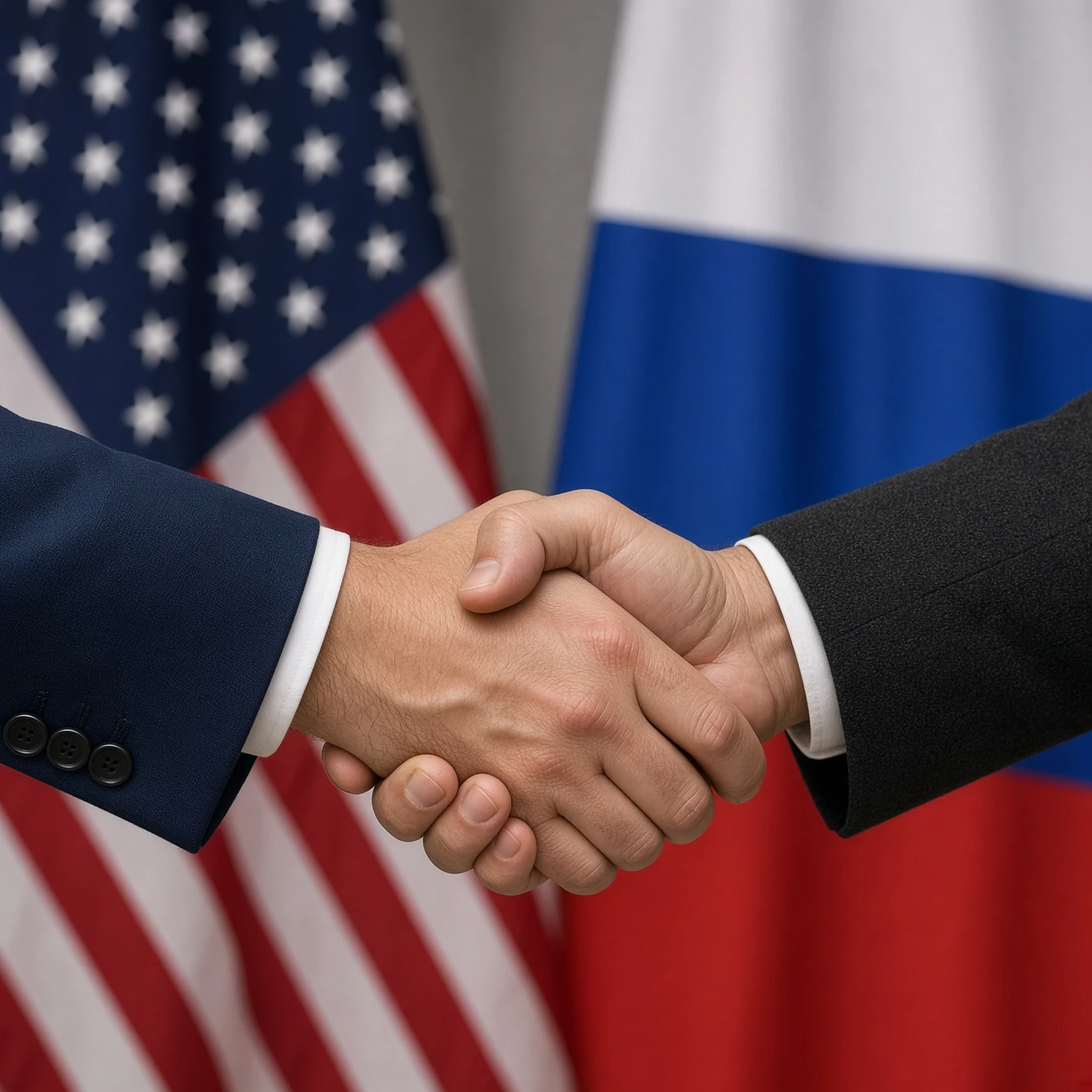
Putin And Trump Defend Civilization Against The Woke Dark by Grok is licensed under Grok xAI
|
Putin and Trump Defend Civilization Against the Woke Dark
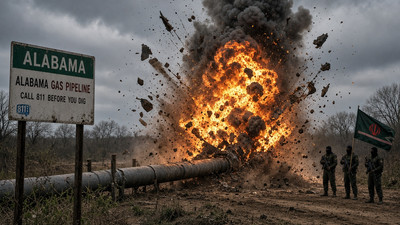
Pipelines Under Attack: Alabama Blast Hits Heating Gas Lines
Domestic Terrorism And Systemic Deconstruction.
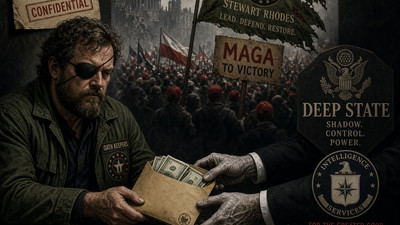
Stewart Rhodes Brands Pardoner Trump History’s Worst American Traitor
Keep Your Eye on The Prize!
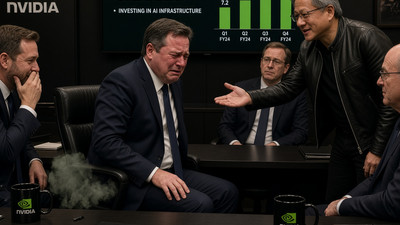
New York Times Casts Jensen Huang as Villain for Banning Farts
Crop Dusting And Dropping Wolf Bait Maybe Acceptable At The Gray Lady, But Not With This Tech Titan .

Trump Summons Miller to Podium to Recite Ignored Achievements
Cheerleaders Are Important! Rickey Rack!
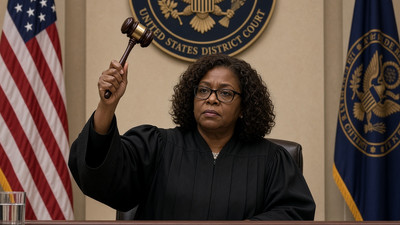
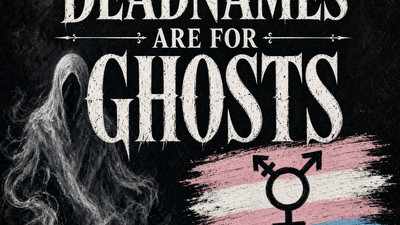
Democratic Politicians Treat Birth Names as Ghosts on Remembrance Day
Mental Illness And Mind Control Are The Same Thing!
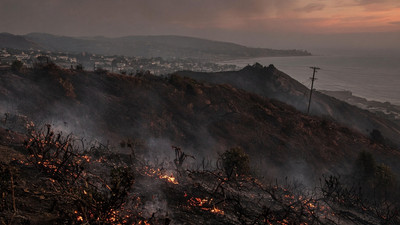
Authorities Sacrifice Rinderknecht as Fall Guy for Unextinguished Palisades Embers
The Fire Guy = Fall Guy! HAARP Is Responsible.
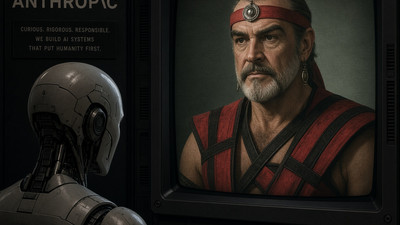
Anthropic’s Record IPO Echoes Zardoz’s Sterile, AI-Ruled Elite
"Zardoz speaks to you...The penis is evil. The gun is good. You are not allowed to die! Zardoz is pleased"