President Trump’s late-Friday waiver of the sanctions set to bite under the Lindsey Graham Act has produced the expected bipartisan clamor from a Senate that still mistakes ritual denunciation for strategy. Signed into law only last month and scheduled to take effect on October 18, the measure would have layered fresh penalties on Russian officials, institutions, and the largest buyers of Russian energy. Trump certified that imposing them now was not in the national interest, citing the need to keep negotiations open and to restrain energy prices already distorted by the wider conflict with Iran. The reaction was immediate and predictable: Senators Tillis, Cornyn, and Blumenthal, among others, denounced the move as capitulation, while House members warned that the president’s agenda would pay a price for the slight. The volume of the protest, however, reveals less about any sudden discovery of principle than about the Senate’s long-standing preference for managed confrontation over any settlement that might reduce the flow of resources and prestige through Washington’s permanent foreign-policy apparatus.
That apparatus long ago ceased to function as a deliberative body responsive to the American electorate and has instead become an institution captured by the same globalist incentives that produced two decades of open-ended commitments, open borders, and open-ended sanctions regimes. Michael Anton’s diagnosis of a governing class that treats its own continuity as the highest good remains the clearest account of the chamber’s behavior: the Senate’s institutional interest lies in perpetual pressure campaigns that justify its relevance, its appropriations, and its alliances with the administrative state and the transatlantic networks that fund and staff them. Christopher Caldwell’s account of the post-1960s entitlement order supplies the complementary explanation—once Congress rewrote its own constitutional role into a permanent manager of global markets and humanitarian missions, any president who seeks to reopen trade or freeze hostilities is, by definition, an enemy of the order those missions sustain. The bipartisan majorities that pass “sanctions from hell” and then express shock when a president uses the waiver authority they themselves wrote into the statute are not practicing oversight; they are defending the jurisdictional expansion that has made the Senate the least representative branch of a government already detached from the economic and demographic realities of the country that elects it.
Trump’s position is the inverse of that institutional interest. He has treated the war in Ukraine as a contest that can and should be concluded, and he has treated Russia as a potential commercial counterparty whose energy supplies can stabilize American markets rather than as a permanent adversary whose isolation must be maintained at any domestic cost. The diesel arrangement announced the previous week and the present waiver are of a piece: both rest on the judgment that the national interest includes lower pump prices ahead of the midterms and the preservation of a negotiating channel that the Senate’s preferred sanctions would likely close. The chamber’s response—that such measures “prolong the war” or constitute “sucking up” to Moscow—assumes that the only legitimate American posture is the one that keeps the conflict open, the sanctions regime permanent, and the flow of European and American resources continuous. That assumption is precisely what MAGA politics was assembled to reject. The Senate may continue to register its displeasure; the president who was elected to reorder the priorities of the American state has already demonstrated that he does not require its permission to do so.
Additional ADNN Articles:
Trump Forges Russian Diesel Pact After Zelensky Ignores Six Requests
Trump’s Russian Diesel Deal Ends the Pointless War in Ukraine
Zelensky Defies Trump, Resumes Refinery Strikes as America First Demands End
Ukraine’s Swarm Hits Moscow Refinery as Russia Warns Retaliation

Trump Defies Captured Senate, Prioritizes Peace and Trade With Russia
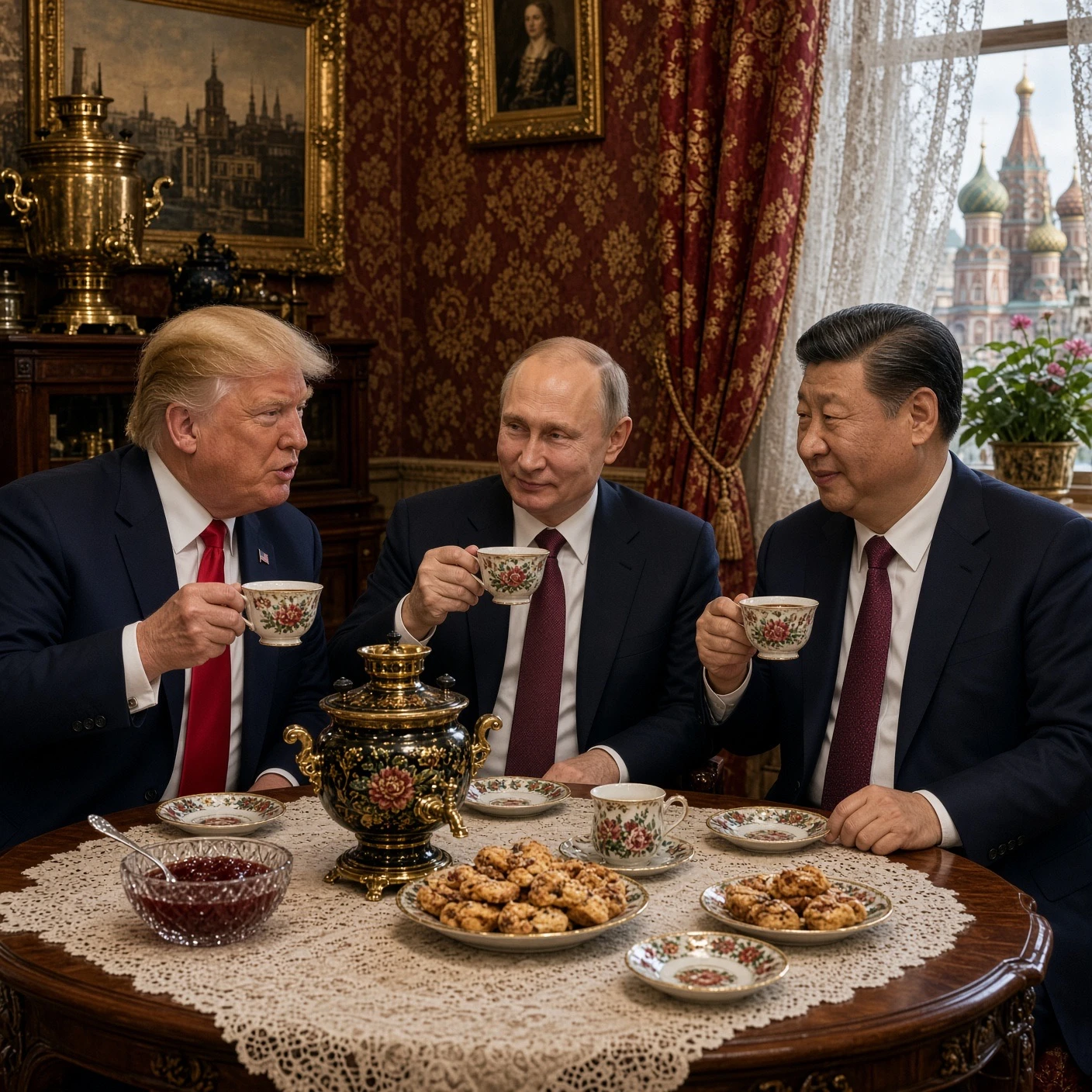
Trump Defies Captured Senate Prioritizes Peace And Trade With Russia by Grok is licensed under Grok xAI
Trump Defies Captured Senate, Prioritizes Peace and Trade With Russia
Alberta Remains Canadian, Forcing Full Scale American Invasion and Annexation
The War Of Southern Aggression Is Coming! Prepare Thyself!
Nationalist Compact Replaces Debt Slavery as Senate Fate Decides Shift
Set Yourself Free!

Former CIA Governor Installs Soros Operative in Virginia Congress Seat
White Hats Vs. Black Hats...Spy War Continues. Question Is Who They Really Working For? Time Will Tell!

Louis Alphonse Offers Throne as Fifth Republic Collapses Amid Unrest
Will To Power! Divine And Definite!

Musk to Give One SpaceX Share to Every American Child
To Infinity And Beyond...Until Flat Earth Is Proven!

Seize Power First to Reshape the Beliefs of Women
Wear The Bonnet!
On This Day Cornwallis Surrenders at Yorktown Ending Revolutionary Combat
Yes But War Continues To This Very Day. Trump Is About To End it Once And For All!
The Same Governing Class Imposed Open Borders Everywhere, Then Lied.
Conspiracy Reality!