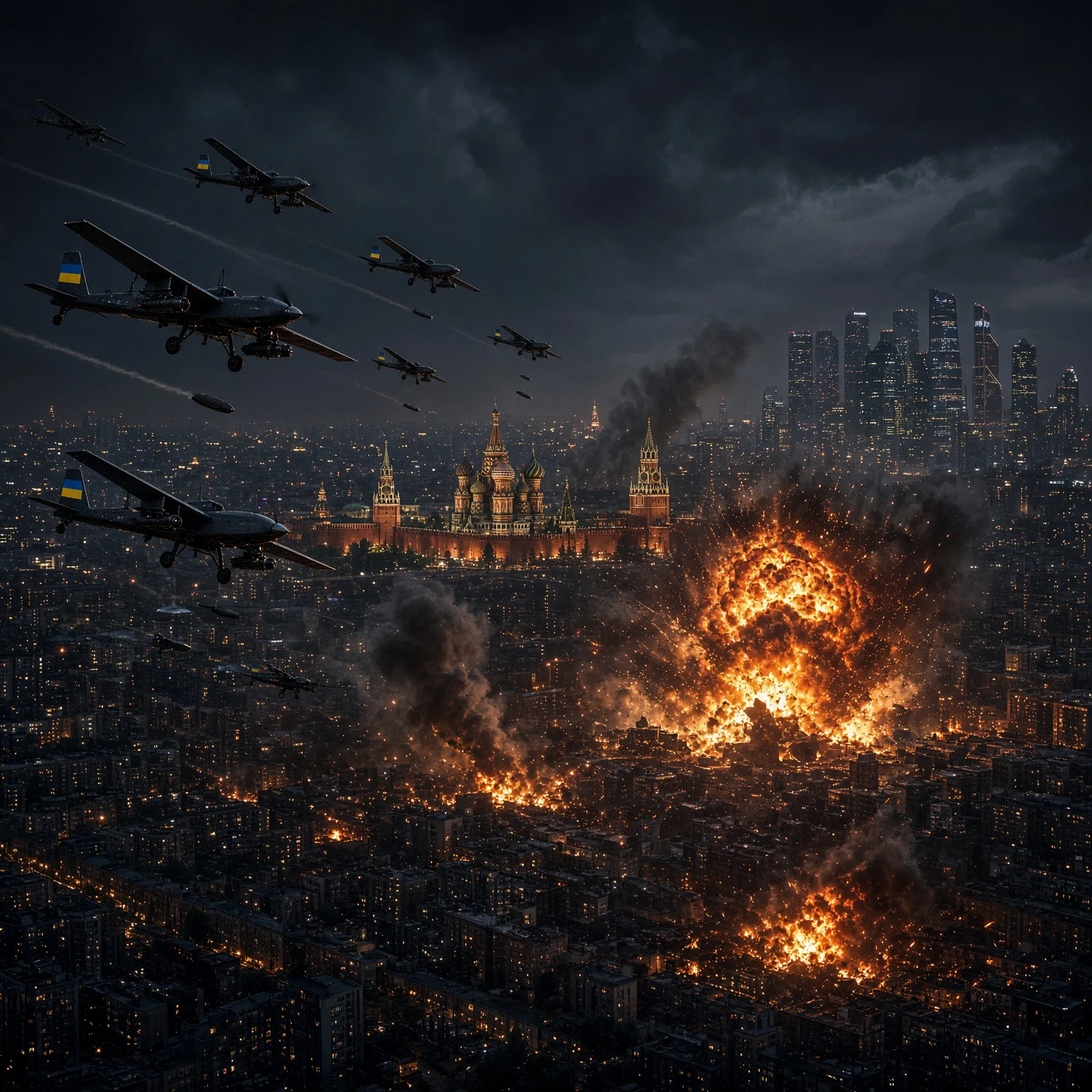
Overnight Ukraine sent one of its heaviest long-range swarms against the Russian capital and its surrounding oblast, and the smoke over Kapotnya was the proof that the war has not remained a provincial affair. Moscow’s mayor claimed more than 1,600 drones were brought down since Saturday, some 450 of them on approaches to the city itself; the Defense Ministry’s overnight tally was 1,110. Enough of the swarm still reached the Gazprom Neft Moscow Oil Refinery—already struck in June and one of the plants that feeds the capital’s gasoline and diesel—to set production units alight. Residential blocks and a warehouse in the Ramensky district burned as well. Two civilians died in the region, others were wounded, hundreds were pulled from a high-rise, and Moscow’s airports were briefly frozen. Zelensky later confirmed the refinery and a logistics site as intended targets. The Kremlin called the timing an attempt to spoil the last day of a managed parliamentary vote. The adversary, as ever, said the opposite.
What matters is not the press-release arithmetic of drones “downed.” What matters is that a plant fifteen kilometers from the Kremlin can still be reached, and that the war’s industrial heart can be set on fire while ballots are being counted. Energy infrastructure is the one target both sides understand without translation: oil paid for the invasion; oil keeps the tanks moving; oil is what a distant capital feels when the sky fills with cheap, patient machines. The West has spent years pretending that “escalation” is a switch one side may flip and the other must not. Kyiv’s answer, night after night, is that a state fighting for its existence will use the range it has. Moscow’s answer is that the capital is no longer a sanctuary. Neither claim is new. The scale is.
Into that wreckage comes the familiar Russian coda—an air-force warning that Ukraine has been given a day, after which the world is invited to watch something “devastating,” with no further notice. Treat the language as theater until the bombs fall; treat the theater as serious because this war has never lacked for ultimatums that later arrived in steel. The prudent reader will note two facts at once: Russia has already been striking Ukrainian cities with missiles and drones on the same nights these swarms fly the other way, and no capital, once it has been shown to burn, recovers the old illusion of distance. The countdown, if it exists, is not a clock on a desk in the Defense Ministry. It is the logic of a war that both sides now wage against each other’s fuel, roofs, and nerves—and that neither side has yet found a way to stop.
Additional ADNN Articles:
Ukrainian Drones Strike Deep as War’s Lessons Demand Ending
Russian Kyiv Assault Exposes Defense Gaps Before NATO Armament Push
Russia Claims Drone Attack on Putin Residence, Blames MI-6 Feud
Patriot Senator Graham Falls After Ukraine Drone Factory Mission

Ukraine’s Swarm Hits Moscow Refinery as Russia Warns Retaliation
Ukraine’s Swarm Hits Moscow Refinery as Russia Warns Retaliation
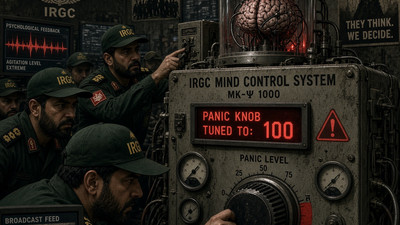
Iran Issues Code 100 as Trump and Netanyahu Rush Home
Turn Up The Volume!

Trump Forms AI Force and Czar; Will Not Stifle Industry
May The Force Be With You! Superior Intelligence Is The New AI!
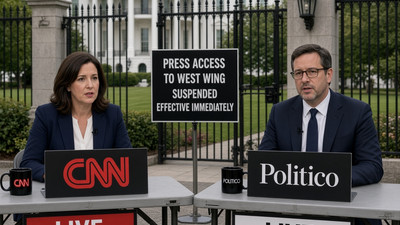
No First Amendment Right To A Seat In West Wing
Mockingbird Press Pissed At Being Locked Out As They Are The "Deep-State-Run-Media" - The Propaganda Arm Of The Intelligence Community Driving Mind Control - Fucking Commies! God To Hell You Sickos!

Trump Secures Infinite Life Greenland Pact Barring China, Russia
Make America Greenland Again - Orangeman Wins Again! God Bless The Red, White And Blue!

Trump Posts Twenty-Five Term-Three Wins No Predecessor Matched
MAGA? Maybe...Let's See What Is Next.

Assange Returns on Constitution Day as the Storm Breaks Worldwide
Trust The Plan? Who The Fuck Are The Planners Of The Plan? Its A Mystery To Us!

Sydney Sweeney’s Playful Ad Rebukes Hypocritical Athletes and Woke Scolds
Tits And Ass Sells. Thank God!

World's Richest Man Still Sleeps in a Trailer Anyway
"In A Van...Down By The River!"