Donna Brandenburg, the U.S. Taxpayers Party candidate for Michigan governor, has refused to concede the 2026 election, declaring that what has occurred is “more than ordinary fraud. It is the result of a sustained infiltration of our government and a coup against the United States of America.” Her refusal rests on a documented pattern of structural defects that have accumulated across successive cycles. Foreign capital has moved into both major parties. Voting machines containing foreign-made components and foreign programming—some of which Serbian technicians have openly acknowledged intervening in American elections for more than two decades—remain in use. Non-citizen voters have been permitted to cast ballots. Electronic systems connected to the internet continue to present open vulnerabilities. Election equipment and its programming have been outsourced to foreign entities, creating an ongoing national-security exposure that no responsible state would tolerate.
These defects are not isolated technical failures. In Michigan the voter-roll data relied upon by local clerks is unauditable and non-compliant with federal law. Electronic records fail basic statutory requirements. Machines themselves remain out of certification compliance. Local clerks have admitted that unlawful processes are underway both statewide and nationally. Jocelyn Benson, as Secretary of State, has overseen elections in which she and the officials she appointed exercised direct administrative control while holding a personal stake in the outcome. The resulting system no longer produces a clear, verifiable expression of the citizen electorate; it produces a managed result whose provenance cannot be independently confirmed.
The surrounding apparatus has reinforced the outcome. Corporate and dark money—large contributions from multinational energy and agriculture interests, corporatized medical and pharmacy concerns, and other aligned donors—has funded preferred candidates across party lines. The media has engineered public perception through selective polling and the systematic exclusion of candidates who deserved equal standing. What remains is not an ordinary partisan contest but a process in which foreign influence, administrative conflict, and institutional capture have displaced the ordinary mechanics of self-government. Brandenburg’s refusal is therefore not a personal protest; it is a recognition that the institutional conditions for a free and fair election have ceased to exist.
Additional ADNN Articles:
Close Michigan Race Underscores the Managed Character of American Elections
Declassified Proof: Voting Machines Exposed to Foreign Manipulation
No Democrat State Checks Citizenship on Its Voter Rolls
John Solomon: Our Intelligence Agencies Pose Greatest Threat to Elections

Brandenburg Refuses to Concede Michigan’s Compromised 2026 Election Results

Brandenburg Refuses To Concede Michigan S Compromised 2026 Election Results by Grok is licensed under Grok xAI
|
Brandenburg Refuses to Concede Michigan’s Compromised 2026 Election Results
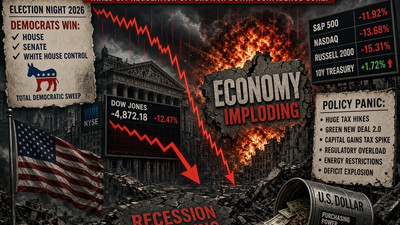
Trump Correct: Envious World Economy Endangered by Democratic Midterm Triumph
The Investor Knows What's Up & What's Down!
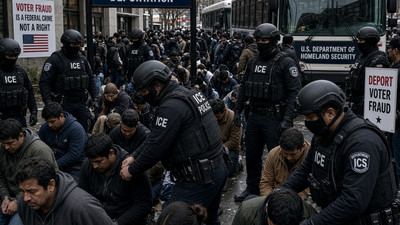

Kansas Audit Opens on 11/4: Dorothy Pulls the Curtain
Off To See The Wizard! "If You Were Really Great And Powerful, You'd Keep Your Promises!" Let's See What Happens...

Tuesday’s Uncertain Results Expose the GOP’s Long Preference for Power
Cleaning Out Corruption And Dead Wood! Time To Really Lead!

AIPAC Claims Over Two Hundred Thirty-Four Midterm Wins Despite Losses
Saving The Jews For Last? What Does Zog Know And Does Zog Do? Jew Know!?!
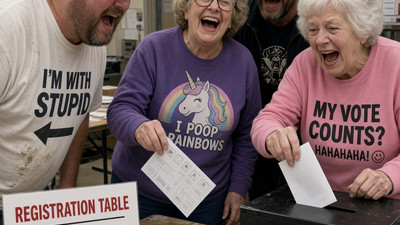
Informed Citizens Track Every Detail While the Uninformed Decide Elections
Sheeple...Mind controlled And Mindless.
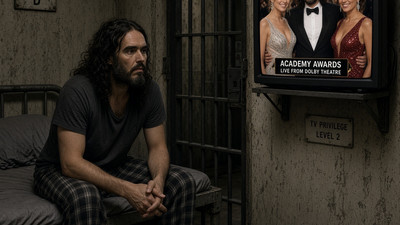
Brand’s Past Weaponized After Christian Populist Conversion: A Warning.
Fucked In the Ass!

Fake News Media Ecstatic Over Blue Tsunami Enemy Confirmed
Enemy Of The People Get To Ride...For A Little While...But The Green Room Always Closes Down!