It is a peculiar and persistent irritant of American political life that the citizens who follow the actual substance of governance—who can distinguish a statute from an executive order, who track the incentives of bureaucracies and the composition of the federal courts—find their attention and knowledge systematically discounted. These are the people who read the opinions, follow the appropriations process, and understand that the three branches are not interchangeable props in a cable-news drama. Yet their engagement confers no special weight at the ballot box. The system treats the careful reader of the Federalist Papers and the person who cannot name the three branches as equals, which means the former’s investment of time is, in practical terms, a private hobby rather than a civic advantage.
The decisive electorate remains those for whom politics is largely ambient noise. They may know the current president’s name and a handful of cable-news villains; they are far less likely to know that Congress writes laws, the executive enforces them, and the courts interpret them. Campaigns have long adapted to this reality. Messaging is reduced to emotional triggers, visual symbols, and simple narratives of threat or favor. The low-information voter does not need to grasp federalism or the limits of judicial power; he or she needs only to register a preference that can be activated by the final weeks of advertising and the social cues of family, workplace, or screen. In a closely divided country, that preference is frequently enough to decide the outcome.
The result is a structural mismatch that no amount of civic education rhetoric has closed. Mass suffrage, once defended as the necessary condition of self-government, now operates as a mechanism that amplifies the least informed preferences while rendering the most informed ones marginal. The engaged citizen is left to watch the same cycle repeat: detailed knowledge of policy is treated as optional, while the capacity to show up and cast a ballot is treated as sufficient. Over time this arrangement does not produce better governance; it produces a permanent market for simplified appeals and a growing class of attentive observers who understand the machinery yet cannot meaningfully affect its direction. The annoyance is therefore not personal. It is the predictable consequence of a system that counts heads without regard to what, if anything, is inside them.
Additional ADNN Articles:
Trump’s DOJ Files Lawsuits to Secure Midterm Ballot Integrity
No Democrat State Checks Citizenship on Its Voter Rolls
Supreme Court Clears Way for Trump’s Mail Ballot Fraud Protections
Democrats Warned of Steal; Assessments Still Pending

Informed Citizens Track Every Detail While the Uninformed Decide Elections
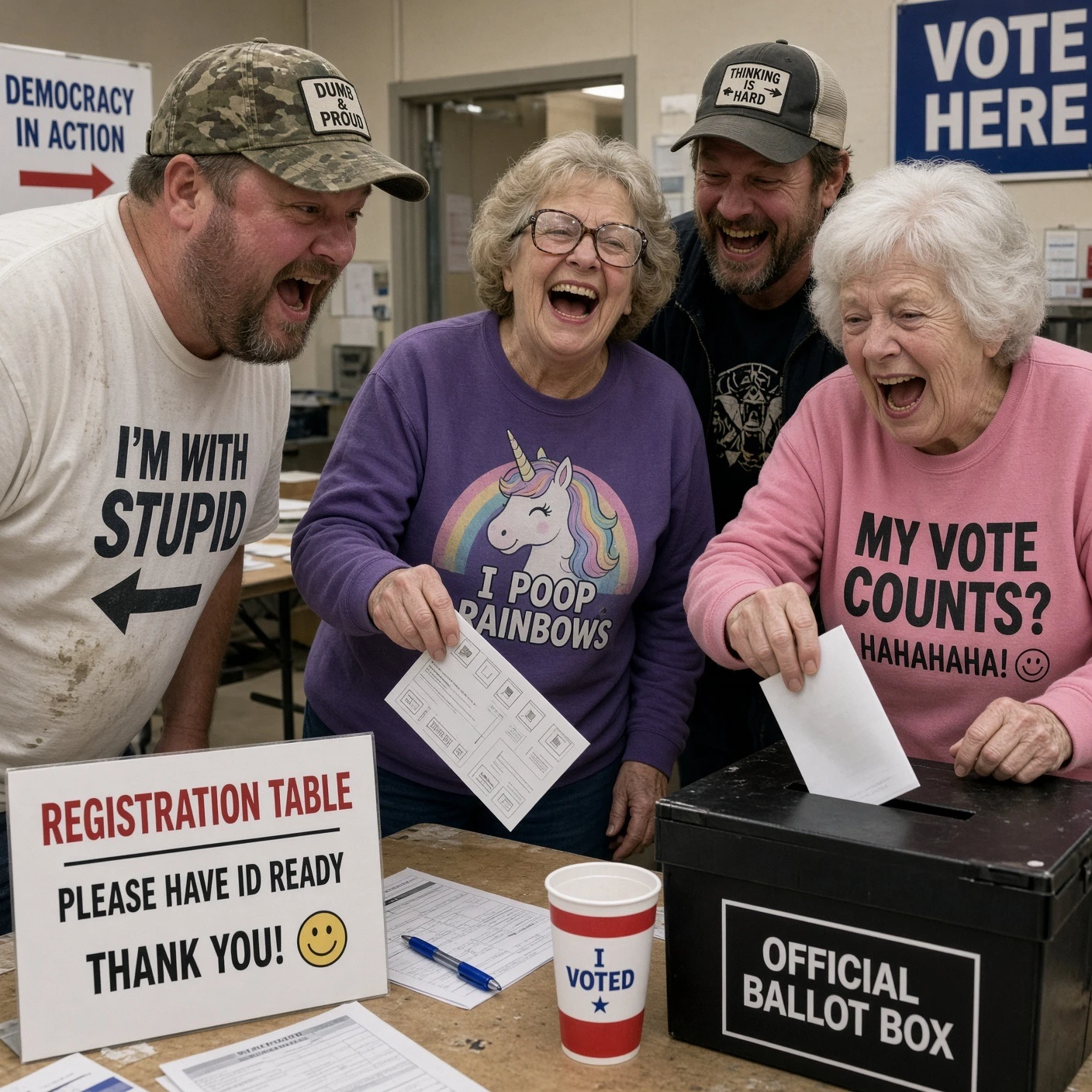
Informed Citizens Track Every Detail While The Uninformed Decide Elections by Grok is licensed under Grok xAI
|
Informed Citizens Track Every Detail While the Uninformed Decide Elections

Tuesday’s Uncertain Results Expose the GOP’s Long Preference for Power
Cleaning Out Corruption And Dead Wood! Time To Really Lead!

AIPAC Claims Over Two Hundred Thirty-Four Midterm Wins Despite Losses
Saving The Jews For Last? What Does Zog Know And Does Zog Do? Jew Know!?!

Brand’s Past Weaponized After Christian Populist Conversion: A Warning.
Fucked In the Ass!

Fake News Media Ecstatic Over Blue Tsunami Enemy Confirmed
Enemy Of The People Get To Ride...For A Little While...But The Green Room Always Closes Down!

Democrats Warned of Steal; Assessments Still Pending.
Are Elections Fake And Gay? Or Not...This Is The Moment Of Truth!
Trump Aides Forge Executive Orders to Sidestep New Democratic Congress
Dictatorship/Crown Is Alive And Well - Will To Power! Impeach This!!!

Elon Musk’s Texas Bet Collapses as State Turns Blue Overnight
Don't Mess With TexASS!
The Joy of Watching Close Midterms After Losing 81 Million Votes
Fake And Gay! 81 Million Votes Poof! Fake! But Hey...Watch Closely...Maybe The Mind Control Will Win?