U.S. District Judge Timothy J. Kelly, a Trump nominee from the first term and a former senior counsel to Senator Chuck Grassley, has ordered the White House to restore immediately the hard-pass credentials of CNN, Politico, and MS NOW. President Trump barred those organizations last week for what he called a diet of fiction and manufactured menace. Kelly’s temporary restraining order, issued in the small hours of September 24, runs fourteen days and is, by the judge’s own account, generally unappealable in that window. The ruling rests on Fifth Amendment process, not a finding that the press is entitled to roam the West Wing as of right. Kelly concluded that the administration revoked the passes without the notice and hearing that D.C. Circuit precedent—Sherrill in 1977, Karem later—requires before a journalist is stripped of a credential that has become a kind of property interest. He was openly skeptical that national security, rather than the president’s stated objection to untruthful and uniformly hostile coverage, was the true motive.
That the order came from a Republican appointee who once restored Jim Acosta’s pass in 2018 is being sold as a rebuke of the president by one of his own. It is more accurately a reminder that lower-court judges in this city treat White House access as a due-process problem first and a First Amendment problem second. Kelly has not yet decided the viewpoint-discrimination claim. He has only frozen the status quo so that the record can be built. The administration must now produce, in short order, the standards it claims the outlets violated and the evidence that their reporting was something other than the ordinary adversarial product of three newsrooms that have spent a decade treating the Trump presidency as a public-safety hazard. The outlets, for their part, must live with the discovery they demanded.
The more interesting question is not whether a fourteen-day pass is restored. It is what the White House is prepared to put on paper when the next round of briefing arrives. If the administration elects to fight past the temporary order rather than settle on new ground rules, the case moves from emergency process into the realm where emails, editorial calendars, source relationships, and the coordination of narratives become exhibits. That is the terrain on which the president’s argument—that certain organizations have ceased to report and begun to operate as a cartel of coordinated falsehood—either stands or collapses. Kelly’s willingness to keep the matter alive is not a confession that crimes will be proved. It is an invitation to test, under oath and under seal if necessary, whether the “routine” stories he described were in fact routine, or whether they were the public face of something more organized. The White House would not be the first litigant to decide that a trial is less dangerous than a sealed settlement. The press would not be the first institution to discover that the First Amendment is a shield against prior restraint, not a grant of immunity from examination.
Additional ADNN Articles:
Stephen Miller Doesn't Like Judges, FakeNews and The Biden Puppetgarchy
Evidence Suggests That CNN Does Hate America
Progressive Judge Rules Government Cannot Enforce Laws Using Own Data
Trump's Unfiltered Correspondents Speech Roasts Press and Claims Fourth Term

Trump Judge Temporarily Restores Banned Networks’ White House Press Passes
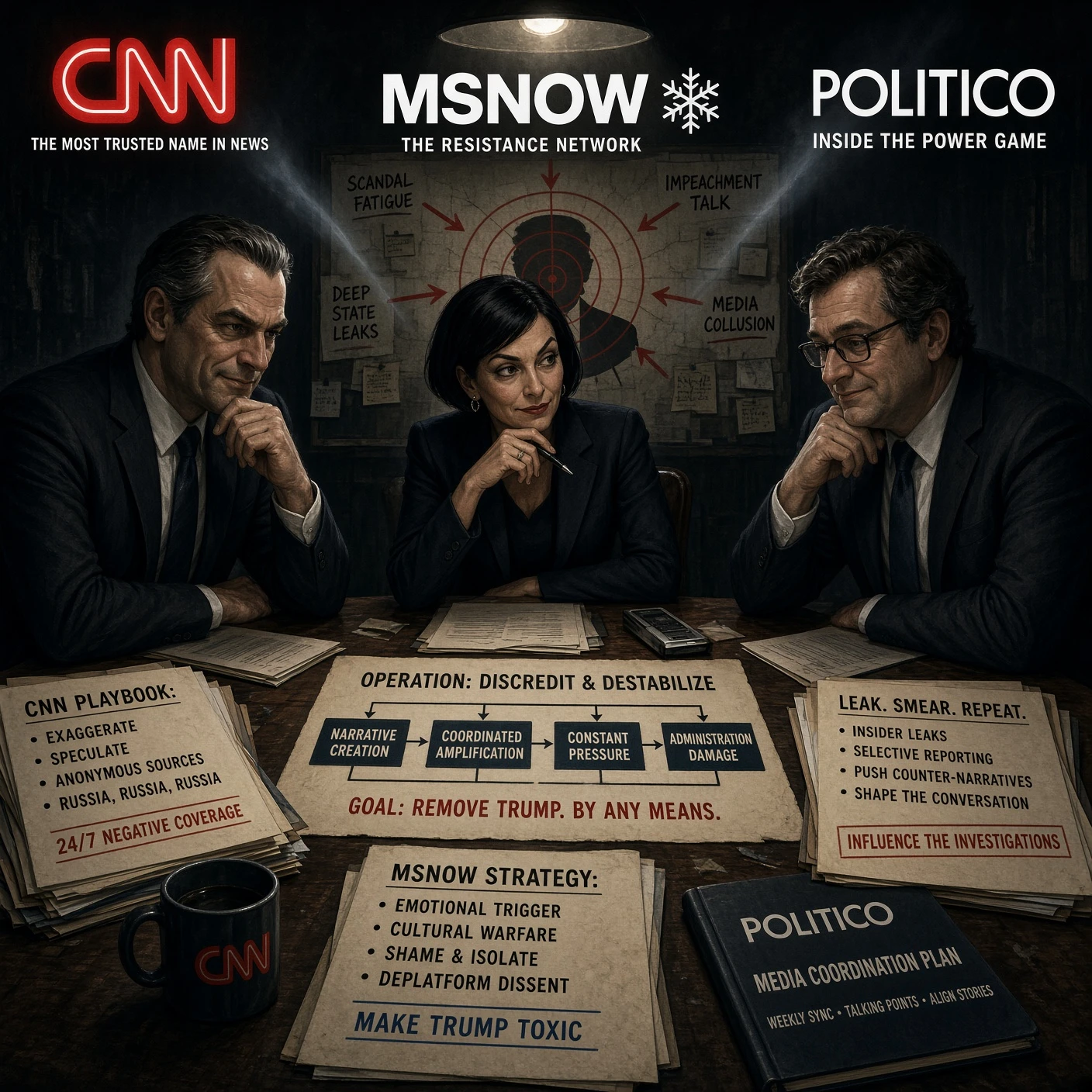
Trump Judge Temporarily Restores Banned Networks White House Press Passes by Grok is licensed under Grok xAI
Trump Judge Temporarily Restores Banned Networks’ White House Press Passes
Trump Greets Xi at Andrews, Superpowers Set Century’s Board
Super Intelligence!
Milei Brands UN Useless Caste of Fatefully Arrogant Parasites
Death Cult Put On Notice! Its Death To The Death Cult!
White House Architect Quits; Trump Says “I Am the Code”
I Am The Code.
Carney Hits Trump War Talk as America Encircles Canada
Surrounded! Like a Trapped Animal Screeching Out!

FBI Blackout Breaks Global Scam Industry Targeting American Savings
The Beekeeper Is Real!
Hollywood’s Predator Film Defames Hansen, Absolves the Hunt
Inside Out, Upside Down. Total Insanity!

Sunny Hostin Brags She Kept Park Butcher Out of Prison
Global Nigger Communism = Repeal The 19th! Many Strikes Against This Sick Bitch!
Trump Tells UN: America Is Back, Iran Faces a Choice
Artificial NoMore! Its Super Cool To Be Real And Straight! America Is The Super Power! Iran Is Shithole Country...Like All Of The UN.