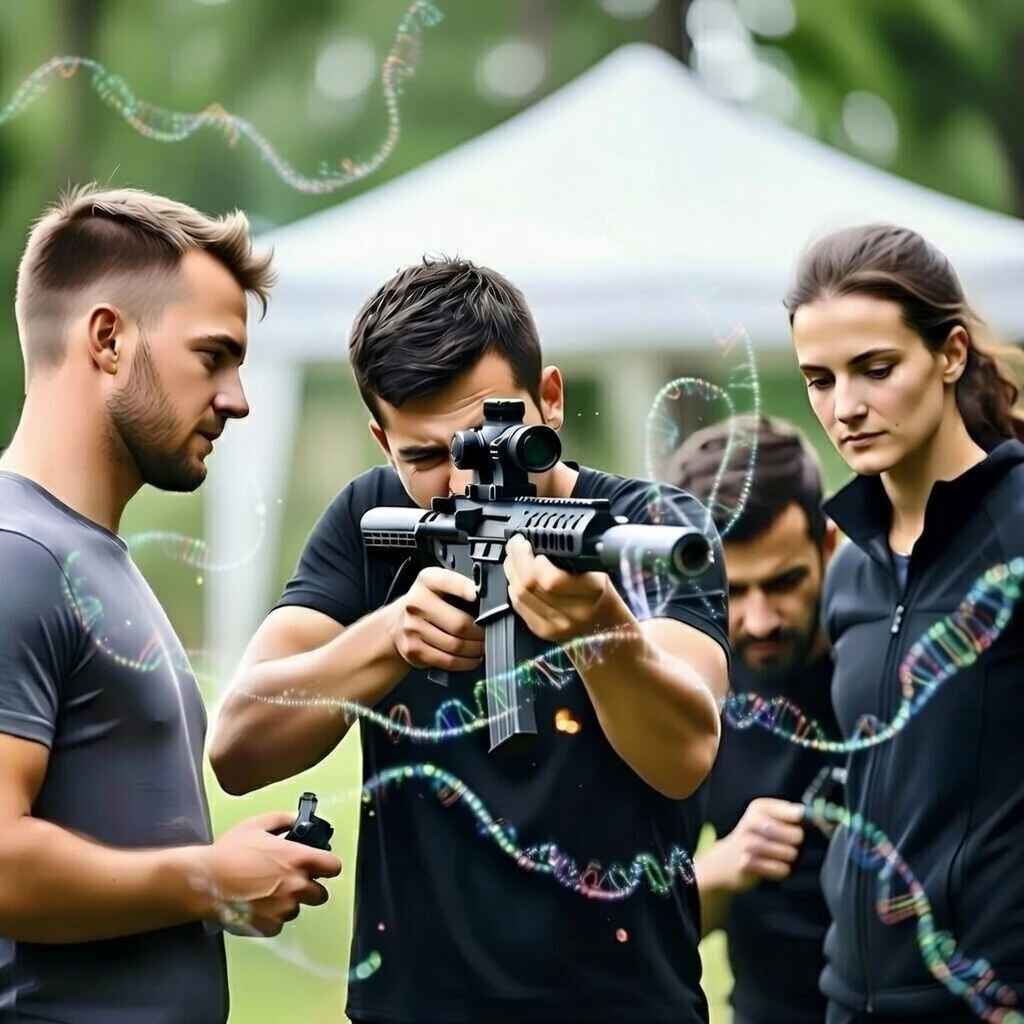
Prosecutors, who have sought the death penalty citing Robinson’s alleged political motivations and a confession via text messages, were quick to counter the defense’s claims. They argued that while trace amounts of extraneous DNA might be present due to environmental factors or secondary transfer, the primary profile overwhelmingly matches Robinson’s genetic markers. However, the defense highlighted lab reports showing overlapping alleles and inconclusive exclusion probabilities, implying that the mixture could implicate innocent bystanders or alternative suspects. This twist has ignited debates among legal experts about the reliability of mixed-DNA evidence in capital cases, especially in politically charged environments where public pressure for swift justice is intense.
As the trial progresses in Provo, Utah, this disclosure could sway jurors toward reasonable doubt, potentially derailing what many viewed as an airtight case built on ballistic matches and surveillance footage. Advocacy groups on both sides of the political spectrum have seized on the news, with conservative commentators decrying it as a ploy to undermine law enforcement, while civil liberties organizations praise it as a safeguard against wrongful convictions. The judge has scheduled additional hearings to evaluate the admissibility of the defense’s forensic rebuttal, leaving the fate of Robinson—and the broader implications for forensic science—hanging in the balance.
Additional ADNN Articles:
- CIA’s Botched Charlie Kirk Psyop: End the Ridiculous Lone Wolf Nonsense
- Tyler Robinson’s Trans Partner Luna Twiggs, a Biden Supporter, Linked to Radicalism in Kirk Assassination
- Shocking Texts: Robinson and Twiggs’ ‘Rational’ Leftist Justification for Kirk Assassination
- NSA’s Utah Data Center Fails to Flag Tyler Robinson’s Discord Plot to Kill Charlie Kirk, Exposing Flaws in AI Surveillance System