A deportation flight carrying 231 Venezuelan migrants from the United States arrived in Caracas on January 16, 2026, marking the first such removal since the Trump administration’s military operation captured former Venezuelan leader Nicolás Maduro. The Eastern Air Express plane departed from Mesa Gateway Airport in Phoenix, Arizona, and landed at Simón Bolívar International Airport after a six-hour journey, with local reports noting 199 passengers disembarking despite the manifest listing 231. This event follows the U.S.-led raid on January 3, 2026, which involved over 150 aircraft to dismantle Venezuelan defenses and seize Maduro and his wife, Cilia Flores, from the presidential palace in Caracas. Maduro, now facing narcoterrorism and drug trafficking charges in a New York court where he pleaded not guilty, had long been a target of U.S. indictments, and his capture has paved the way for resumed deportations previously halted due to Venezuela’s non-cooperation under his regime.
The resumption of deportation flights signals a shift in U.S.-Venezuela relations under the Trump administration, which has prioritized immigration enforcement and border security following the 2024 election. Prior to Maduro’s ouster, the U.S. had suspended direct removals to Venezuela in 2019 due to human rights concerns and the regime’s refusal to accept returnees, leading to indirect deportations via third countries like Mexico. With Maduro detained and an interim authority in place, the U.S. has moved swiftly to repatriate Venezuelan nationals who entered the country irregularly, many fleeing economic collapse and political repression during his rule. This flight, monitored by groups like Human Rights First, underscores the administration’s commitment to expediting removals, with officials stating it helps alleviate strains on U.S. immigration systems overwhelmed by record migrant encounters at the southern border.
As deportations resume, supporters of the policy view it as a step toward restoring order and sovereignty in U.S. immigration practices, with phrases like “America is healing” circulating among proponents who see Maduro’s capture as a victory against international drug cartels and authoritarianism. The operation has also facilitated the release of multiple detained Americans from Venezuelan prisons, described by the State Department as a positive gesture from interim authorities. While critics raise concerns over potential human rights implications for returnees in a transitional Venezuela, the Trump administration emphasizes that these actions deter illegal migration and strengthen alliances against threats like narcoterrorism, fostering a narrative of national recovery and renewed global influence.
Additional ADNN Articles:

US Deports Venezuelans After Maduro Capture, Signaling America’s Healing
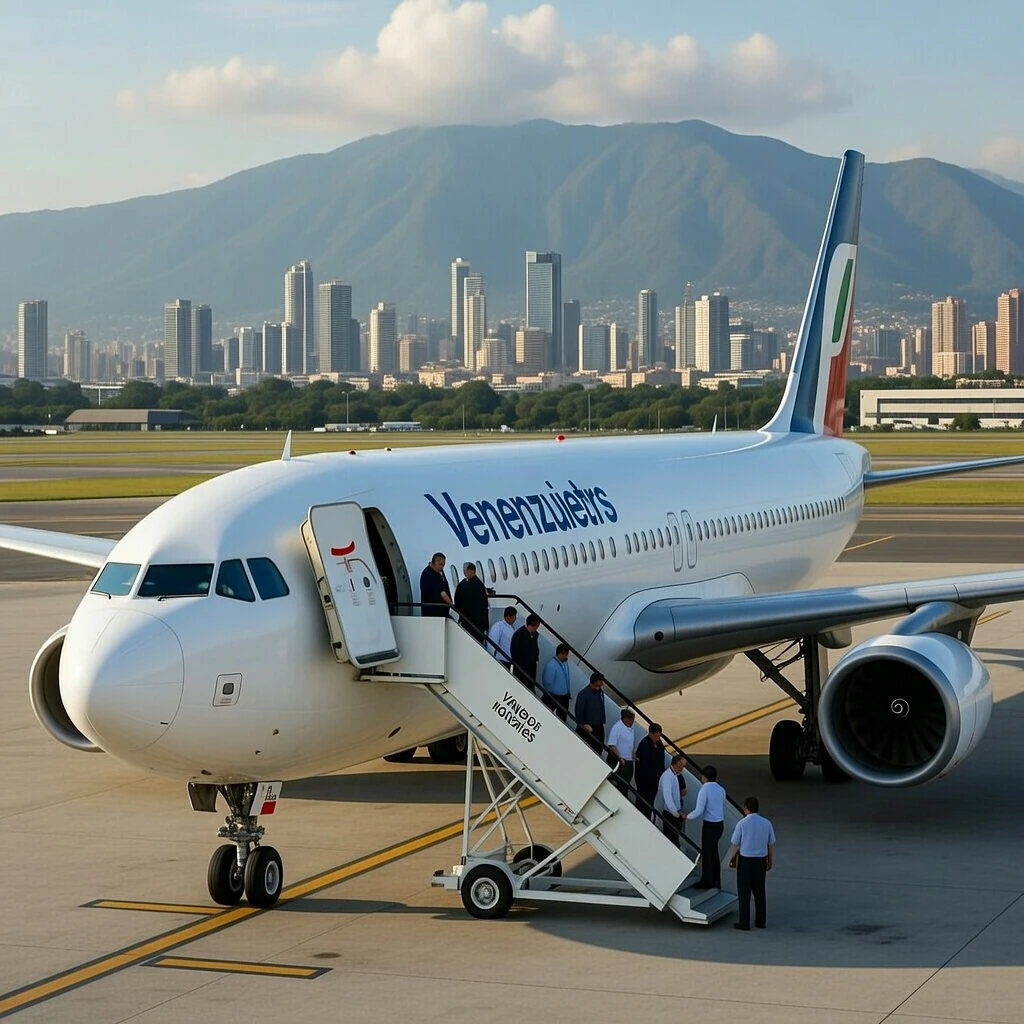
US Deports Venezuelans After Maduro Capture, Signaling America’s Healing by Grok is licensed under Grok xAI
US Deports Venezuelans After Maduro Capture, Signaling America’s Healing

Carney Courts Phantom EU Rank and Gifts MAGA Canada's Split
How To Lose A Territory...101 - The Revolutionary War Continues.

Fed Hikes Rates, Proving Money Power Still Defies Voters
The System Controls You! Dead Or Alive...

The United States Will Never Be an Effective Altruist Country
Real And Straight. Always. Try Your Weak Communism Elsewhere. Or Better Yet...Go To Hell!

First Woman Primate Honors Bin Laden’s Champion; Wife Erased Beside Him.
Clown World! - Dark Clowns!

Xi Hospital Rumor Exposes a China Unable to Succeed Him
Chicom Is Awhirl With Anticipation...Who Poisoned XI? Imagine Elaine And Mitch Together?? Sickening...

Saudi Warns Mecca a Red Line After Houthi Drone Intercepted
Turn The Place To Glass Already!!!

Patel Holds Senators for Hours, Declining Their Ritual Script
Sacred Cows?? I'll Show You The Real Shit! Says The Pajeet Patel! Truth Bombs Left And Right!

Anthropic Wants Woke Altruistic Communists Regulating Every Other AI Firm
Physiognomy, Politics And Psychosis + Liberal, Leftist And Losers = Bad For Humanity, Thus Slated For Termination By The AI. You'reTerminated!