A nation that cannot manufacture, mine, ship, or refine its needs gradually cedes its strength and sovereignty to others. Economic independence forms the bedrock of true national power. When a country relies on foreign entities for critical goods—ranging from semiconductors and pharmaceuticals to steel and energy—it introduces vulnerabilities into its supply chains. Disruptions, whether from geopolitical tensions, natural disasters, or deliberate trade manipulations, can paralyze industries and weaken defense capabilities. This dependency shifts leverage away from domestic policymakers toward international suppliers, eroding the ability to act autonomously in crises. History shows that empires and nations often declined not solely through military defeat but through the slow atrophy of their productive capacities, turning once-mighty powers into mere consumers beholden to others.
For any country, this erosion represents a dangerous dependency that compromises resilience and long-term stability. Mining and refining raw materials domestically ensures control over essential resources like rare earth elements, which power modern technologies from electric vehicles to military hardware. Manufacturing builds skilled workforces, fosters innovation, and creates multiplier effects across the economy. Shipping and logistics infrastructure maintains efficient internal distribution and global trade on favorable terms. Without these pillars, a nation risks hollowing out its industrial base, leading to unemployment in key sectors, technological lag, and heightened exposure to coercion. Nations that prioritize these capabilities can weather storms, pivot during conflicts, and dictate terms rather than accept them.
For the United States of America, such dependency is unacceptable given its unique global role and security obligations. As a superpower with far-flung alliances and interests, America must maintain the capacity to sustain itself and project strength without reliance on potential adversaries. Rebuilding robust domestic manufacturing, mining, refining, and shipping networks would enhance economic security, reduce trade imbalances, and safeguard strategic autonomy. This approach does not advocate isolationism but prudent self-reliance that underpins freedom of action. By investing in these foundational industries, the U.S. can secure its sovereignty, bolster its prosperity, and ensure that future generations inherit a nation capable of shaping its own destiny rather than having it shaped by others.
Additional ADNN Articles:
Trump: US Has Plenty Of Oil Without Hormuz Strait
Trump Repeals Obama’s Climate Hoax, Reviving Industry Against China
California Auditor Exposes $76B+ Fraud and Waste Under Newsom
May 15 Regime Change: Warsh Seizes Fed Throne from Powell

US Sovereignty at Risk Without Domestic Manufacturing Mining and Refining
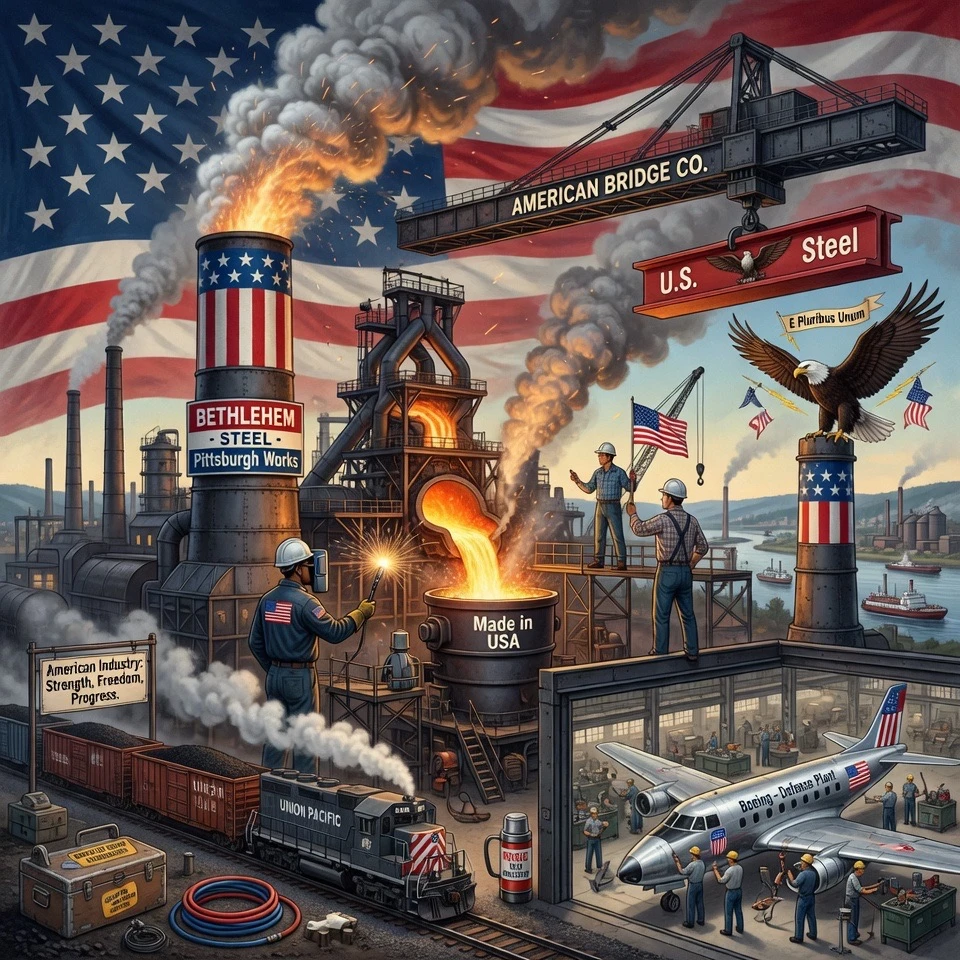
Us Sovereignty At Risk Without Domestic Manufacturing Mining And Refining by Grok is licensed under Grok xAI
US Sovereignty at Risk Without Domestic Manufacturing Mining and Refining

Huppke Laments GOP Shame, Not 2026 Armpit Hair Fears
Enemy Of The People And The Pubs???

Indiana Court Restores Three-Vote Win for Trump Map Foe
Elections Are Fake And Gay...So, Are These Judges. Clearly.
Trine University Is Not a Campus but a Visa Pipeline
Replacement Theory...Know The Stats and The Signs.

AI Coding Lacks Shared Practice and Mistakes Spectacle for Mastery
So...AI Is Fake And Gay Too? Probably...

Trump Backs United Ireland as London Learns About Getting Even
Inter-Christian Religious War Stopped By Jewish President! God Can't Save The King...This Time.

Bush Still Calls Islam Peace Twenty-Five Years After 9/11
All I Can Think About It Bush!

9/11 Mastermind Faces 2028 Trial After Decades of Costly Delay
Again...Imagine Being A CIA Informant, Paid By The CIA & On Top Of The World...Then One Day For No Reason At All You Find Your Ass In GITMO!

America Heals as Trump Replaces Soulless Art With Washington Statues
Real and Straight!