The recent trilateral gathering in China, where American, Russian, and Chinese principals sat down to survey the wreckage of a conflict that has already consumed five years and untold resources, appears to have clarified rather than confused the calculations in Brussels. While the great powers begin the hard work of measuring what can still be salvaged, the European Commission has chosen instead to announce a fresh plan to borrow another forty-five billion euros—roughly forty-nine billion dollars—to keep Ukraine’s treasury and war machine solvent through 2027. This is not the first such instrument. Nearly a year earlier, European leaders endorsed an interest-free package of ninety billion euros meant to cover most of Kyiv’s military and economic requirements for 2026 and 2027. The new tranche is therefore less a response to unforeseen catastrophe than an admission that the original arithmetic has already collapsed under the weight of intensified Russian strikes on energy and civilian infrastructure and the resulting disruptions to Black Sea trade.
What is striking is the absence of any corresponding demand that the recipient alter its strategic posture or that the lenders themselves reassess the viability of the enterprise they are underwriting. The Commission’s language treats the additional debt as a technical necessity rather than a political choice, as though the fiscal and industrial capacities of the European Union were inexhaustible and the patience of its taxpayers unlimited. Yet the pattern is now unmistakable: each round of intensified Russian pressure is met not with a recalibration of war aims but with another call upon European credit markets. The earlier ninety-billion-euro facility was itself presented as a bridge; the new forty-five-billion-euro proposal reveals that the bridge has no opposite bank in sight. European officials continue to frame the outlays as solidarity, yet the cumulative effect is to convert the Union into a permanent financial backstop for a war whose military and territorial outcomes remain unresolved after half a decade of fighting.
The deeper question is whether this open-ended commitment serves European interests or merely the institutional interests of those who have staked their credibility on the proposition that the conflict must continue until some unspecified settlement is achieved. The trilateral meeting in China at least acknowledged that the major powers have reasons to seek a framework for de-escalation; Brussels’s answer has been to enlarge the ledger. Interest-free loans still impose real costs—on debt markets, on future fiscal space, and on the credibility of European economic governance—while the Ukrainian state remains dependent on external financing for both its defense and its basic functioning. If the European Commission’s purpose is to prolong the war until external conditions change, the new borrowing plan is consistent with that aim. If the purpose is to secure a durable peace on terms that protect European security and prosperity, the repeated resort to additional debt without a corresponding strategy suggests that the former objective has quietly displaced the latter.
Additional ADNN Articles:
Symbolic House Vote Melts 8 Billion More into Zelensky Black Hole
Ukraine Strikes Druzhba Pipeline Again, Halting Hungary’s Oil Supply in Escalating Energy War
Zelensky Defies Trump, Resumes Refinery Strikes as America First Demands End
After 200 Years Of Attempted Conquest European Powers Shut Out Of Ukraine Future

After Talks in China Europe Borrows More to Extend Ukraine War
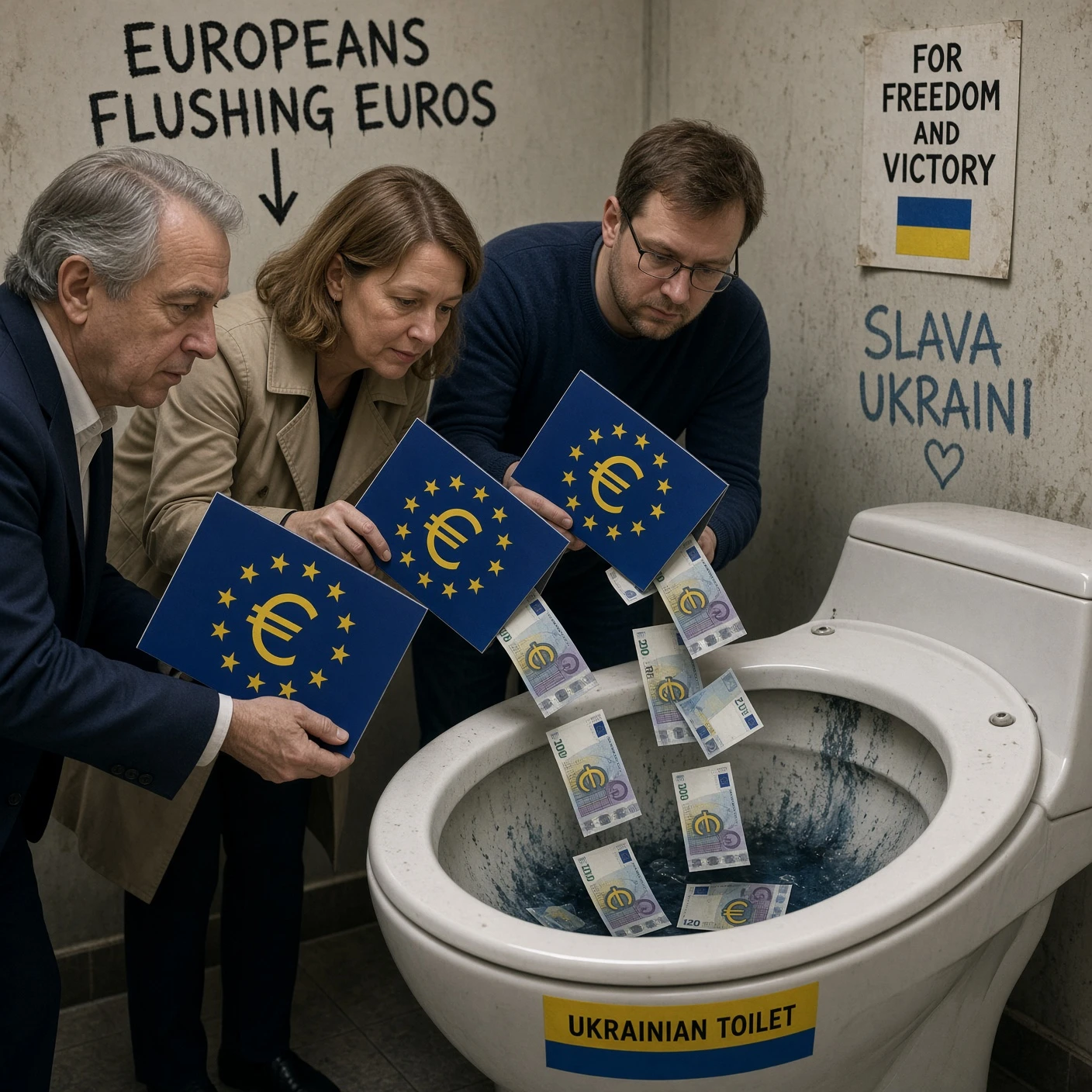
After Talks In China Europe Borrows More To Extend Ukraine War by Grok is licensed under Grok xAI
|
After Talks in China Europe Borrows More to Extend Ukraine War

Anthropic’s Record IPO Echoes Zardoz’s Sterile, AI-Ruled Elite
"Zardoz speaks to you...The penis is evil. The gun is good. You are not allowed to die! Zardoz is pleased"
Elections Over Senate Drops Green Talk for Faster Energy Permits
Fuck A Duck...TIme To Make A Buck!
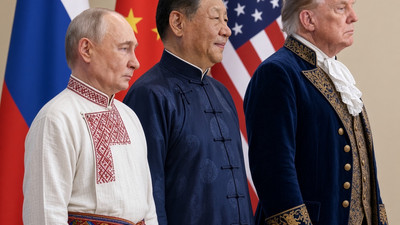
Trump Alone Unites Xi and Putin on Reform, Fuel, Nuclear Risks
New. World. Order.
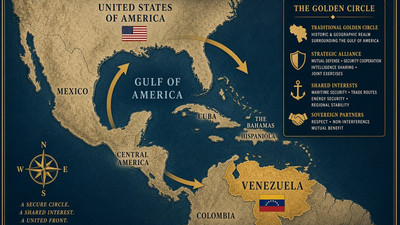
Hegseth Forges Close Alliance With Venezuela for Golden Circle Defence
The Vortex Of The Donroe Doctrine - Circle Up!

Gas Prices Hit Eight-Month Low After Election; Markets, Not Manipulation, Drove Decline
What Are The Coincidences???

Young Men Blast GTA 6 Cucked Romance and Club Protections
Rock Star Games...More Like Woke Star Games. Losers...
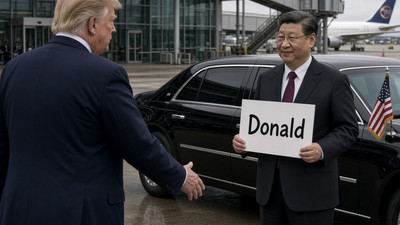
Xi’s Rare Airport Greeting Affirms Restored American Strength Under Trump
Meet You At The Gate! Like The Good Ole' Days!