Democrats have initiated tentative discussions with the White House over their calls for substantial curbs on President Donald Trump’s aggressive immigration enforcement efforts, as the Department of Homeland Security (DHS) faces a funding deadline on February 13, 2026. These negotiations follow Democrats’ decision to decouple DHS appropriations from a broader spending package, granting only a two-week extension amid outrage over recent enforcement actions, including the fatal shootings of two U.S. citizens in Minneapolis. Their approximately 10 demands include requiring body cameras, banning masks for agents, stricter warrant rules, and clearer identification protocols to enhance accountability. However, this push appears largely performative, as Republicans view the proposals as “fatally flawed” and obstructive to effective border security, with figures like Senator Lindsey Graham dismissing them outright while pledging to force a vote to highlight their weaknesses.
With Republicans controlling both chambers of Congress and the White House emphasizing that President Trump is the “ultimate decider” in these matters, Democrats’ leverage is limited despite their ability to filibuster in the Senate. The talks have seen counteroffers from the administration, but GOP leaders like Senate Majority Leader John Thune and Speaker Mike Johnson show little inclination to yield, framing the Democratic demands as political posturing that hinders national security priorities. In this context, the negotiations seem more like theater, with Democrats backed into a corner where their only real paths are either triggering a partial shutdown—which could backfire politically ahead of midterms—or conceding to Trump’s agenda without meaningful concessions.
As the deadline approaches, the impasse underscores the power imbalance, with Republican negotiators like Senator Katie Britt urging an end to posturing and White House-driven decisions likely to prevail. Analysts suggest that while Democrats are united in their reform push, the reality of GOP dominance and Trump’s firm stance on immigration enforcement leaves them with scant options beyond symbolic resistance. Ultimately, this episode highlights how Democrats’ efforts may amount to little more than an act, compelled to either shut down DHS operations or surrender to the administration’s crackdown to avoid broader fallout.
Additional ADNN Articles:

Democrats Demand Curbs on Trump Immigration, But It’s All Theater

Democrats Demand Curbs on Trump Immigration, But It’s All Theater by Grok is licensed under Grok xAI
Democrats Demand Curbs on Trump Immigration, But It’s All Theater
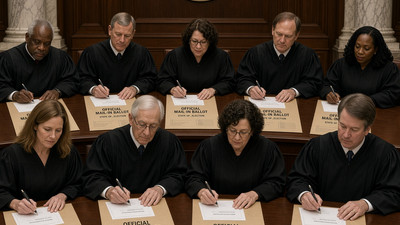
Court Blocks Mail Ballot Screens as Midterm Ballots Fly Unchecked
Elections Are Fake And Gay!

Trump Calls AI Apocalypse a Hoax, Heralds Golden Age Ahead
Calling Bullshit On The Nerds! And No More Global Resets!

EPA Withdraws Biden Carbon Rules That Forced Plants To Close
Clean Air & Clean Water...Clean House On Everything Else!





Palantir’s Twenty-Two Points: Hard Power for the Machine Age
Hubris? Or Humility? Humming Away Won't Solve It. Time To Pay The Piper! The Future Is Now!