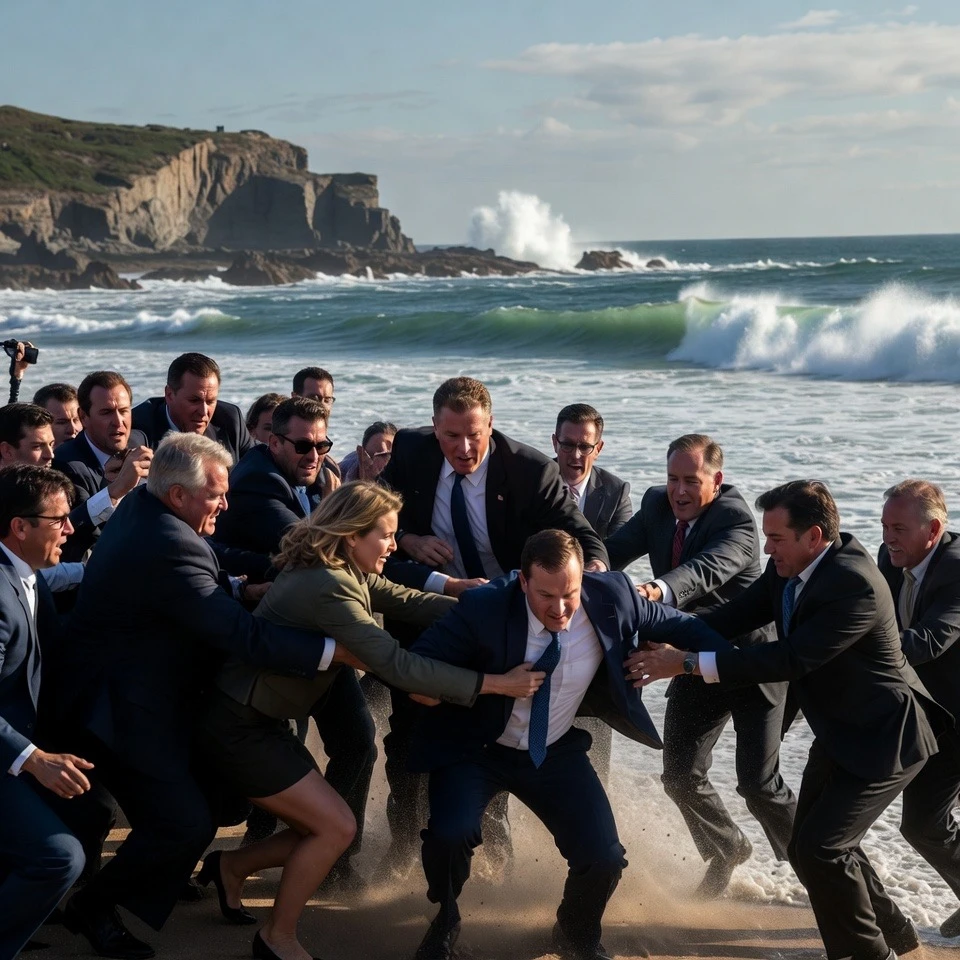
The recent succession of Lindsey Graham’s sister to his Senate seat, effected through gubernatorial appointment under long-standing vacancy statutes, has been greeted in some quarters as a de facto restoration of the older constitutional order the Seventeenth Amendment displaced. That amendment, ratified in 1913, transferred the election of senators from state legislatures to popular vote, ostensibly to purify the upper chamber of machine influence. In practice it created a class of professional politicians answerable chiefly to national media, donor networks, and the permanent bureaucracy rather than to the sovereign states that created the Union. When a vacancy occurs, the temporary appointment power retained by the states briefly reasserts the original design; the Graham succession simply made the anomaly visible. It is not repeal, yet it is a reminder that the people never fully surrendered the older mechanism.
In Maine the spectacle is more instructive still. Graham Platner, having prevailed in the primary, was driven from the field by a coordinated campaign of allegation and amplification that the party’s own apparatus then converted into an opportunity. Leadership installed former State Senate President Troy Jackson, a familiar figure from the legislative ranks, in his place. The episode illustrates how primary victories have become provisional when they inconvenience the permanent cadre. Voters are invited to ratify a choice already made by insiders; the forms of democracy are preserved while its substance is quietly redirected. Such substitutions breed a rational cynicism: if the party can discard the people’s preferred candidate and install a reliable operator, the act of voting itself begins to look ornamental.
The larger question, therefore, is not merely procedural but constitutional in the deepest sense. When senators are selected by popular vote yet remain subject to elite override, or when vacancies are filled by familial continuity under residual state authority, the electorate is left to wonder what residual power it actually exercises. The Seventeenth Amendment was sold as democratic reform; a century later its practical effects include both the insulation of a national political class and the occasional, almost accidental, reassertion of older state prerogatives. Americans noticing the discrepancy are not mistaken. They are simply observing that the forms of popular sovereignty and the reality of elite management have drifted further apart than the civics textbooks allow.
Additional ADNN Articles:
Graham Platner Fraud Gift to Republicans Keeps Susan Collins Senator
Platner Exit Forces Democrats to Impose Unwanted Pick on Marxist Base
Democrats Ruthlessly Abandon Their Scandal-Plagued Senate Nominee Graham Platner
Senate Trash Pile: Graham’s Sister Sworn In Over Ambitious Lifers

Elite Overrides Expose Limits of Popular Sovereignty in Senate
Elite Overrides Expose Limits of Popular Sovereignty in Senate

Ukraine’s Swarm Hits Moscow Refinery as Russia Warns Retaliation
World War Three, Anyone?
Iran Issues Code 100 as Trump and Netanyahu Rush Home
Turn Up The Volume!

Trump Forms AI Force and Czar; Will Not Stifle Industry
May The Force Be With You! Superior Intelligence Is The New AI!
No First Amendment Right To A Seat In West Wing
Mockingbird Press Pissed At Being Locked Out As They Are The "Deep-State-Run-Media" - The Propaganda Arm Of The Intelligence Community Driving Mind Control - Fucking Commies! God To Hell You Sickos!

Trump Secures Infinite Life Greenland Pact Barring China, Russia
Make America Greenland Again - Orangeman Wins Again! God Bless The Red, White And Blue!
Trump Posts Twenty-Five Term-Three Wins No Predecessor Matched
MAGA? Maybe...Let's See What Is Next.
Assange Returns on Constitution Day as the Storm Breaks Worldwide
Trust The Plan? Who The Fuck Are The Planners Of The Plan? Its A Mystery To Us!

Sydney Sweeney’s Playful Ad Rebukes Hypocritical Athletes and Woke Scolds
Tits And Ass Sells. Thank God!