For nine years the permanent administrative class and its media auxiliaries treated the anonymous Q drops as nothing more than an elaborate LARP—an internet game invented by bored anons to entertain themselves while the real machinery of government continued undisturbed. They were wrong about the nature of the contest. The drops did not need to be literal intelligence briefings to function as a diagnostic instrument; they exposed the gap between the official narrative and the accumulating pattern of institutional failure, elite immunity, and strategic retreat that Michael Anton diagnosed in the Flight 93 essay and that Christopher Caldwell traced to the post-1965 transformation of the American order. When every prediction of mass arrests failed to materialize on the predicted timetable, the establishment declared the entire exercise discredited. What they refused to register was the more durable observation the drops repeatedly made: the people who actually run the permanent government had come to regard the electorate as a problem to be managed rather than a principal to be served.
That refusal is now colliding with the language of the present White House. Official accounts have begun to recycle the very phrases the drops popularized—“Patriots are still in control,” “No Panicans,” “We’ve only just begun”—not as coded verification of every 2017–2022 post, but as a deliberate public signal that the old managerial consensus no longer sets the terms of discussion. The distinction matters. The original drops were the work of an anonymous figure or figures operating outside the institutions; the current posts are the product of people who have captured those institutions and are now using their own channels to reframe the contest. The establishment spent nearly a decade insisting that any citizen who noticed the pattern was either deluded or dangerous. It did not expect those same citizens to watch the White House itself adopt the vocabulary of resistance once the political weather changed.
What has changed is not the sudden authenticity of every drop, but the balance of institutional power. The administrative state that treated skepticism as pathology now finds itself answering to an executive that treats the same skepticism as a political resource. Caldwell’s account of how elite projects gradually detached themselves from popular consent supplies the longer background; Anton’s warning that the 2016 election was a last chance to arrest the slide supplies the immediate stakes. In that light the White House’s present phrasing is less a confirmation of any particular Q prediction than an acknowledgment that the people who were told for nine years to stop asking questions are no longer willing to accept the old answers. The permanent government still exists. It is no longer the only government.
Additional ADNN Articles:
Q Signals Expose Eight-Year Media Hypocrisy on Alleged Domestic Threat
Hegseth Signals Patriots Have Reclaimed Command of the American Military
Department of War Declares: Trust The Plan, Patriots—The Storm Comes
Trump Welcomes Rodeo Champs, Dons White Hat Nodding to QAnon

Establishment Called Q a LARP; White House Now Speaks the Same Tongue
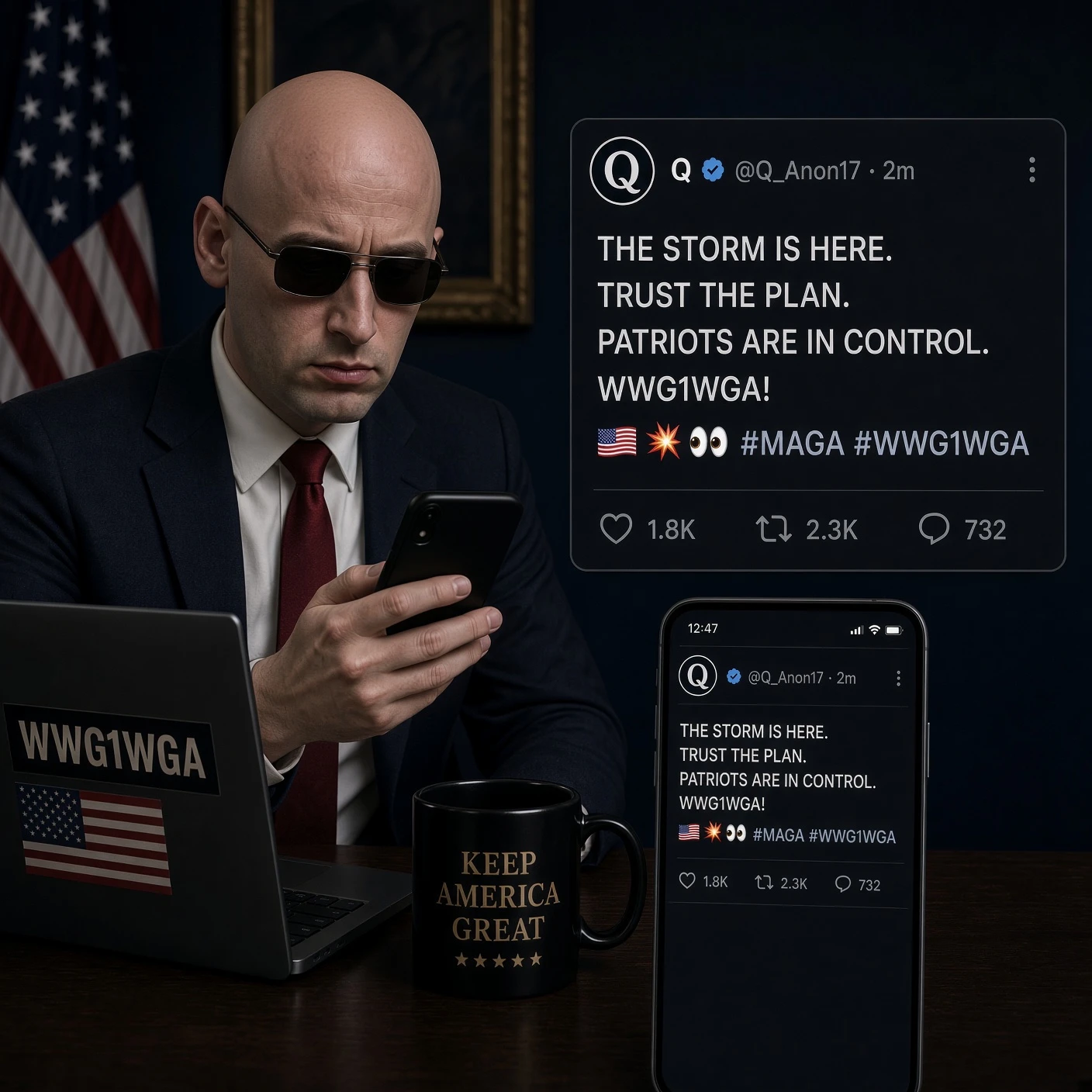
Establishment Called Q A Larp White House Now Speaks The Same Tongue by Grok is licensed under Grok xAI
|
Establishment Called Q a LARP; White House Now Speaks the Same Tongue

Veterans Day: Hegseth Blocks Campaign to Cow Troops into Silence
Hug A Veteran, Thank The Troops! Defeat Enemies - Both Foreign And Domestic! God Bless America!

All 254 Texas Counties Shift Left in Impossible Midterm Reversal
Fake And Gay...As Always.
Dave Chappelle Admits Feeling Better After Charlie Kirk Assassination
Who Says Comedy Is Dead? Fake Chappelle Continues To Steal Jokes! What Else Is A Nigger To Do?
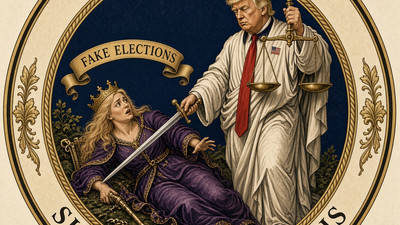
Trump Warns Midterm Math Fails as Virginia Rolls Exceed Citizens
"SIC SEMPER TYRANNIS" - Goes For CIA Bitches Too! Elections Are Fake & Gay!
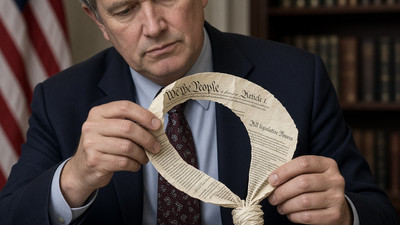
Massie Forces Vote Treating Constitution as National Suicide Pact
Lame? Lame Duck? How About Lame Fuck!!!

Election Ends Oil Psyop as Tankers Still Burn in Hormuz
Down Goes Oil! Up Goes Spoil! Mind Control Is Everywhere!

Supreme Court Restores Trump’s Border Wall Work in Texas Big Bend
Promise Made, Promises Kept...Even If Texans And A DEI Hire Hate It.

Americans Reject Endless Compromises for Broken Immigration System
The System Is Broken...Now What? Time To Deport! Don't Stop....Just Say You'll Stop And Go Right Ahead.