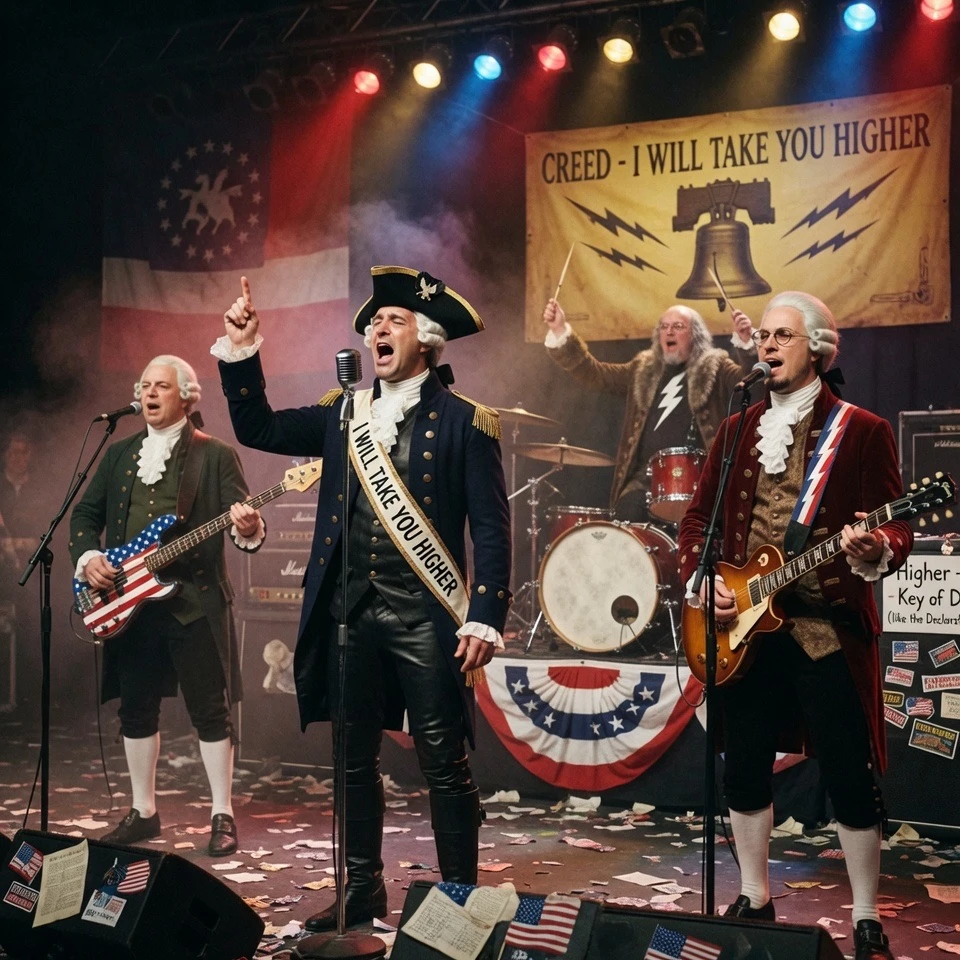
In a recent interview promoting his children’s book on the Declaration of Independence, Justice Neil Gorsuch declared, “Our nation is not founded on a religion. It’s not based on a common culture, even, or heritage. … We’re a creedal nation.” This statement, framing America solely as a set of abstract ideas drawn from the Declaration—equality, inalienable rights, and self-rule—directly contradicts the words of the Founders themselves. Figures like John Adams, George Washington, and James Madison repeatedly invoked the necessity of religious morality, particularly Protestant Christianity, as the bedrock of republican virtue, alongside a shared Anglo-American cultural and legal heritage rooted in English common law and the experiences of a specific people. The Founders did not envision a deracinated “creed” open to anyone subscribing to propositions; they spoke of a nation built by and for a particular stock with inherited traditions. By rejecting this, Gorsuch reveals he does not actually believe the Founders’ own expressed understanding of what they were creating, undermining the very foundation of originalism, which claims to honor the public meaning of constitutional text as understood by those who ratified it.
This creedal-nation rhetoric also exposes Gorsuch’s selective fidelity when it comes to the original meaning of the Fourteenth Amendment. Ratified in 1868 to secure the rights of freed slaves within the existing constitutional order, the Amendment’s text and history reflect the era’s understanding of citizenship, due process, and equal protection as applied to a nation still defined by its cultural and historical particularities—not an open-ended invitation to redefine America as a pure proposition detached from heritage. Yet Gorsuch’s broader jurisprudence and public commentary treat these provisions as vehicles for a universalist creed that the Amendment’s framers, fresh from the Civil War, never contemplated as erasing the nation’s rooted identity. If originalism demands fidelity to the ratifiers’ intent and the public meaning at the time, then dismissing the Fourteenth Amendment’s grounding in a specific people’s post-war settlement—as Gorsuch’s creedal framing implicitly does—renders the methodology hollow. It becomes a tool for results-oriented reasoning rather than historical constraint.
Ultimately, what is originalist about defending a progressive view forged in the 1960s? Gorsuch’s landmark opinion in Bostock v. Clayton County stretched the 1964 Civil Rights Act’s prohibition on discrimination “because of sex” to cover sexual orientation and gender identity, a reading that no one in 1964 would have recognized and that critics across the ideological spectrum have slammed as living-constitutionalist activism dressed in textualist clothing. Pairing this with his creedal-nation pronouncements shows the game: originalism is invoked selectively when it suits conservative outcomes but abandoned when it conflicts with modern egalitarian orthodoxies. If a sitting Supreme Court justice who styles himself the archetype of originalism can jettison the Founders’ words, ignore the Fourteenth Amendment’s historical limits, and retrofit 1960s-era progressive victories onto older texts, then originalism reveals itself as little more than a rhetorical joke—a flexible philosophy that bends to the prevailing cultural winds rather than anchoring judges to the Constitution as written and understood by the people who enacted it.
Additional ADNN Articles:

Gorsuch’s Creedal Nation Claim Proves Originalism Is a Joke
Gorsuch’s Creedal Nation Claim Proves Originalism Is a Joke
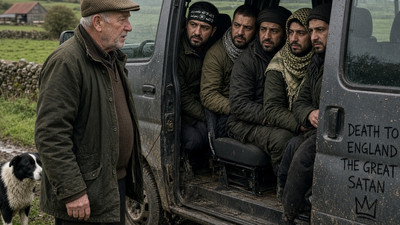
Farmer’s Call Forces Rearrest of Five Over Fairford Plot
Arrest Them All!


You Built Pattern Recognition. What Did You Expect Would Happen?
Racism Is Real...Not Artificial.
USC Celebrates Illegal Hit on Top Prospect Dante Moore
Gridiron Games...

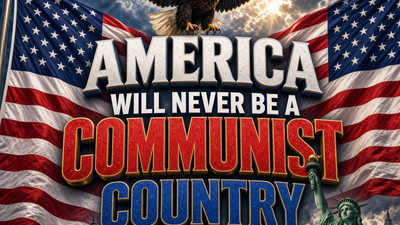
America Will Never Be Communist Because the Soil Refuses It
Commies Out! Better Dead Than Red!
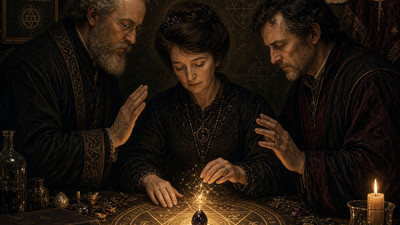
Sanger Was Ellis’s Proxy as Inversion Became Planned Parenthood Doctrine
Kill Kill Hate Hate Murder Murder Mutilate. These Sickos Have Done Real Damage!