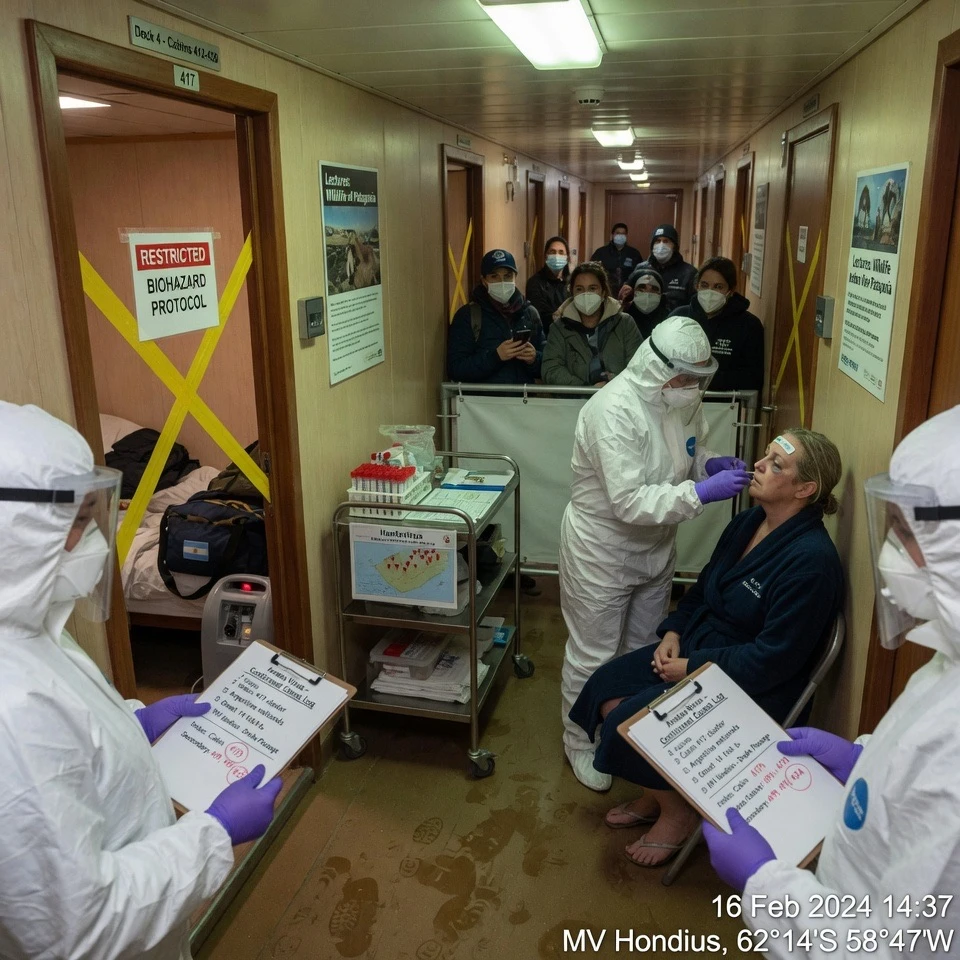
Where the situations diverge sharply is scale, novelty, and transmissibility. Early COVID involved a novel coronavirus with efficient person-to-person spread that rapidly escaped containment, leading to exponential global cases before full understanding. Hantavirus here is neither novel nor highly contagious; U.S. domestic strains have never shown human-to-human transmission at all, and even Andes virus cases historically number in the low hundreds over decades, mostly rodent-linked with isolated close-contact clusters in South America. No widespread monitoring beyond standard follow-up for a handful of returning U.S. passengers in states like Georgia, California, and Arizona; annual U.S. hantavirus cases hover around 30, almost all rural and rodent-related. Unlike COVID’s early “PCR-driven fear machine” that justified lockdowns based on high cycle-threshold positives and unproven asymptomatic spread assumptions, officials here stress targeted precautions without calls for travel bans or panic. The outbreak unfolded over weeks on a remote itinerary, with initial symptoms possibly tied to pre-boarding rodent exposure in Argentina or Chile, not a mystery pathogen igniting worldwide.
Some online voices aligned with America First priorities and Trump supporters have framed this as the opening salvo of a potential second psyop—warning that WHO and public-health institutions could inflate the incident using familiar PCR testing and outbreak rhetoric to revive fear narratives, disrupt travel, or undermine Trump’s post-election agenda much as COVID policies did during his first term. Patriots and skeptics are pushing back hard on social media, highlighting the virus’s rarity, the absence of efficient transmission, and the lack of any political motivation in the data, urging vigilance against overreach rather than blind compliance. They point to the contained nature of the event and experts’ explicit statements (“not the next COVID”) as proof that calm, evidence-based responses—not manufactured crises—should guide policy. Whether this vigilance prevents escalation into broader restrictions remains to be seen, but the focus is on protecting American interests from any repeat of 2020-style disruptions.
Additional ADNN Articles:
- Cicada COVID Variant Resurfaces as Psyop Diversion
- Ex-CDC Chief Redfield Demands Immediate Pull of mRNA COVID Vaccines
- CDC Leadership Failures: Botched COVID Response, Political Interference and Staff Turmoil Cripple Infectious Disease Prevention
- EU Commission Admits mRNA COVID Vaccines Rolled Out Without Full Safety Data, Igniting Calls for Accountability