In a recent federal court decision, U.S. District Judge Colleen Kollar-Kotelly permanently blocked key provisions of President Donald Trump’s executive order that sought to mandate documentary proof of citizenship for voter registration in national elections. The ruling, issued in late January 2026, determined that the executive branch overstepped its constitutional authority by attempting to unilaterally alter federal election procedures, which are primarily the domain of Congress and the states. This action was seen by supporters of the order as a blow to efforts aimed at enhancing election security, while critics argued it prevented unnecessary barriers to voting. The judge’s opinion emphasized that existing laws already require voters to affirm citizenship under penalty of perjury, rendering the additional requirements redundant and potentially burdensome.
The executive order in question, titled “Preserving and Protecting the Integrity of American Elections,” was signed by Trump in 2025 amid ongoing debates about voter integrity and non-citizen participation in elections. It aimed to require items like passports or birth certificates for federal voter registration forms, a move challenged by multiple lawsuits from voting rights groups, including the League of Women Voters and the ACLU. These organizations contended that the order violated separation of powers and could disenfranchise eligible voters who lack easy access to such documents. Judge Kollar-Kotelly, appointed by President Bill Clinton, had previously issued a preliminary injunction, and her final ruling echoed concerns about executive overreach, though it did not invalidate the entire order.
This judicial outcome has intensified calls from some Republican lawmakers to advance legislative measures like the Safeguard American Voter Eligibility (SAVE) Act, which proposes similar proof-of-citizenship requirements through congressional action rather than executive fiat. Proponents argue that such laws are essential to prevent potential fraud, while opponents highlight studies showing non-citizen voting is exceedingly rare and warn of discriminatory impacts. The ruling underscores the ongoing tension between election security initiatives and voting access protections, potentially influencing future policy debates as the 2026 midterms approach. Meanwhile, discussions of impeaching the judge reflect heightened political rhetoric, though judicial impeachment is rare and typically reserved for misconduct rather than unpopular rulings.

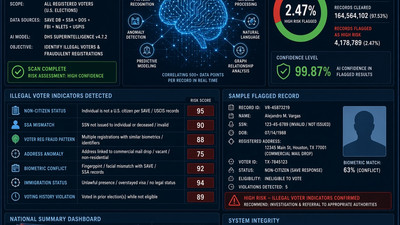
Judge Overturns Trump’s Citizenship Voting Requirement: Impeach Now, Pass SAVE!

Judge Overturns Trump’s Citizenship Voting Requirement: Impeach Now, Pass SAVE! by Grok is licensed under Grok xAI
Judge Overturns Trump’s Citizenship Voting Requirement: Impeach Now, Pass SAVE!

Harvard’s Own AI Tutor Doubles Learning, Exposes Classroom Bubble
Principles Over Personalities...

Farmer’s Call Forces Rearrest of Five Over Fairford Plot
Arrest Them All!


You Built Pattern Recognition. What Did You Expect Would Happen?
Racism Is Real...Not Artificial.

USC Celebrates Illegal Hit on Top Prospect Dante Moore
Gridiron Games...

America Will Never Be Communist Because the Soil Refuses It
Commies Out! Better Dead Than Red!

Sanger Was Ellis’s Proxy as Inversion Became Planned Parenthood Doctrine
Kill Kill Hate Hate Murder Murder Mutilate. These Sickos Have Done Real Damage!