They gathered on their own recordings as if the cameras were not running and the microphones had been switched off, a conclave of retired admirals, former USAID hands, and the professional organizers of street theater. What they discussed was not a grievance to be aired in the ordinary channels of a republic, but a set of red lines under which the government of the United States could be declared illegitimate. The invocation of the Insurrection Act against protesters they themselves had helped to stage, the refusal of governors to accept federal authority, the coordination of networks already practiced in the gentle arts of color revolution abroad: these were the contingencies they itemized, the thresholds at which the elected government would cease, in their estimation, to command obedience. One listens in vain for any corresponding recognition that the same government had been returned to office by the same electorate that had earlier installed their preferred candidates, or that the instruments they now treat as disposable were once the very tools by which they claimed to measure legitimacy overseas.
The irony is not subtle. These are the people who spent years assuring the public that any questioning of administrative prerogative, any reduction of foreign-aid bureaucracies, any reluctance to treat protest as a form of sovereign veto, constituted a threat to democracy itself. Yet here they are, in closed session, mapping the precise conditions under which that democracy may be set aside. The retired flag officers who once swore to support and defend the Constitution now appear to treat its ordinary operation as provisional, subject to the continuing consent of an interlocking set of nonprofits, former officials, and activist cadres. The former aid administrators who once measured the health of distant polities by their deference to international norms now apply a sharper standard at home: almost any effective check on their preferred organizations registers as proof that the regime has crossed into illegitimacy. What is offered as the defense of democracy is, on the evidence of their own words, the assertion of a residual right to nullify its outcomes.
The deeper trouble is not the existence of disagreement, which a free people may always entertain, but the quiet institutionalization of a parallel authority. A permanent administrative class, joined to networks of professional protest and former national-security personnel, has come to regard its own judgments as the true measure of constitutional fidelity. When those judgments are disappointed, the remedy is not argument or election but the pre-arranged declaration that the government has forfeited its claim to rule. The recordings do not reveal a conspiracy in the melodramatic sense; they reveal something more ordinary and more corrosive, the settled conviction of a self-appointed guardianship that the people may be trusted with power only so long as they do not use it to dismiss the guardians. That is the opposite of republican government, and no amount of retrospective rhetoric about protecting democracy can alter the plain meaning of the planning.
Additional ADNN Articles:
USAID Defunded: 7 “Far-Right” Latin Wins Expose Aid Myth
Hegseth’s 10-Point Plan: Military to Crush Antifa and Cartels, Axes DEI, Boosts Lethal Ops
O’Keefe Exposes NJ Antifa Network in Institutions and Chats
USAID’s end bankrupted the clients and restored the country.

Retired Admirals and Bureaucrats Caught Defining When America Is Illegitimate
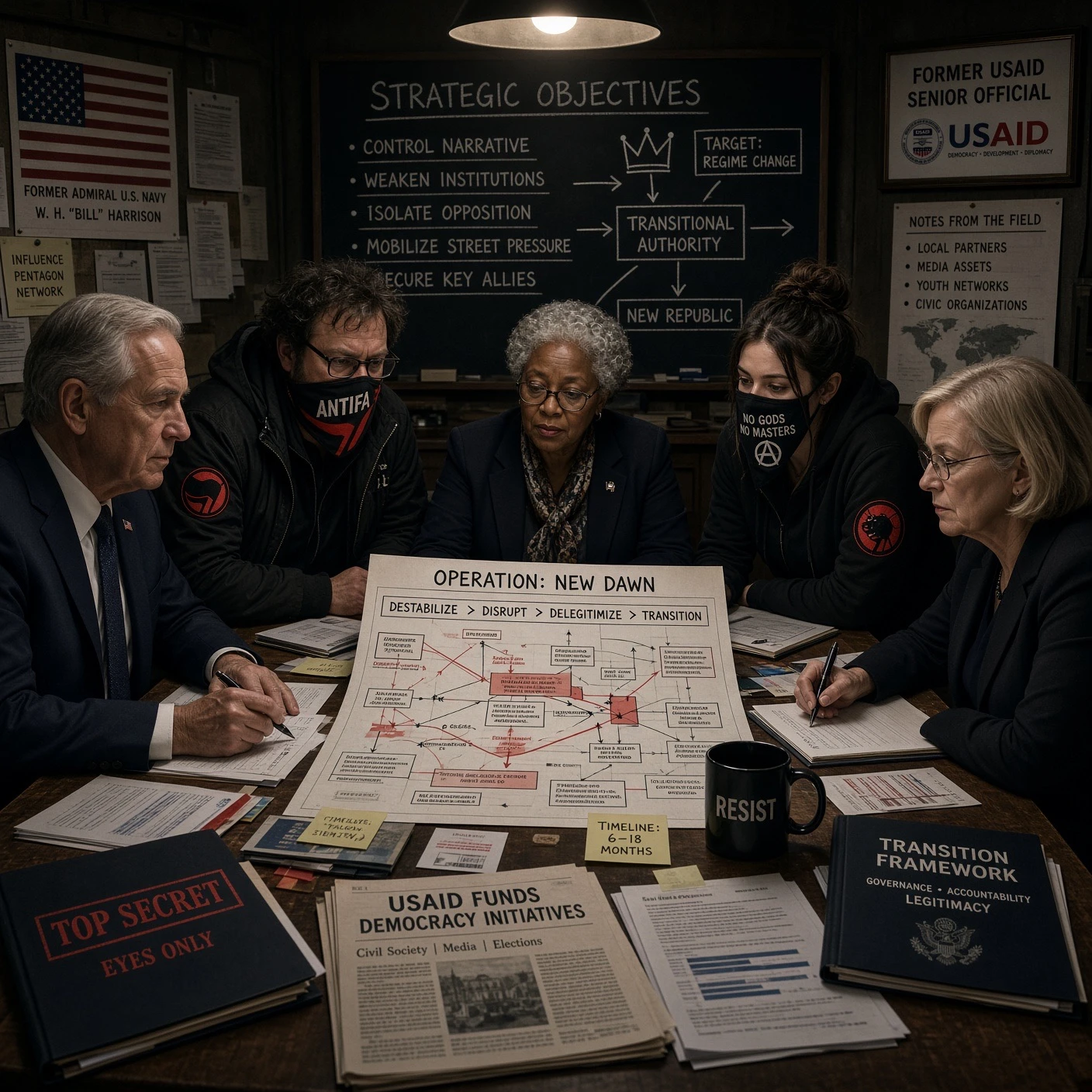
Retired Admirals And Bureaucrats Caught Defining When America Is Illegitimate by Grok is licensed under Grok xAI
Retired Admirals and Bureaucrats Caught Defining When America Is Illegitimate

White House Reveals Middle Class Paid Half Life for Fraudsters
Fraud Is Real! Justice Is Coming...Trust Trump!

Europe’s Women Cradle Dogs Where Their Aborted Children Should Be
European Irony...Can't Live With 'Em, Can't Kill 'Em And Can't Reproduce With 'Em.

Descendants of Redskins Logo Chief Demand Trump Restore the Name
Hail To The Redskins! Hail Trump! Hail Redskin Nation! Heal America!
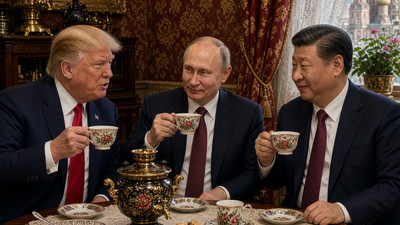
Trump Defies Captured Senate, Prioritizes Peace and Trade With Russia
Dictate This! Congress Is Feckless, Weak And Whacked! Trump Is In Charge! We Think...Who Knows??? Aliens, Simulation, Fate?
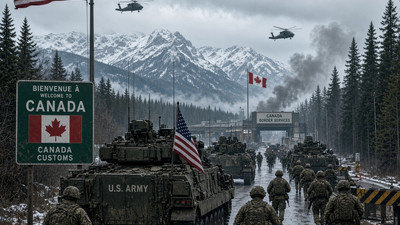
Alberta Remains Canadian, Forcing Full Scale American Invasion and Annexation
The War Of Southern Aggression Is Coming! Prepare Thyself!
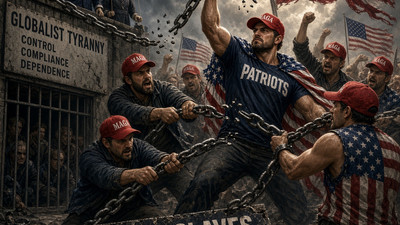
Nationalist Compact Replaces Debt Slavery as Senate Fate Decides Shift
Set Yourself Free!
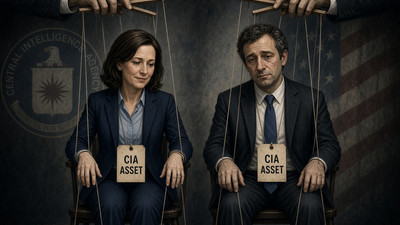
Former CIA Governor Installs Soros Operative in Virginia Congress Seat
White Hats Vs. Black Hats...Spy War Continues. Question Is Who They Really Working For? Time Will Tell!

Louis Alphonse Offers Throne as Fifth Republic Collapses Amid Unrest
Will To Power! Divine And Definite!