
You’ve seen the clip, the one that circulates with a grim regularity these days. A young Frenchwoman stands in the street of her own capital, voice breaking, hands raised as if she can reason with the men smashing what remains of the neighborhood around her. She asks them why they are doing this. She tells them it is not what they stand for. The mockery arrives almost at once, and it is not wholly without point. She and millions like her helped place the people now governing the country in power, and those people have spent years explaining that the borders must remain open, the rules must remain unenforced, and the resulting disorder must be met with understanding rather than force. Still, the look on her face is not the look of a simpleton who has been caught out. It is the look of a person whose deepest instincts have been turned against the very conditions that allow her to live as she does.
That condition has a name. Gad Saad, the evolutionary psychologist who left Lebanon as a boy when the civil war made ordinary life impossible, calls it suicidal empathy. Empathy itself is not the enemy. It is an old and useful faculty, shaped for the small circle in which a person could actually know who was kin, who was neighbor, and who was a threat to both. It bound parents to children and bands of men to one another when resources were scarce and outsiders were not abstractions. The trouble begins when the same faculty is cut loose from its original limits and directed, without remainder, at whoever presents the most vivid claim on it. The criminal becomes more vivid than the person he has robbed. The stranger who arrives without papers becomes more vivid than the citizen whose wages, schools, and streets are altered by his arrival. The public performance of concern becomes more vivid than the measurable results of that concern.
What follows is not a failure of intelligence but a systematic misfiring of a trait that once protected the group. A society can survive a certain amount of ordinary selfishness. It cannot survive a ruling disposition that treats the defense of its own continuity as a moral failing. Saad’s argument, developed across The Parasitic Mind and now carried forward in Suicidal Empathy, is that the West has trained itself to experience this inversion as kindness. The woman in the street is not lying when she says the looters do not represent what she stands for. She is simply discovering, too late and in the wrong place, that the people who trained her to feel this way never intended the feeling to be tested against the facts.
Additional ADNN Articles:
Amazon “Burns” Camp of the Saints Over Immigration Truths
Liberal Women Inflict Cluster B Society On America
New IRA Civil War Threat Proves Melting Pot Makes Groypers
Disney Morality Fuels Third-Worldism: Feelings Trump Facts, Mobs Fade to Bureaucratic Sludge

Suicidal Empathy: The West’s Kindness Turned Against Its Own
Suicidal Empathy: The West’s Kindness Turned Against Its Own
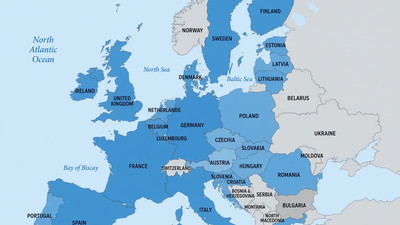
The Same Governing Class Imposed Open Borders Everywhere, Then Lied.
Conspiracy Reality!

Limoges Town Hall Burns After Decades of Ignored Assimilation Warnings
France Must Find The Will To Live! Vive La France!

Slotkin’s Prosecutions Aim to Drive Conservatives From Public Life
Fear And Loathing In America! These Sickos Must Be Stopped!

Trump Names Mohammed El-Sayed, Citing Brotherhood Ties in Michigan Race
Elections Are Fake And Gay...And Guess What...So Is Mohammed!
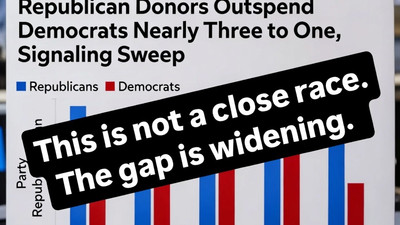
Republican Donors Outspend Democrats Nearly Three to One, Signaling Sweep
Elections Are Fake And Gay...But Maybe, Just Maybe We Are Healing! Time Will Tell...


Population Genetics Validates Early Racial Observations Modern Anthropology Long Denied
The Urantia Book Might Be Most Accurate...That Or It Is A Simulation! Don't Chimp Out!

Armed citizen stops Oregon school shooter after four killed.
MK Ultra And Beyond...Beyond All Reality, Until It Is Not! 2A Is Reality.