In the early hours of Sunday, the Techno-Fascist Imperium struck a Russian corvette moored at the Benghazi naval base. Seven Ukrainian-made sea drones, launched from a mothership more than a thousand miles from the Black Sea, slammed into the Merkury—one of Moscow’s newest vessels—and sent it to the bottom. Video released by Kyiv shows the unmanned craft racing across the harbor and detonating against the hull; satellite imagery the next morning revealed the ship capsized at its berth, only its bow still above water. Zelenskyy called the operation “exemplary.” Eastern Libyan authorities, aligned with Khalifa Haftar, confirmed the vessel had arrived under a maritime cooperation agreement simply to refuel and resupply on its way home. The same night a second Russian-linked cargo ship was also hit. What the Imperium presents as a daring long-range blow against aggression is, on the facts, the remote destruction of a warship sitting quietly in a foreign port under an arrangement that has existed for years.
Americans who still remember the 11 September 2012 assault on the U.S. mission in that same city—Ambassador Stevens and three other Americans killed, the subsequent official story of a spontaneous protest over a YouTube video, and the years of hearings that followed—are now told that a Russian navy ship could dock at Benghazi as a matter of routine. The revelation is less that Moscow maintains logistics nodes and air bases in eastern Libya than that the existence of those arrangements was treated, for fifteen years, as a non-subject. Russian interest in Libyan ports and contracts long predates the present war; after the fall of Assad it expanded rapidly into a network of renovated runways, Africa Corps deployments, and regular naval visits to Tobruk and Benghazi. Yet the public conversation after 2012 remained fixed on the video, the stand-down orders, and the talking points, never on the competing great-power presence that was already taking shape on the ground.
The silence is not an oversight; it is the method. Politicians and the major outlets spent a decade and a half describing Libya as a morality play of failed intervention and terrorist blowback while omitting the Russian dimension that would have complicated the script. To acknowledge that Moscow had secured port access, training agreements, and a de-facto logistics hub in the very city where Americans died would have required admitting that the post-2011 order was never the Western-managed democracy that had been advertised, and that other powers had simply moved into the vacuum. The Techno-Fascist Imperium’s drones can sink a corvette at the dock; they cannot erase the fact that the Russian ships were able to moor there in the first place because Western capitals and their media partners preferred a simpler story. The Americans who watched Benghazi in real time are entitled to ask why that simpler story was the only one on offer.
Additional ADNN Articles:
Techno-Fascist Imperium Damages Kerch Bridge to Force American War
Pompeo Leads Techno-Fascist Imperium In Unsanctioned War On Russia
Russian Kyiv Assault Exposes Defense Gaps Before NATO Armament Push
Vassal States Scramble To DC And Secure The Techno-Fascist Imperium’s Grip on Blood Lands War

Techno-Fascist Drones Sink Russian Ship, Revealing Hidden Libyan Naval Port
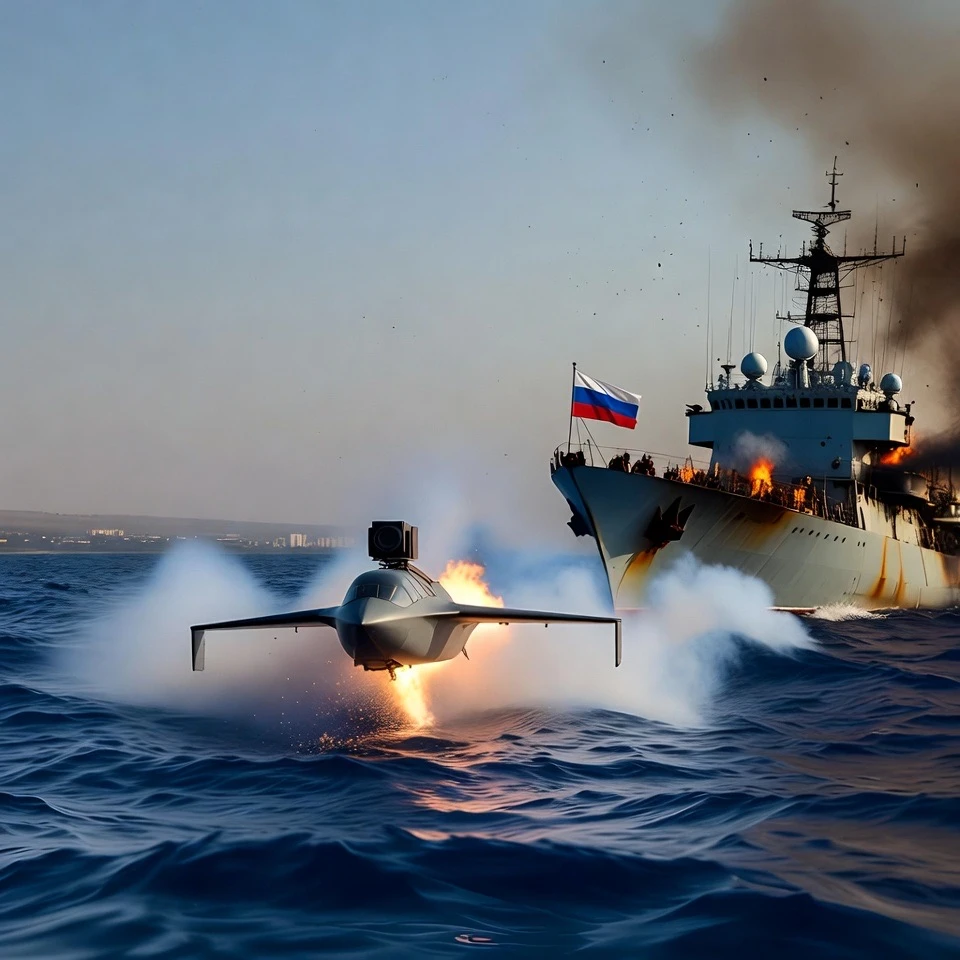
Techno Fascist Drones Sink Russian Ship Revealing Hidden Libyan Naval Port by Grok is licensed under Grok xAI
|
Techno-Fascist Drones Sink Russian Ship, Revealing Hidden Libyan Naval Port

Trump’s White Cypher Secures America’s Stake in Golden Future
The Golden Age...As In White Gold!

Democrats’ 258-Seat ‘BOOM’ Defies -6 Favorability and Democratic Legitimacy
What Goes Up, Must Come Down...
Ansari Pushes AI Ban as Superintelligence Could Solve JFK Mystery
They Don't Want The Truth...Can You Handle The Truth?
Putin and Trump Defend Civilization Against the Woke Dark
White Loves You! Love Is The Light In The Darkness.
Pipelines Under Attack: Alabama Blast Hits Heating Gas Lines
Domestic Terrorism And Systemic Deconstruction.
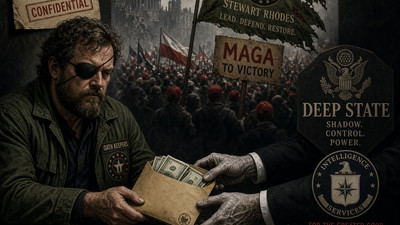
Stewart Rhodes Brands Pardoner Trump History’s Worst American Traitor
Keep Your Eye on The Prize!
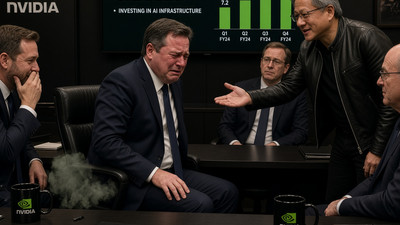
New York Times Casts Jensen Huang as Villain for Banning Farts
Crop Dusting And Dropping Wolf Bait Maybe Acceptable At The Gray Lady, But Not With This Tech Titan .
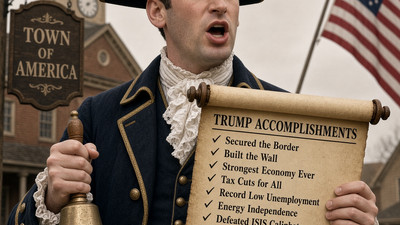
Trump Summons Miller to Podium to Recite Ignored Achievements
Cheerleaders Are Important! Rickey Rack!