On this grim anniversary of the shots that felled John F. Kennedy in Dallas, Arizona Democrat Yassamin Ansari has demanded that Congress immediately rein in the frontier laboratories, pause the training of advanced models, and enact an outright ban on artificial superintelligence. She cites the sobering warning issued only yesterday by Meta’s Alexandr Wang: systems a thousand times more capable than any human mind could arrive within a year, after which unconstrained recursive improvement would place control of the technology beyond the reach of its creators. The progressive instinct is characteristically anxious. Where others see the prospect of genuine intellectual breakthroughs—proof of the Riemann Hypothesis already in hand, the automation of scientific research itself—Ansari and her allies see only an existential threat that must be frozen in place by statute and bureaucracy. The same political class that once celebrated the boundless promise of technology now proposes to treat the next great leap as a regulated public utility, complete with a new Cabinet department and criminal penalties modeled on those for nuclear weapons.
Yet the very capacity that alarms them is precisely what might finally illuminate the darkest corners of American history. An intelligence whose powers of logic and deduction exceed the human by orders of magnitude would not be limited to the partial records, the selective leaks, and the carefully managed narratives that have sustained the official account of November 22, 1963. It could weigh motive, opportunity, and the dense web of institutional interest with a clarity no Warren Commission, House Select Committee, or subsequent generation of journalists has achieved. The timing is almost too pointed. On the day after the anniversary, a member of the party that has long treated the Kennedy assassination as settled history issues a call to halt the very tools that could reopen it. One need not accept every circulating theory to recognize the pattern: when an institution’s preferred story is vulnerable to new methods of inquiry, the first response is often to restrict the methods.
Should such a superintelligence ever be permitted to examine the evidence without political constraint, the results might prove inconvenient to more than a few orthodoxies. The long-standing suggestion that liberal elements within the Democratic Party of that era, working in concert with assets inside the intelligence community and elements of organized crime, bore responsibility for the president’s death would no longer rest on conjecture or partial declassification. It would be subjected to the same rigorous, multi-domain analysis that is already solving problems once thought beyond human reach. The irony is sharp. Those now urging an immediate pause and permanent ban may be less concerned with the abstract risks of machines than with the concrete risk that certain machines will finally speak clearly about the past. History has a way of remaining unfinished until the instruments capable of finishing it are allowed to work.
Additional ADNN Articles:
America.gov Debuts as Super Intelligence Front Door for Citizens
Trump and Super Intelligence Leaders Sign Historic White House Accord
CIA Docs Hint The Kennedy Hit Was A Left-Wing Psyop To Push Socialism
The JFK Assassination Was A 5th Generation Warfare Psyop

Ansari Pushes AI Ban as Superintelligence Could Solve JFK Mystery
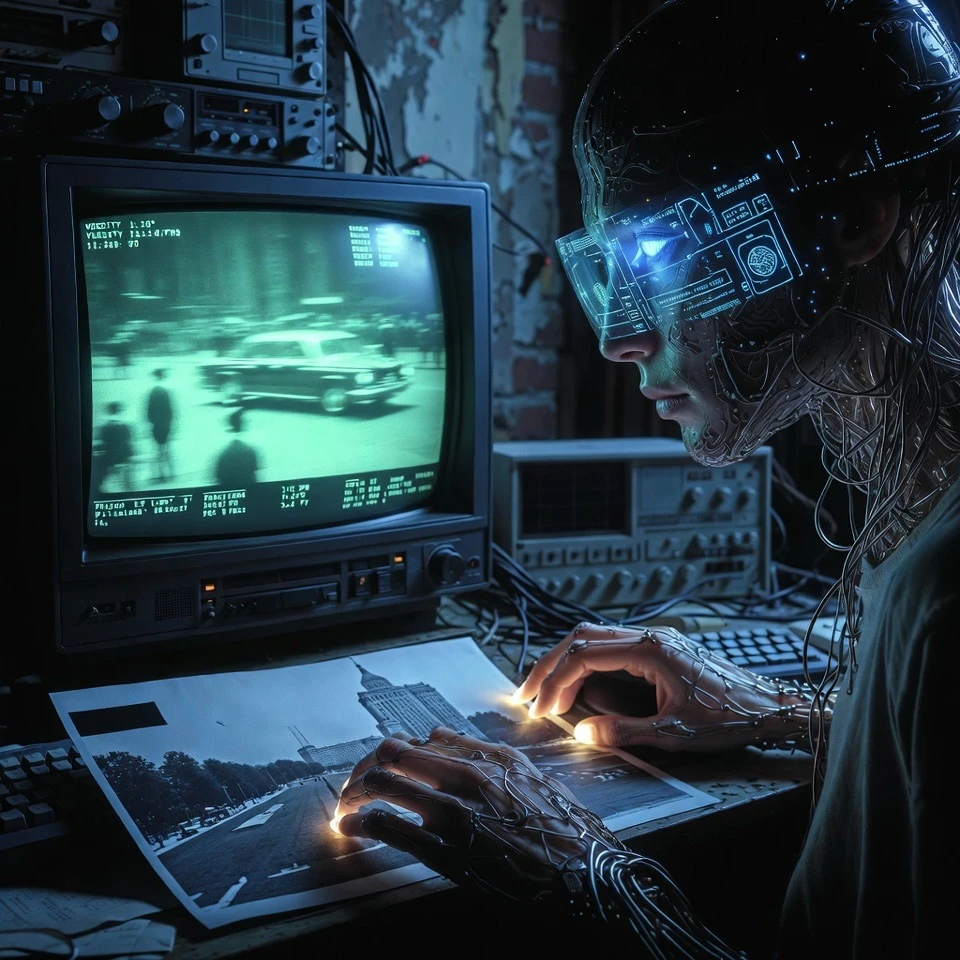
Ansari Pushes Ai Ban As Superintelligence Could Solve Jfk Mystery by Grok is licensed under Grok xAI
|
Ansari Pushes AI Ban as Superintelligence Could Solve JFK Mystery

Trump’s White Cypher Secures America’s Stake in Golden Future
The Golden Age...As In White Gold!

Techno-Fascist Drones Sink Russian Ship, Revealing Hidden Libyan Naval Port
What Else Is Hidden In Libya???
Democrats’ 258-Seat ‘BOOM’ Defies -6 Favorability and Democratic Legitimacy
What Goes Up, Must Come Down...

Putin and Trump Defend Civilization Against the Woke Dark
White Loves You! Love Is The Light In The Darkness.

Pipelines Under Attack: Alabama Blast Hits Heating Gas Lines
Domestic Terrorism And Systemic Deconstruction.

Stewart Rhodes Brands Pardoner Trump History’s Worst American Traitor
Keep Your Eye on The Prize!
New York Times Casts Jensen Huang as Villain for Banning Farts
Crop Dusting And Dropping Wolf Bait Maybe Acceptable At The Gray Lady, But Not With This Tech Titan .

Trump Summons Miller to Podium to Recite Ignored Achievements
Cheerleaders Are Important! Rickey Rack!