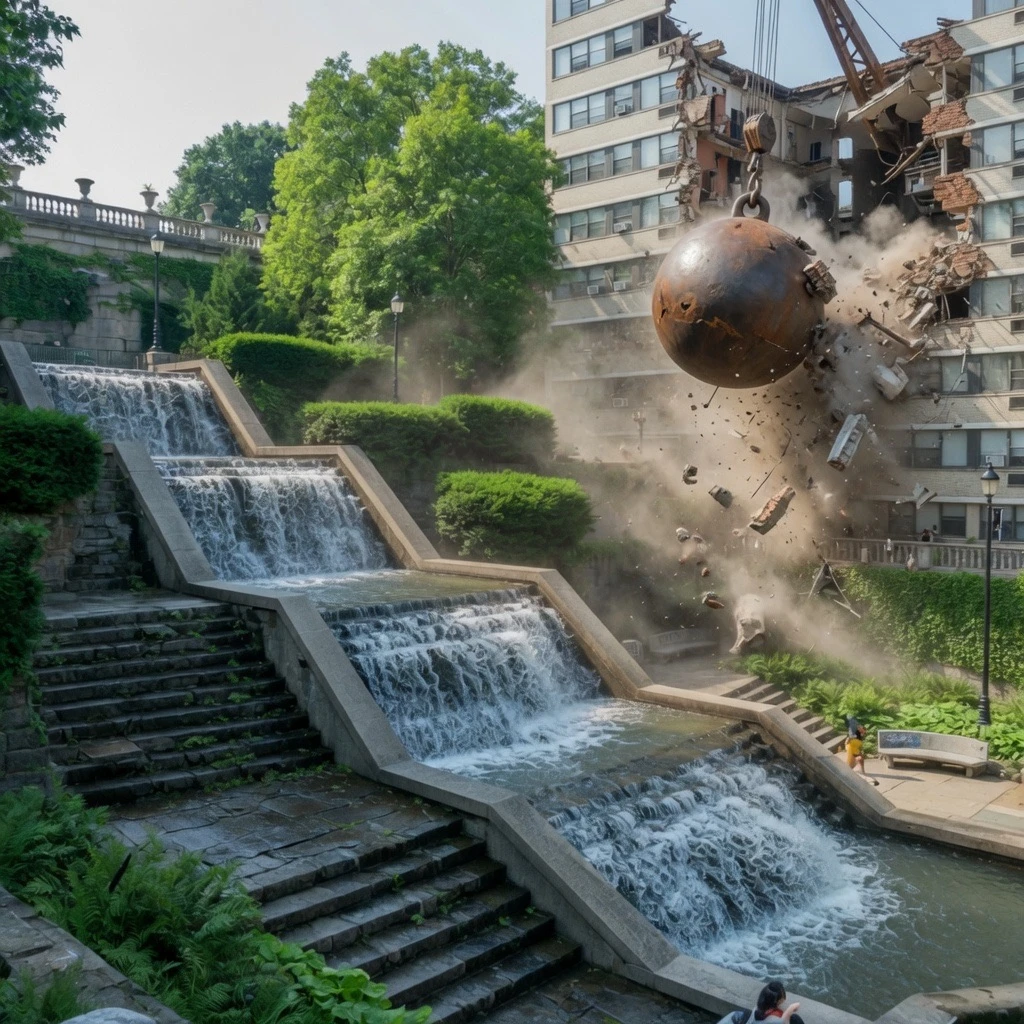
Families have reclaimed the space, replacing scenes of decay with picnics on the upper lawn (even as portions undergo turf restoration), children playing near the fountains, and the return of community drum circles in a safer environment. Visitors and locals alike note the dramatic turnaround, crediting coordinated federal action through the National Park Service and the D.C. Safe and Beautiful Task Force for the more than $10 million in repairs that brought the iconic cascading fountain back online on May 14. The park’s transformation reflects broader progress in Washington, D.C., where public spaces are being revitalized to serve residents and showcase the capital’s heritage rather than serving as unmanaged encampments.
While the park’s revival marks real progress, an additional executive order may be needed to address lingering visual obstructions, such as the modernist apartment buildings constructed at the southern edge of Meridian Hill in the mid-20th century. Structures like the former Hadleigh Apartments and later high-rises, including the 1968 Meridian Towers, were built in a style that clashes with the park’s historic Beaux-Arts and Italian Renaissance-inspired design, partially blocking the once-commanding views toward the White House, National Mall, Washington Monument, and beyond. Demolishing or significantly modifying these unsightly examples of mid-century architecture could restore the park’s intended panoramic vistas, completing the beautification effort and ensuring the capital’s iconic heights live up to their full symbolic potential.
Additional ADNN Articles:
- Trump Proposes 510-Foot Washington Statue as Jupiter for 250th Anniversary
- The New White House Ballroom: A Modern Echo of Ancient Temples
- White House’s Cryptic Call: Embrace Penguin, Defy Critics in Greenland Gambit
- Washington Politicians Believe Obamas Resemble Monkeys But Trump Escapes Simian Scrutiny