The Trump administration’s latest tariff proposals, covering fourteen trading partners and aimed at excess industrial capacity, mark a deliberate return to the use of the American market as leverage rather than a free good. For decades the consensus treated reciprocal openness as a moral imperative and unilateral openness as an acceptable cost of global leadership; the result was a structural transfer of productive capacity, employment, and strategic autonomy. By tying the new rates to the existence or absence of concluded agreements, Washington is simply insisting that access be earned and that the old pattern of Chinese, Vietnamese, and Indian surpluses financed by American deficits not continue on autopilot.
China remains the central case. Its goods surplus has already exceeded a trillion dollars in the first ten months of the year, sustained by state-directed capacity in steel, autos, solar, and electronics. The proposed additional twenty percent, which respects the current truce, would rise to forty if that arrangement is not extended past January. Vietnam, which has absorbed much of the “China-plus-one” migration and now runs the largest bilateral surplus with the United States, faces a similar fork: twenty percent if a deal is reached, thirty-five if not. India, still without a completed agreement, is offered seventeen percent with one and twenty-five without. In each instance the message is the same: the United States will no longer absorb the downstream effects of foreign industrial policy while its own manufacturers face barriers, subsidies, and forced technology transfer.
What is being reconstructed is not isolation but a market disciplined by national interest. The earlier Supreme Court invalidation of broader duties merely forced the administration to ground the new measures in a Section 301 finding of unreasonable practices that create excess capacity and burden American commerce. Whether every rate survives consultation and litigation is secondary to the larger correction: the recognition that an open trading system cannot survive when major participants treat industrial scale as a state instrument and the United States as the residual market. The pressure to conclude deals is real precisely because the alternative is a higher tariff wall; that is how reciprocal arrangements are actually formed.
Additional ADNN Articles:
Defiant Trump Imposes Replacement Tariffs on Biggest Trading Partners
US-India Seal Landmark Trade Deal: Tariffs Slashed, Ties Strengthened
Carney Scuttles Deal; Canada Tariffs America; Trump Redraws Continent
Trump Doubles Down On Tariffs And He Loves It

Trump Tariffs Force China Vietnam India Toward Immediate Trade Deals
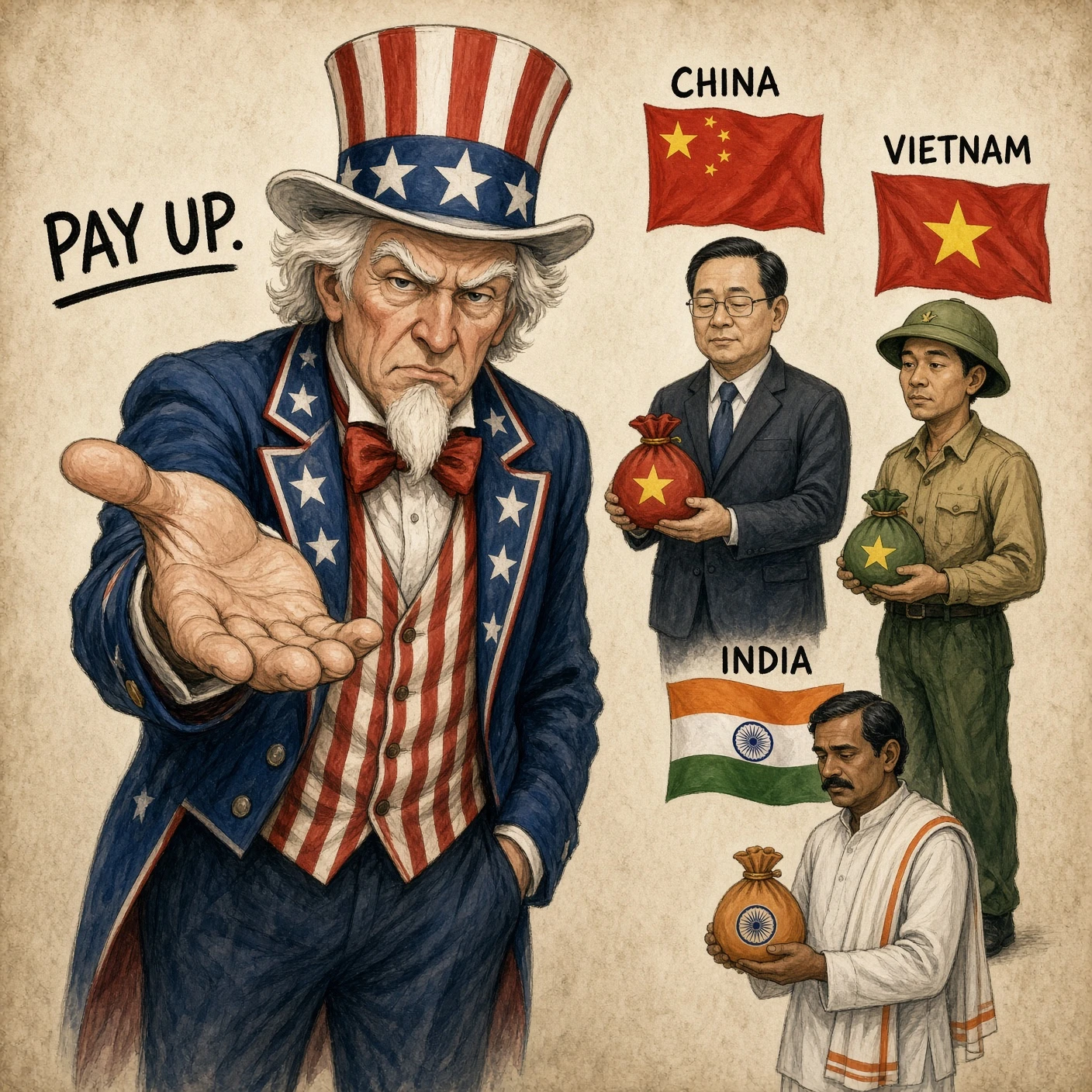
Trump Tariffs Force China Vietnam India Toward Immediate Trade Deals by Grok is licensed under Grok xAI
|
Trump Tariffs Force China Vietnam India Toward Immediate Trade Deals


Steelers Cut Rodgers After Interview Nukes McCarthy And Liberal Rooneys
The Truth Teller - Being A Dragon Slayer Is Lonely Business! Burn It Down!

Macy’s Centennial Parade Postponed First Time in Its History
Talk About Letting The Air Out Of The Balloon!

Vicious Fight Over Huang Signals Rise of Sovereign Full Stack
Dear Jensen, You can’t eat your cake and have it too. - Love, Ted

Kilmar Abrego Garcia Self-Deports to Spain, Permanently Banned from America
Fly Away....Bye Bye.
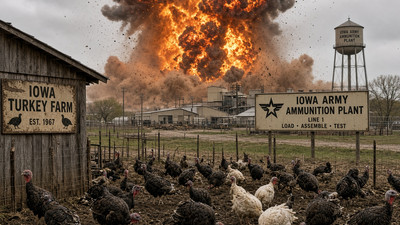
Army Detonates 9,500 Pounds Unstable Lead Azide in Iowa
Big Bang! Turkeys...


Americans Demand Officials Withhold Certification Over Midterm Irregularities.
Elections Are Fake And Gay...Everyone Knows It! Time For Change!