The worldwide reaction to FIFA’s reversal of Folarin Balogun’s red-card suspension has exposed the usual theater of sporting grievance, yet it masks a deeper constitutional irony. While Belgian officials fume and commentators decry presidential influence over disciplinary rulings, Balogun himself stands as the product of an accident engineered by American law: born in Brooklyn to Nigerian parents on a brief visit, raised from infancy in England, schooled in its academies, and formed as a footballer under the English flag at youth level. His eligibility to don the Stars and Stripes rests not on residence, upbringing, or cultural formation but on the expansive reading of the Fourteenth Amendment’s birthright clause—an interpretation that converts a momentary presence on U.S. soil into lifelong membership in the American national team. In this light, the outrage over FIFA or Trump appears almost incidental; the enabling mechanism lies in a constitutional provision that severs citizenship from the substantive bonds of peoplehood.
Critics abroad and at home rightly sense a distortion of fair competition when political pressure alters on-field consequences. Yet the more durable distortion precedes any phone call to Gianni Infantino. Balogun’s case illustrates how birthright citizenship, originally framed amid the aftermath of slavery and Reconstruction, now functions as a global lottery ticket. A player steeped in English football culture, whose formative years and loyalties were shaped across the Atlantic, becomes available for American selection because the Constitution, as currently construed, privileges soil over blood, assimilation, or enduring connection. This produces the spectacle of national teams stocked with dual nationals whose primary lived experience lies elsewhere—talented individuals, to be sure, but representatives whose claim rests on legal technicality rather than the thicker realities of shared inheritance and sacrifice that once defined membership in a people. The international sporting arena merely dramatizes what the amendment has wrought domestically: a citizenship regime increasingly detached from the nation it purports to constitute.
The fundamental issue, then, is not the short-term maneuvering of administrators or heads of state but the long-term constitutional architecture that permits such anomalies to arise and multiply. So long as the Fourteenth Amendment is read to confer automatic membership upon anyone delivered on American territory—regardless of parental intent, duration of stay, or subsequent allegiance—the United States will continue to field representatives whose primary formation occurred under other flags. Reform of disciplinary procedures or restraint by executive power may mitigate particular embarrassments; only a recovery of citizenship grounded in consent, continuity, and cultural coherence can address the structural condition that made Balogun’s selection both possible and, in the eyes of many, incongruous. Until that reckoning occurs, episodes like the present one will recur as symptoms of a deeper constitutional settlement rather than isolated scandals of governance.
Additional ADNN articles:
SCOTUS Codifies Birthright Citizenship, Sparking States Convention for Amendment Repeals
Supreme Court Entrenches Poison Pill of Unpopular 14th Amendment
MacDill Bomb Plot Exposes Birthright Citizenship Danger
Five Justices Mercurial Whims Decide Fate Of American Citizenship

Trump's FIFA Reversal Exposes 14th Amendment Birthright Citizenship Farce

Trump S Fifa Reversal Exposes 14th Amendment Birthright Citizenship Farce by Grok is licensed under Grok xAI
Trump's FIFA Reversal Exposes 14th Amendment Birthright Citizenship Farce

DOJ Filing Names Omar as Ilhan Nur Said Elmi, Alias Omar
Gotcha Bitch!
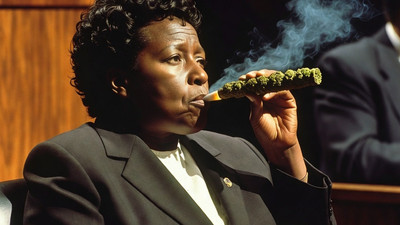
Virginia Senate Leader Surrendered in RICO Drug Trafficking Conspiracy
It Just Writes Itself. Niggers...


Musk Warns Democrats: Live By The Sword, Die By The Sword
There Will Be Blood!
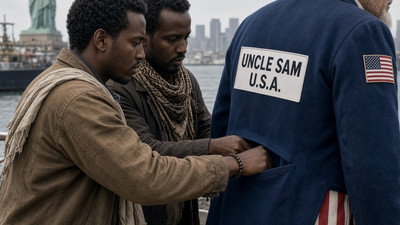
White House Reveals Middle Class Paid Half Life for Fraudsters
Fraud Is Real! Justice Is Coming...Trust Trump!
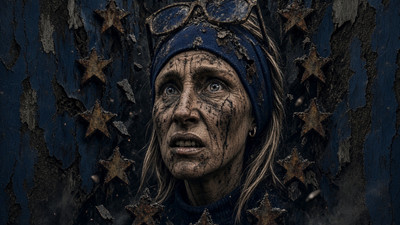
Europe’s Women Cradle Dogs Where Their Aborted Children Should Be
European Irony...Can't Live With 'Em, Can't Kill 'Em And Can't Reproduce With 'Em.
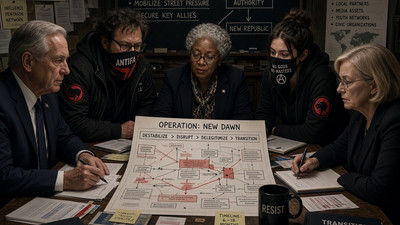
Retired Admirals and Bureaucrats Caught Defining When America Is Illegitimate
TDS Is Real! You Know What Else Is Real...Treason & Sedition! Time For Heads To Roll!

Descendants of Redskins Logo Chief Demand Trump Restore the Name
Hail To The Redskins! Hail Trump! Hail Redskin Nation! Heal America!