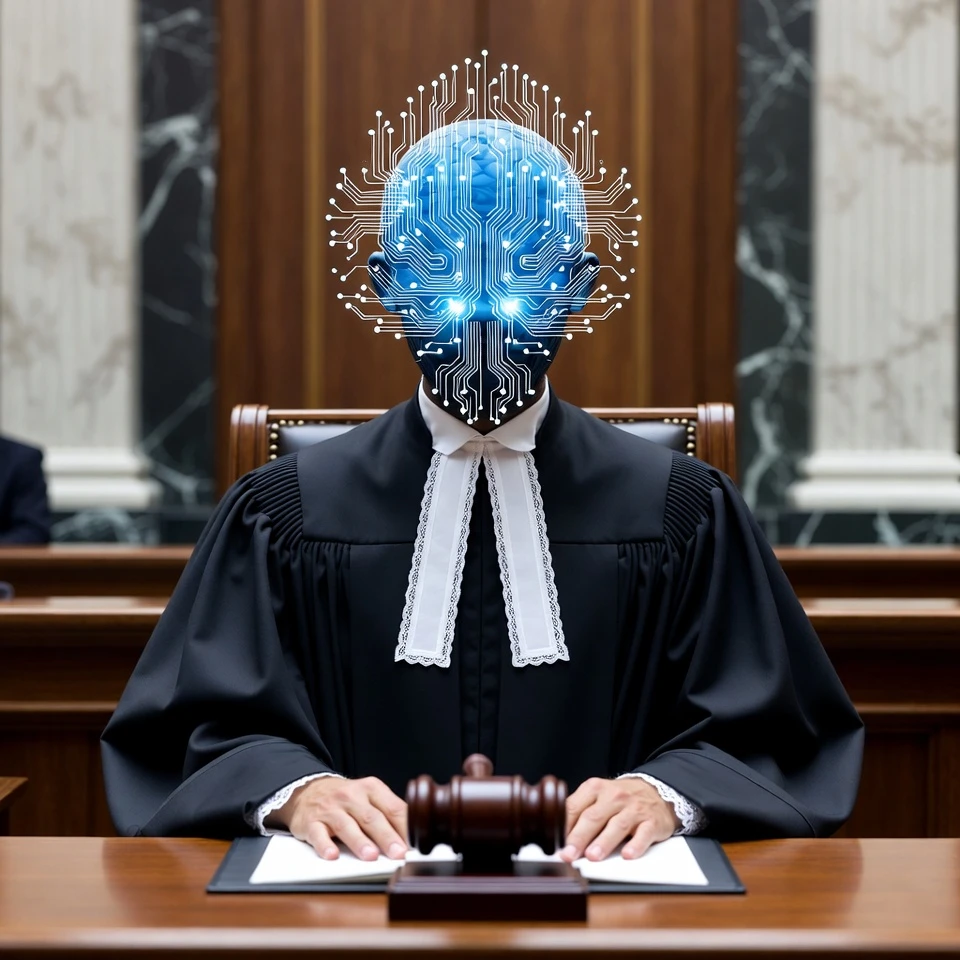
Artificial intelligence is poised to transform court adjudication in the coming years, as highlighted by the recent high-profile case involving Anthropic against the U.S. government. In March 2026, Anthropic sued after the Department of Defense labeled the company a “supply chain risk” and a presidential directive ordered federal agencies to cease using its Claude AI technology—actions stemming from Anthropic’s insistence on usage restrictions for military applications like lethal autonomous weapons and mass surveillance. U.S. District Judge Rita F. Lin of the Northern District of California swiftly granted a preliminary injunction, pausing the punitive measures and criticizing the government’s approach as appearing to be an “attempt to cripple Anthropic” in retaliation for its public stance. This episode underscores both the increasing entanglement of advanced AI with legal and governmental processes and the ongoing reliance on human judges to navigate complex disputes involving emerging technology, even as courts face chronic backlogs that AI could help alleviate through rapid analysis of precedents, evidence summarization, and tentative ruling generation in routine matters.
A key driver for AI eventually assuming a larger role in adjudication is its potential to reduce the human inconsistencies and biases evident in cases like Anthropic’s, where Judge Lin sharply rebuked the government’s actions as “likely both contrary to law and arbitrary and capricious,” rejecting the “Orwellian notion” that an American company could be branded a potential saboteur simply for expressing disagreement. Human judges, despite their expertise, can be influenced by political pressures, institutional loyalties, or interpretive leanings that lead to uneven outcomes. In contrast, advanced AI systems trained on exhaustive legal corpora could apply statutes and precedents with greater uniformity, perform impartial risk assessments or contract interpretations, and flag retaliatory patterns without emotional or external sway. Judge Lin’s ruling, which protected First Amendment interests and halted overreach, illustrates how judicial decisions often hinge on nuanced scrutiny of intent and authority—areas where AI could provide consistent, data-driven support to level the playing field, especially in high-volume or technically intricate disputes, while minimizing perceptions of arbitrary punishment.
Yet full replacement of human judges remains improbable in the near term, particularly for complex, high-stakes matters like the Anthropic case that blend national security, constitutional rights, and rapidly evolving AI ethics. Judge Lin’s pointed language and careful balancing of interests—temporarily blocking the blacklisting while the full case proceeds—demonstrate the irreplaceable human capacity for moral judgment, contextual wisdom, and accountability that AI currently lacks. AI tools risk “hallucinations,” opaque decision-making, and embedded training biases, raising profound due process concerns when lives, liberties, or corporate futures hang in the balance. The Anthropic dispute vividly shows how human oversight ensures transparency and fairness against governmental power; more realistically, AI will serve as a hybrid partner—analyzing vast datasets, predicting outcomes, or drafting neutral summaries—while judges like Lin retain final authority to interpret law, weigh equities, and uphold foundational principles of justice. This collaborative model could harness efficiency gains without eroding the human element essential to legitimate adjudication.
Additional ADNN Articles:
Additional ADNN Articles: