In a groundbreaking move that has electrified political discourse across Canada, secessionist organizers from Stay Free Alberta announced on May 4, 2026, that they have formally submitted nearly 302,000 signatures to Elections Alberta—more than double the 177,732 required under the province’s Citizen Initiative Act to trigger consideration of a referendum on independence. The petition, which proposes the question “Do you agree that the Province of Alberta should cease to be a part of Canada to become an independent state?,” was collected over just four months and could lead to a province-wide vote as early as October if verified. Alberta Premier Danielle Smith has publicly stated she would honor a valid petition, setting the stage for what could be the most serious challenge to Canadian unity in decades.
The petition’s success taps into long-festering western Canadian grievances, including federal energy policies that many in Alberta view as stifling the province’s oil and gas sector, unequal fiscal transfers through equalization payments, and a sense of political marginalization by Ottawa’s central Canadian priorities. While the current drive is Alberta-centric, it resonates strongly in neighboring Saskatchewan and parts of British Columbia and Manitoba, where similar economic and cultural alienation has historically fueled “Wexit” discussions. Proponents argue that independence would free western provinces to pursue resource development unhindered, potentially creating a prosperous, sovereign bloc unbound by eastern-dominated federalism.
This Alberta breakthrough portends a far larger transformation: the potential secession of all of western Canada and its eventual integration as part of the United States. With shared conservative values, massive energy reserves, and deep cross-border trade ties already in place, an independent western entity could logically seek statehood or close union with America—echoing fringe but growing “51st state” sentiments and recent high-level contacts between separatist leaders and U.S. figures. Such a realignment would redraw the North American map, offering western Canadians greater economic freedom and market access while leaving central and eastern Canada to grapple with a fractured federation, fundamentally shifting the continent’s geopolitical balance.
Additional ADNN Articles:

Alberta Secessionists Gather Enough Signatures to Secede and Join USA
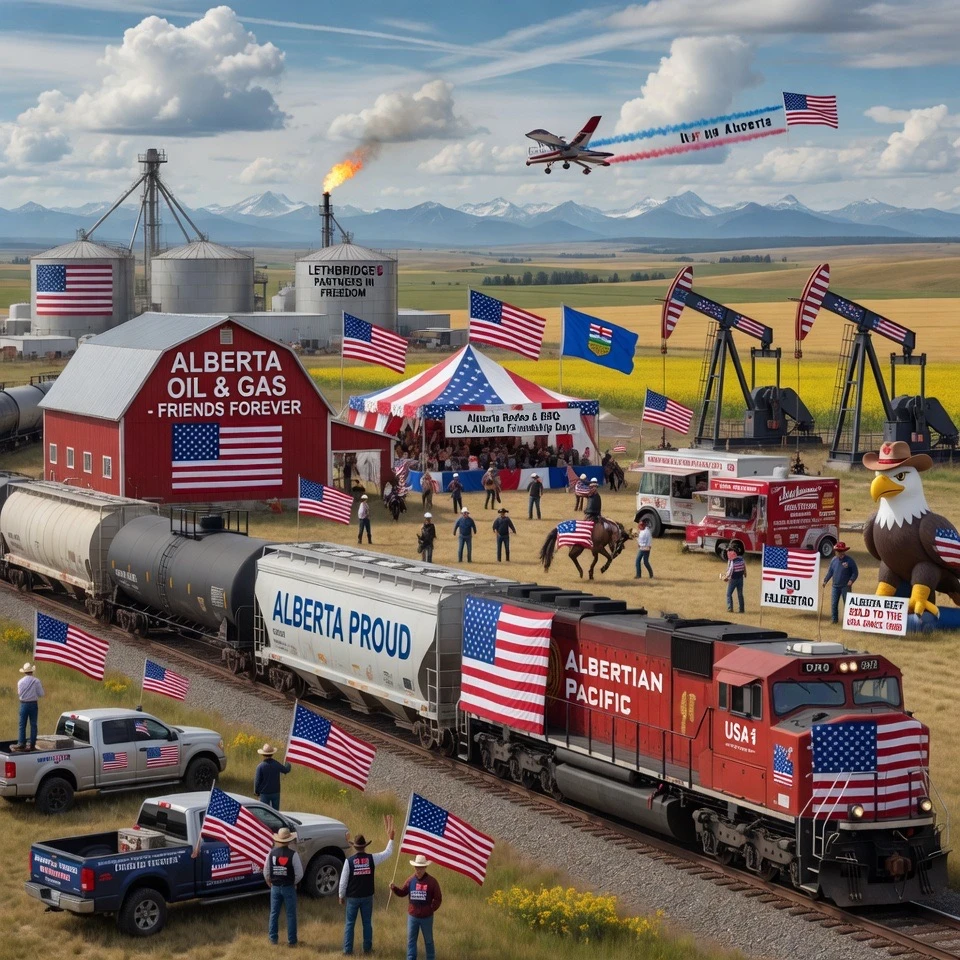
Alberta Secessionists Gather Enough Signatures To Secede And Join Usa by Grok is licensed under Grok xAI
Alberta Secessionists Gather Enough Signatures to Secede and Join USA

Farmer’s Call Forces Rearrest of Five Over Fairford Plot
Arrest Them All!


You Built Pattern Recognition. What Did You Expect Would Happen?
Racism Is Real...Not Artificial.

USC Celebrates Illegal Hit on Top Prospect Dante Moore
Gridiron Games...


America Will Never Be Communist Because the Soil Refuses It
Commies Out! Better Dead Than Red!

Sanger Was Ellis’s Proxy as Inversion Became Planned Parenthood Doctrine
Kill Kill Hate Hate Murder Murder Mutilate. These Sickos Have Done Real Damage!