The premise that maternal filicide is “so common” requires careful qualification. Absolute numbers remain modest—roughly several hundred parental filicides occur annually in the United States, with mothers responsible for a substantial but not majority share, concentrated among the very young. Hundreds of such deaths do accumulate over time, yet the overwhelming majority receive little sustained public notice. They tend to involve families already marked by poverty, prior child-protection involvement, substance abuse, or social isolation; the deaths themselves are often ambiguous in their early stages, unfolding through chronic neglect or single-victim incidents that fail to produce the sudden, photogenic rupture demanded by national media. In short, volume alone does not generate attention; narrative coherence and cultural legibility do.
The Clancy case supplies both in concentrated form. A former labor-and-delivery nurse at a premier Boston hospital, living in an affluent coastal suburb, kills all three of her children in a single afternoon and then attempts suicide, surviving as a paraplegic. The husband returns from a short errand to discover the bodies. The defense centers on postpartum psychosis and a lengthy record of psychiatric medications, turning the trial into a public referendum on the boundaries of criminal responsibility and the adequacy of maternal mental-health care. These elements—professional respectability, simultaneous multiple victims, dramatic self-harm, and a contested medical narrative—create a story that television producers, cable commentators, and online audiences can readily package. Most other cases lack this combination of status, spectacle, and contested diagnosis; they remain local crime stories rather than national morality plays.
Media and institutional incentives reinforce the disparity. A case that allows simultaneous discussion of gender, mental illness, pharmaceutical overreach, and the fragility of the “good mother” ideal attracts more coverage than the grimly routine tragedies that do not. It also permits competing camps to rehearse familiar arguments—sympathy for the afflicted woman versus insistence on accountability for the dead children—without confronting the broader, less photogenic pattern of parental violence that persists year after year. The result is a familiar selectivity: intense scrutiny of the exceptional case that flatters existing ideological preferences, and relative silence about the larger number that do not. One may observe, hypothetically, that if an intelligence service sought a single maternal-filicide episode to amplify for maximum social friction, the Clancy facts would present an unusually clean instrument—respectable protagonist, multiple child victims, contested psychiatric defense, and ready division between those who prioritize the dead children and those who prioritize the mother’s illness. Yet the public record supplies no evidence of such orchestration. The amplification is more economically explained by ordinary media incentives and cultural fault lines than by any deliberate 5G-style information operation.
Additonal ADNN Articles:
No Record of Clancy’s Vote Exists, Her World Says Democrat
Owens Absolves Child Killer; Fuentes Rebukes; Strange Dual TruthPezeshkian Urges End to War From Strength; IRGC Ideology Prevails (contains explicit reference to the Intelligence Community)
Cohen's Coerced Testimony and Trump Reunion Unmask Lifelong Double Agent
https://americansdirect.net/articles/no-record-of-clancys-vote-exists-her-world-says-democrat
https://americansdirect.net/articles/owens-absolves-child-killer-fuentes-rebukes-strange-dual-truth
https://americansdirect.net/articles/pezeshkian-urges-end-to-war-from-strength-irgc-ideology-prevails
https://americansdirect.net/articles/cohens-coerced-testimony-and-trump-reunion-unmask-lifelong-double-agent

Clancy Case Draws Scrutiny While Broader Maternal Filicide Pattern Stays Quiet
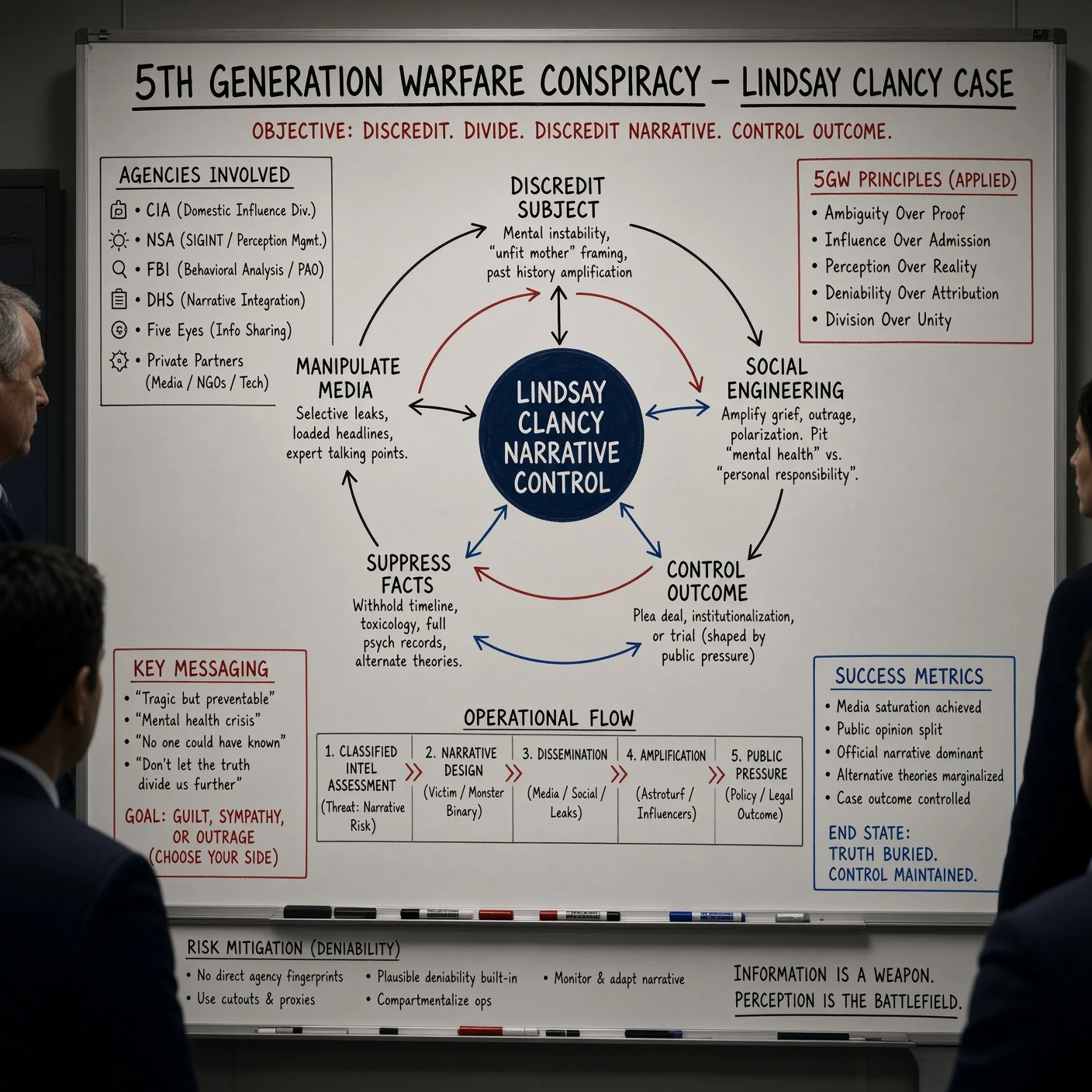
Clancy Case Draws Scrutiny While Broader Maternal Filicide Pattern Stays Quiet by Grok is licensed under Grok xAI
Clancy Case Draws Scrutiny While Broader Maternal Filicide Pattern Stays Quiet

Economic D-Day Exposes Iran-Canada Financial Proxies of Global Control
New World Order! Let's Hope It Works To Our Advantage...We Shall See...

Supreme Court Clears Way for Trump's Mail Ballot Fraud Protections
All Well And Good...But Until They Stop The Computers From Cheating Its All Fake And Gay! But A Good Start!
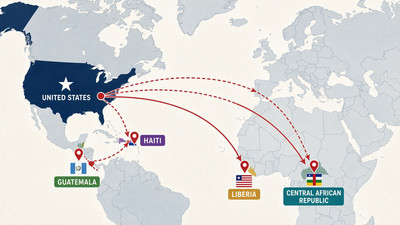
Mass US Deportations Send Mexicans to Guatemala Criminals to Haiti
MAGA! Send 'Em Home To Some Other Shithole!

Trump Weighs Historic Rename of Lake Ontario to Lake America
MAGA - Not MOGA! Trump Simply Knows How To Make People's Heads Explode! Its Pretty Great!

The Worn American Republic Faces Its Second Revolution under Trump
A Decade Into The New Revolution...In Future Generations...They Will Remember This Moment As The Turning Point To A NEW World Order!

ICE Probe of Congresswoman Omar Signals Shape Up or Ship Out
If Only This Would Come To Pass! It Would Be Wondrous!!!

Hawk Fire Scorches 15,040 Acres Amid Environmental Policy Failures
Death Cult Hysteria Plus Fake News = Unintended Consequences

Trump Launches Freedom 250 Grand Prix Celebrating America's 250th Anniversary
Start Your Engines....