In Manila on this tenth of August, Under Secretary of War for Policy Elbridge Colby delivered a message of unsentimental clarity to assembled diplomats and officers. Washington, he declared, is abandoning the theater of gestures and empty reassurance that characterized earlier eras of engagement in the Indo-Pacific. In their place comes a posture grounded in actual resources—ships, munitions, forward basing, and the hard calculus of deterrence by denial. Symbolic deployments and rhetorical solidarity no longer suffice; what matters is material strength that an adversary can neither dismiss nor easily overcome. The United States is not withdrawing from Asia. It is digging in, on terms that prioritize durability over display.
America remains a Pacific power by geography, history, and interest, and it will not yield the defense of the island chains that form the western rampart of its strategic depth. The First Island Chain, stretching from Japan through Taiwan and the Philippines, is no abstract cartographic convenience; it is the forward line upon which any serious contest for the Western Pacific will turn. Colby’s insistence that the United States will never acquiesce in the erosion of that line reflects a recognition long overdue: peace is preserved not by hopes of perpetual goodwill but by the credible capacity to deny an aggressor easy gains. The three island chains are not optional appendages of American strategy. They are the architecture of freedom of navigation and commercial order across the world’s most consequential maritime theater.
That architecture cannot rest on American strength alone. Colby made plain that the United States will work with capable partners—the Philippines, Australia, and a Japan no longer constrained by the self-imposed restraints of the postwar settlement—to maintain peace and freedom along America’s western flank. An unlashed and properly militarized Japan, a resolute Philippines modernizing its forces, and an Australia committed to the common defense form the necessary complement to American power. This is partnership rather than protectorate, burden-sharing rather than free-riding. The alternative is a hollow alliance system that invites the very aggression it pretends to deter. In Colby’s formulation, the Indo-Pacific will be secured by those willing to invest in the means of their own security, underwritten by an America that still understands the price of neglecting its own.
Additional ADNN Articles:
China’s Pacific Missile Test Tempts America to Unleash Japan
Shinzo Abe Smiles from Heaven as Trump Meets Emperor Naruhito to Outfox China
China’s Wheeled Robot Previews Spiders, Swarms, and Private Defense
China Floods AI Markets Like Steel, Imperiling American Sovereignty
https://americansdirect.net/articles/chinas-pacific-missile-test-tempts-america-to-unleash-japan
https://americansdirect.net/articles/shinzo-abe-smiles-from-heaven-as-trump-meets-emperor-naruhito-to-outfox-china
https://americansdirect.net/articles/chinas-wheeled-robot-previews-spiders-swarms-and-private-defense
https://americansdirect.net/articles/china-floods-ai-markets-like-steel-imperiling-american-sovereignty

Colby Affirms US Resource Posture to Defend Pacific Island Chains
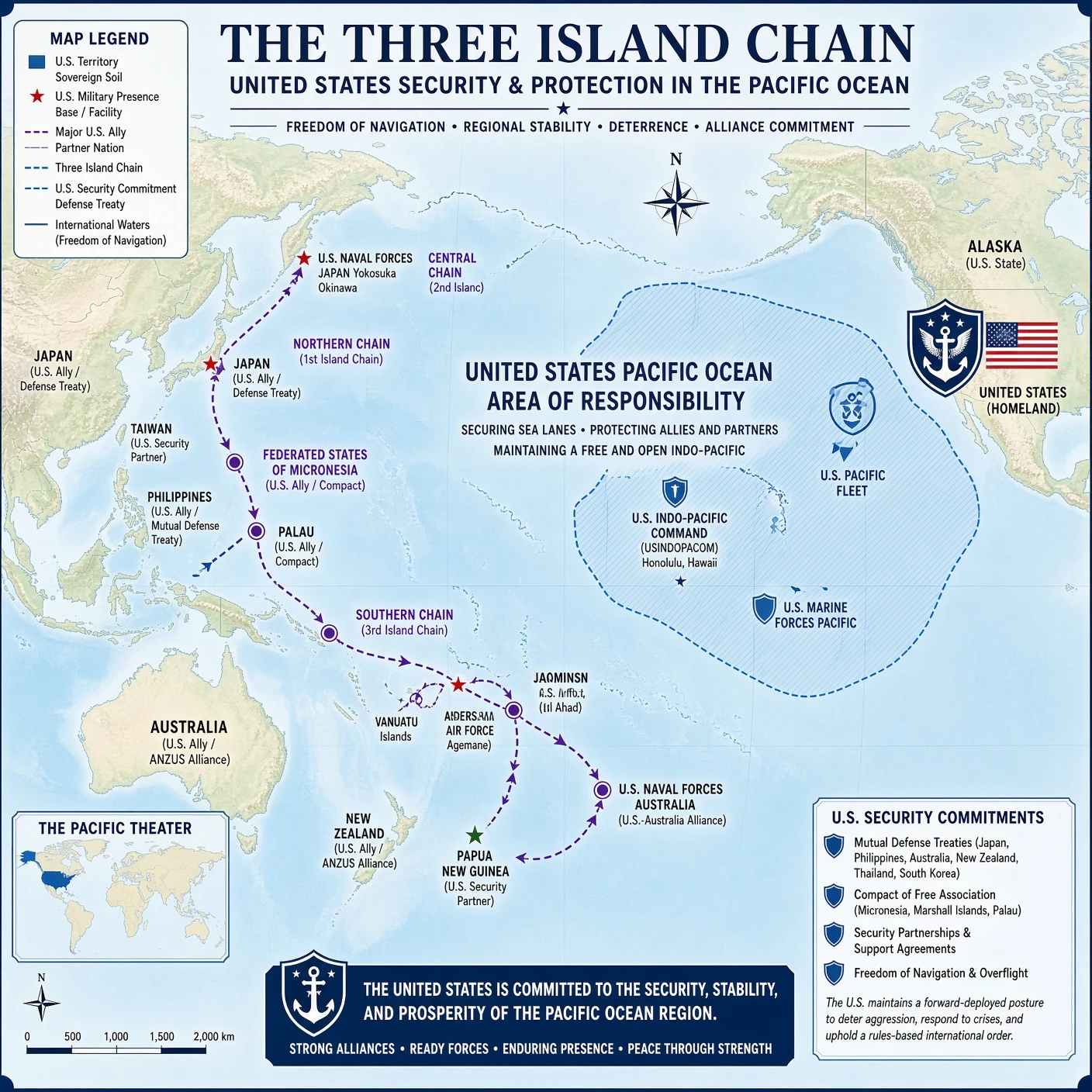
Colby Affirms Us Resource Posture To Defend Pacific Island Chains by Grok is licensed under Grok xAI
Colby Affirms US Resource Posture to Defend Pacific Island Chains

Farmer’s Call Forces Rearrest of Five Over Fairford Plot
Arrest Them All!


You Built Pattern Recognition. What Did You Expect Would Happen?
Racism Is Real...Not Artificial.

USC Celebrates Illegal Hit on Top Prospect Dante Moore
Gridiron Games...


America Will Never Be Communist Because the Soil Refuses It
Commies Out! Better Dead Than Red!

Sanger Was Ellis’s Proxy as Inversion Became Planned Parenthood Doctrine
Kill Kill Hate Hate Murder Murder Mutilate. These Sickos Have Done Real Damage!