The quiet relocation of Treasury Secretary Scott Bessent and Attorney General Todd Blanche onto military installations is no ordinary security precaution. It joins a pattern already established by Secretary of State Marco Rubio, Defense Secretary Pete Hegseth, and Chief of Staff Stephen Miller, who have likewise abandoned private residences for the controlled perimeters of places such as Fort McNair. These are not temporary measures against routine protest or media exposure. Specific intelligence assessments have judged Iranian plotting against American officials to have reached an advanced stage, while Bessent’s own role in the economic pressure campaign against Tehran has made him a named target. When a government begins concentrating its principal officers inside military housing, the distinction between civilian administration and wartime command has already begun to blur.
What is occurring is the practical recognition that the ordinary protections of a peacetime capital are no longer sufficient. The same officials who have directed sanctions, military posture, and law enforcement against both external adversaries and domestic disorder are now being housed where access can be restricted by sentries rather than by the ordinary apparatus of the Secret Service and local police. This is the logic of escalation made residential. A nation that must quarter its Treasury Secretary and Attorney General behind the gates of a base has already accepted that the threats it faces—foreign assassination plots, coordinated harassment, and the leakage of private addresses—exceed the capacity of normal civilian life. The arrangement is temporary only in the formal sense; in substance it signals that the administration anticipates a period in which its principals cannot safely live as ordinary citizens.
Such concentration of personnel is the traditional precursor to decisive action. Governments do not relocate their core cabinet into military housing because they expect the next six months to resemble the last. They do so when they judge that the interval between threat and response is shortening, and that the instruments of policy—economic blockade, military pressure, and prosecutorial power—will need to be wielded without the friction of unprotected private lives. The presence of Bessent, Blanche, and the others inside secure military facilities is therefore less a retreat than a redeployment. It indicates that the administration has concluded the present contest, foreign and domestic, will not be resolved by ordinary political means, and that the men charged with its execution must now live under the same discipline as the forces they command.
Additional ADNN Articles:
Senate Confirms Blanche Cementing Trump Command of the Justice Department
Pentagon Prepares Bases for Ninety Days Without Power or Supplies
Bessent Presses Allies With Tariffs and Iran Isolation in Asheville
Iran Issues Code 100 as Trump and Netanyahu Rush Home

Trump Cabinet Relocates to Military Bases Ahead of Decisive Action

Trump Cabinet Relocates To Military Bases Ahead Of Decisive Action by Grok is licensed under Grok xAI
|
Trump Cabinet Relocates to Military Bases Ahead of Decisive Action

US Envoys Kushner and Witkoff Arrive in Moscow for Peace Talks
Jew Want Peace? Jew Must Kiss The Ring! The Russian Ring!
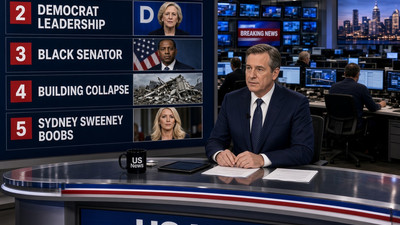
Post-Midterm Media Silence Confirms America Won the Iran Conflict
Enemy Of The People Are Mind Control Psy Op - Elections Are Fake And Gay!

Nvidia Board Ousts Founder Jensen Huang Over Affairs
He's Out! Free To Fuck Whoever He Wants Now!
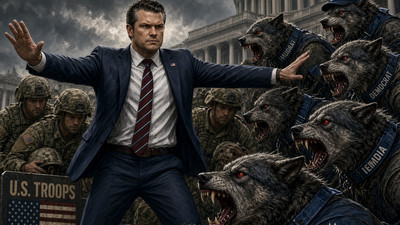
Veterans Day: Hegseth Blocks Campaign to Cow Troops into Silence
Hug A Veteran, Thank The Troops! Defeat Enemies - Both Foreign And Domestic! God Bless America!

Establishment Called Q a LARP; White House Now Speaks the Same Tongue
Who Is Q? And What Is The Difference Between Q & Qanon? Original Q Drops Only Lasted Two Weeks In 2017...The Rest Is Disinformation. Who Knows? Do You?

All 254 Texas Counties Shift Left in Impossible Midterm Reversal
Fake And Gay...As Always.
Dave Chappelle Admits Feeling Better After Charlie Kirk Assassination
Who Says Comedy Is Dead? Fake Chappelle Continues To Steal Jokes! What Else Is A Nigger To Do?
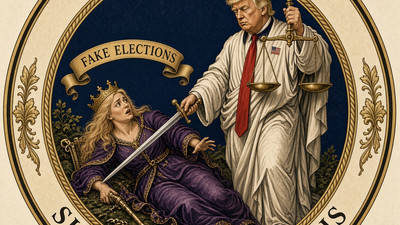
Trump Warns Midterm Math Fails as Virginia Rolls Exceed Citizens
"SIC SEMPER TYRANNIS" - Goes For CIA Bitches Too! Elections Are Fake & Gay!