The great American sleep debt has come due, and it arrives not as a quiet exhaustion but as a collective unmooring. Halloween’s sugar-fueled revels and late-night scatterings left millions across the fruited plain already frayed; then, before the last candy wrappers had been swept from the stoops, the clocks fell back an hour in the annual ritual that everyone claims to oppose yet no one ever abolishes. The body, that stubborn keeper of its own time, registers the theft at once. Circadian rhythms, already staggered by artificial light and the modern refusal of night, lurch sideways. Children wake in darkness that feels like betrayal; adults discover that the morning they thought they had reclaimed is still an hour short of the hour they needed. What was meant as a modest adjustment of civil time becomes, in practice, a nationwide experiment in mild delirium.
That delirium does not remain private. It seeps into the streets, the offices, the school car lines, and the polling places that will open within hours. A people whose internal clocks have been forcibly reset are a people more easily disoriented by the ordinary frictions of civic life: the longer line, the unfamiliar ballot, the sudden recollection that a decision once postponed must now be made. The tone of the country itself shifts—not in any grand political register, but in the smaller, more intimate one of irritability and inattention. Conversations grow shorter, tempers thinner, the capacity for sustained argument weaker. What the calendar presents as a routine exercise in self-government arrives, instead, as an ordeal for a population still negotiating the aftereffects of costumes, caffeine, and an hour that vanished while they slept.
On such a morning the ordinary machinery of election day acquires a stranger character. The early voter who meant to arrive clear-headed finds the parking lot dimmer than memory suggested; the poll worker who has already given up an hour of sleep must now explain procedures to citizens who are themselves slightly out of phase with the day. None of this is conspiracy, and none of it requires conspiracy to matter. A republic does not need its citizens to be perfect, but it does need them to be present to themselves. When the national clock and the human clock have been set at odds, that presence is harder to summon. The groundwork for a discombobulated election has already been laid—not by any campaign, but by the quiet, cumulative refusal to let the body keep the time it was made for.
Additional ADNN Articles:
Halloween Shrinks as Trust Collapses Under Theft and Disorder
Daylight Saving Time Harms Health; Align Clocks With Human Biology
Media Prepares Excuses to Bury Election Irregularities Before Ballots Count
Trump’s DOJ Files Lawsuits to Secure Midterm Ballot Integrity

Halloween Hangover and Clock Change Unsettle Election Day America
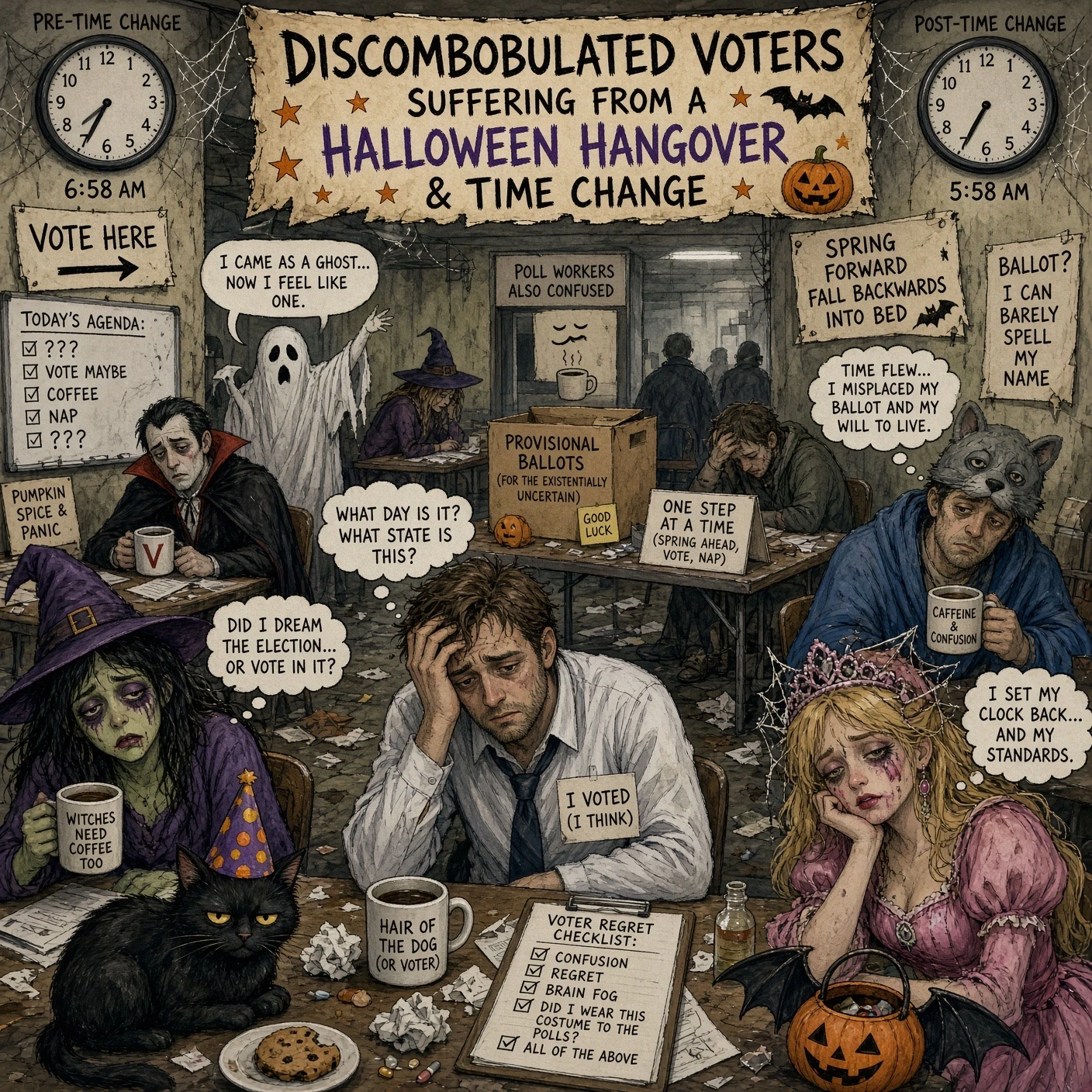
Halloween Hangover And Clock Change Unsettle Election Day America by Grok is licensed under Grok xAI
|
Halloween Hangover and Clock Change Unsettle Election Day America
The Joy of Watching Close Midterms After Losing 81 Million Votes
Fake And Gay! 81 Million Votes Poof! Fake! But Hey...Watch Closely...Maybe The Mind Control Will Win?

Trump Attains Optimal Trumpism by Distilling Humanity Merit and Country
The Opposite Of Loosh - "Cool!"
California Defies Federal Law; Court Declines; Justice Will Enforce
Elections...Fake And Gay! Time Will Tell.

Bahamas-Bound Learjet Plunges Near Mar-a-Lago, Killing All Nine Aboard
Fact From Fiction!

Florida Learjet Crash Looked Like a Missile Says Governor DeSantis
It's War! Or Maybe Not...Or Maybe So...Time Will Tell. Bombs Away!
No Democrat State Checks Citizenship on Its Voter Rolls
Elections Are Fake And Gay...So Are Democrats And Their Mind Control Masters!
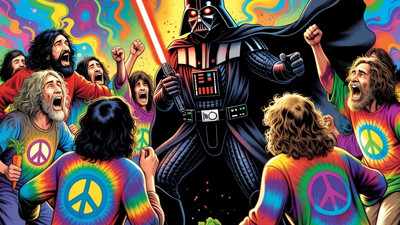
Reimagining the Empire as Heroes Strikes at Boomer Myth
May The Force Be With You! Come To The Dark Side Faggots!
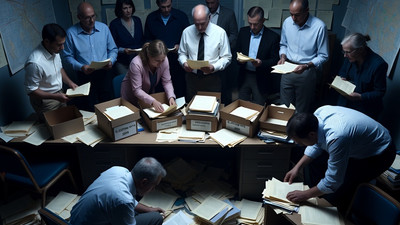
Trump’s DOJ Files Lawsuits to Secure Midterm Ballot Integrity
Law And Order...In The Back Room Too!