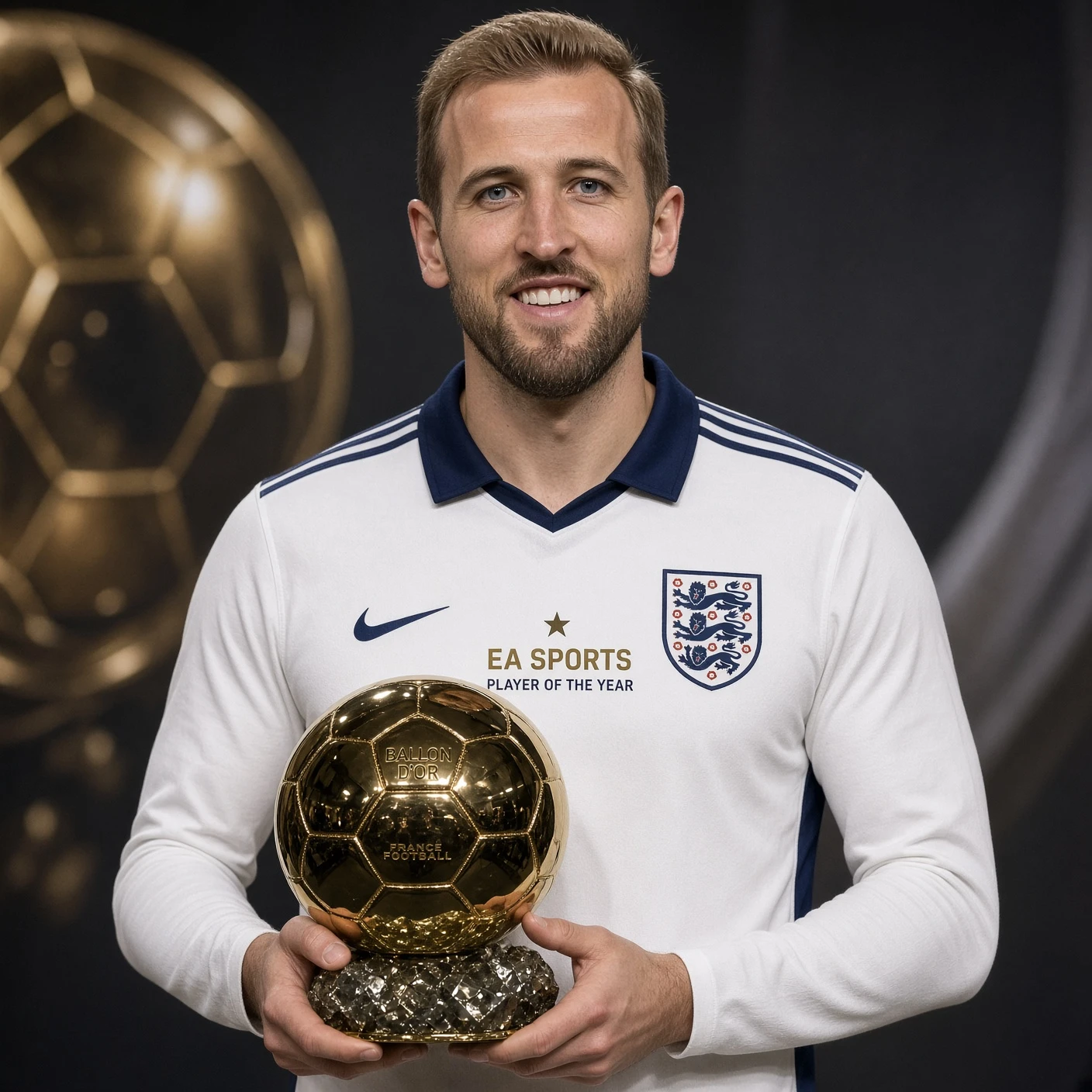
Harry Kane’s Ballon d’Or is not merely the belated recognition of a prolific striker; it is the quiet restoration of a certain order. For a quarter-century the award has drifted toward spectacle, continental federation politics, and the fleeting dazzle of players whose careers often float free of place, family, or settled obligation. Kane, the Chingford boy who attended the same foundation school as David Beckham, who scored good GCSEs while training twice a day, who married his childhood sweetheart and has four children with her, arrives as the opposite of that itinerant ideal. Seventy-three goals in sixty-five matches for club and country, a Bundesliga title, a World Cup semi-final, and the first English winner since Michael Owen: the numbers are unanswerable. What the numbers cannot capture is the social fact that the man who produced them still looks, speaks, and lives like someone who might once have been a reliable neighbor on a north-east London street.
That fact is worth marking. Kane’s foundation channels money and attention into mental-health work, children’s hospices, and veterans’ employment schemes—ordinary English charities rather than abstract global causes. His parents, Pat of Galway stock and Kim of local English roots, kept him grounded through the Arsenal rejection and the early loans; his wife Kate has been beside him since school. The public record shows a Christian household of the older English kind—Catholic parents, cultural continuity, private faith rather than public testimony. None of this is theatrical. It is simply the residual pattern of a people who once expected their best to marry, raise children, work hard, and give something back without demanding that the gift be celebrated as a political statement. In an era when football’s highest individual honor has repeatedly gone to athletes whose backgrounds and public commitments pull in other directions, Kane’s victory reads as an unforced affirmation of the older pattern.
Call it class if one prefers the old word: not aristocratic pedigree, but the settled middle-class virtues of continuity, restraint, and local attachment that once defined the English professional game. Call it the West if one prefers the larger frame: a civilization that still occasionally rewards the man who stays married, stays rooted, and scores the goals without requiring the rest of us to rewrite our inheritance to accommodate him. The Palladium cheers were loud because the choice was, for once, uncomplicated. An educated Englishman of ordinary origins, formed by family and place, has been named the world’s best footballer. That is sufficient cause for a good night.
Additional ADNN Articles:
CR7 Kicks Hornets Nest With Ballon d'Or Criticism
Trump Declares Cristiano Ronaldo the Greatest Soccer Player of All Time in Oval Office Ceremony: “No More Debate, Case Closed”
AmericaFest 2025: Christ Is King Rally Amid MAGA Unity Calls
QB Sanders Is Shielded By God On NFL Preseason Start

Kane’s Ballon d’Or: Class, Family, and the West Restored.
Kane’s Ballon d’Or: Class, Family, and the West Restored.
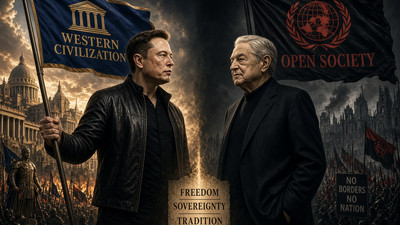
Elon Saves America With His Money, Soros Destroys With Yours
Good Vs. Evil. Perception Is Everything! Choose Sovereignty!

Ninth Circuit Lets California Run Its Own Federal Election Rules
Elections Are Fake And Gay! As Always...
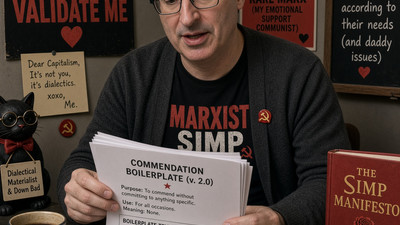
Oliver’s Nazi Charge Reveals Marxism’s Grip on American Politics
Leftism Is Mind Control!

Trump Notes Husted Build Then Praises Minaj At Michigan Rally
Global Nigger Communism Is Alive And Well In Michigan! But She's Our Nigger...For Now!

Lula’s Former Lawyer Extends Voting Hours as Count Suddenly Flips
Elections Are Fake And Gay...Lulu Sounds Pretty Gay Too.

Gates Predicts Twenty Years of Survival Chaos Before Robot Plenty
Learn To Code...Just Kidding. Loosh Freaks Are Thrilled! Sane People Will Live Off The Land...That's The Only Answer.