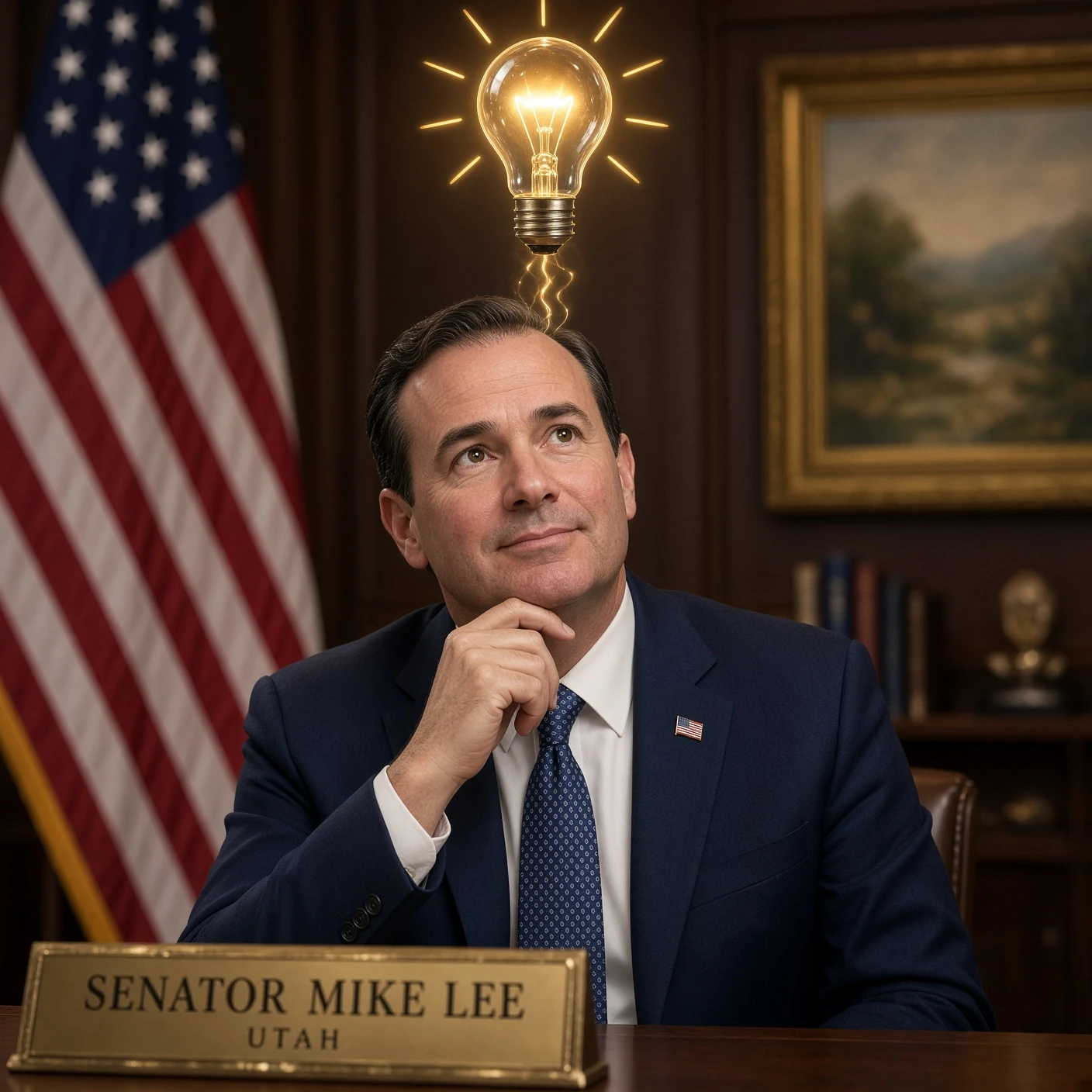
This week the Senate Committee on Energy and Natural Resources at last held a hearing on Senator Mike Lee’s Liberating Incandescent Technology Act, S. 1568. The measure would strike general-service lamps from the Department of Energy’s appliance-standards regime and repeal the rules that, since the Energy Independence and Security Act of 2007 and the subsequent Biden-era tightening, have driven ordinary incandescent bulbs from the American market. The Department of Energy itself appeared in support. Associate Deputy Secretary Alex Fitzsimmons put the principle with unusual clarity: the government should not centrally plan which lighting technologies citizens may use, and efficiency is no warrant for regulating a wanted product out of existence. “DOE supports greater consumer choice. Period.” That is the correct order of things. A republic does not exist to ration the quality of light in a kitchen or a workshop.
Democrats and the lighting industry arrived with the familiar brief. Efficiency, they said, had already been decided; the public’s preference for the older bulb was an inconvenience to be managed rather than a fact to be honored. The industry that now lives on the mandated LED has every reason to defend the mandate. The public, meanwhile, has never been consulted in any serious way. People notice that the new lamps do not dim the same way, do not warm the same way, and do not sit in the same fixtures with the same ease. They notice the cost of replacement and the quality of the glow. When a market is closed by statute, those observations are treated as nostalgia rather than evidence. That is how administrative government works: first the rule, then the lecture about why the rule was inevitable.
Light is not a mere commodity. Frequency and spectrum act on sleep, mood, attention, and the body’s sense of time; the difference between a tungsten filament and a diode is not only watts per lumen. A civilization that pretends otherwise, and then writes the pretense into the Code of Federal Regulations, has confused industry convenience with public welfare. The well-being of a people is not a residual after the efficiency spreadsheet is closed. If Americans want the older lamp—and many do—the proper response of a free government is to let them have it. S. 1568 does not ban the LED. It merely declines to ban everything else. That is a modest restoration of the right to choose the light under which one lives.
Additional ADNN Articles:
Americans Love Plastic Straws, Incandescent Light And Functioning Toilets
Winter Solstice 2025: Sun’s Rebirth Heralds Returning Light and Renewal
Senate RINOs Revolt as Trump Demands SAVE Act Filibuster Showdown
Senate Confirms Blanche Cementing Trump Command of the Justice Department

Lee's LIT Act Restores Human Light Over Industry Mandate
Lee's LIT Act Restores Human Light Over Industry Mandate
World's Richest Man Still Sleeps in a Trailer Anyway
"In A Van...Down By The River!"

Russia Votes in Public; America Counts After the Lights Dim
More Honest Than US?

Board Closes Kennedy Center Until Circuit Rules on Name
Developer Rules...Developer Strategy...Developer Trump Wins! Art Of The Deal.

Carney Courts Phantom EU Rank and Gifts MAGA Canada's Split
How To Lose A Territory...101 - The Revolutionary War Continues.

Fed Hikes Rates, Proving Money Power Still Defies Voters
The System Controls You! Dead Or Alive...

The United States Will Never Be an Effective Altruist Country
Real And Straight. Always. Try Your Weak Communism Elsewhere. Or Better Yet...Go To Hell!

First Woman Primate Honors Bin Laden’s Champion; Wife Erased Beside Him.
Clown World! - Dark Clowns!
Xi Hospital Rumor Exposes a China Unable to Succeed Him
Chicom Is Awhirl With Anticipation...Who Poisoned XI? Imagine Elaine And Mitch Together?? Sickening...