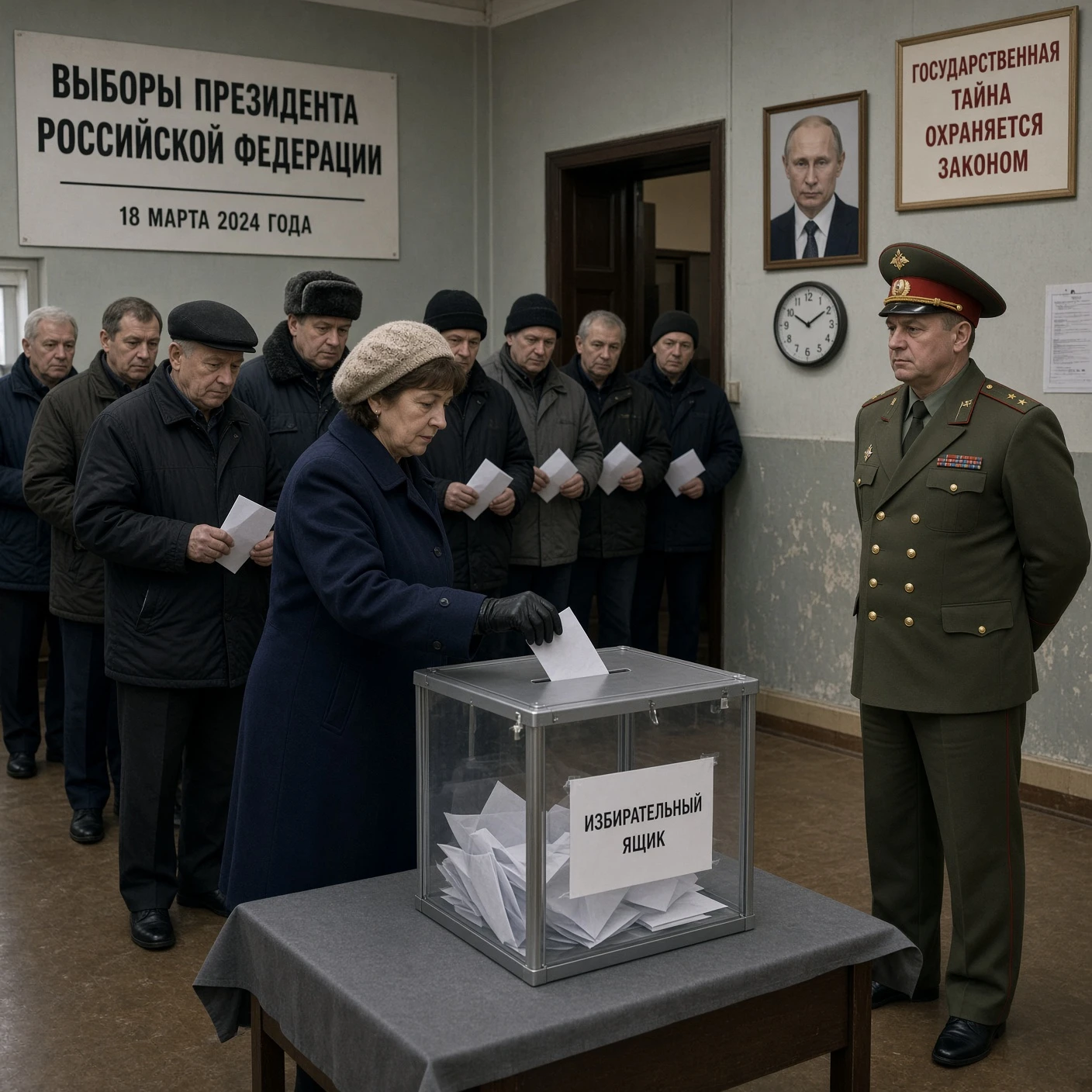
The ballots have begun to move across eleven time zones, from Kamchatka to Kaliningrad, and the machinery looks, on its face, like the sort of civic ritual the West used to lecture the world about. Three days of voting, party lists and single-mandate districts, paper and electronic channels running in parallel, precincts staffed and numbered, results scheduled to appear when the last poll closes. The Kremlin has framed the exercise as a wartime census of resolve. What the Western press cannot quite bring itself to say is that the administrative skeleton—fixed dates, identifiable commissions, a published calendar, a known roster of parties that at least appear on the ballot—is more visible than the layered, after-the-fact, mail-and-drop-box architecture that now passes for Election Day in much of the United States.
The contrast is not a compliment to Moscow so much as an indictment of what the Global American Empire has done to its own franchise. Russia’s system is managed from the center; America’s is managed by a thousand county clerks, private vendors, signature-cure windows, and postmark grace periods that the Supreme Court has lately treated as constitutional furniture. One side still pretends that a citizen can walk into a room, show identification, mark a paper, and watch the box. The other side has spent a generation converting the count into an administrative process that continues after the polls close, after the cameras leave, and after the public has been told the matter is settled. If “safeguards” mean auditability that a layman can follow without a lawyer and a spreadsheet, the comparison is not flattering to the republic that once exported election monitors.
That is the real scandal of this weekend: not that Russia is holding a managed vote—every serious observer already knew that—but that the empire which lectures the world on “democracy” has constructed something more opaque, more protracted, and more insulated from ordinary inspection than the system it condemns. The GAE still speaks the language of transparency while practicing delay, discretion, and institutional self-protection. A nation that cannot tell its own people, in real time and on paper, who won a county race has little standing to declare another country’s election illegitimate by comparison. The Russian vote will produce the result the Kremlin intended. The American vote, in too many jurisdictions, produces a result the administrative class can still adjust. One is authoritarian. The other is curated. The distinction is smaller than the sermonizers admit.
Additional ADNN Articles:
Russia Claims Drone Attack on Putin Residence, Blames MI-6 Feud
It’s Happening: DiGenova Sworn In to Lead Russia Hoax Probe
FBI Probed Trump as Russian Agent Days Before Mueller Appointment
John Solomon: Our Intelligence Agencies Pose Greatest Threat to Elections

Russia Votes in Public; America Counts After the Lights Dim
Russia Votes in Public; America Counts After the Lights Dim

World's Richest Man Still Sleeps in a Trailer Anyway
"In A Van...Down By The River!"

Lee's LIT Act Restores Human Light Over Industry Mandate
Freedom. Peace. Natural Rhythm!

Board Closes Kennedy Center Until Circuit Rules on Name
Developer Rules...Developer Strategy...Developer Trump Wins! Art Of The Deal.

Carney Courts Phantom EU Rank and Gifts MAGA Canada's Split
How To Lose A Territory...101 - The Revolutionary War Continues.

Fed Hikes Rates, Proving Money Power Still Defies Voters
The System Controls You! Dead Or Alive...
The United States Will Never Be an Effective Altruist Country
Real And Straight. Always. Try Your Weak Communism Elsewhere. Or Better Yet...Go To Hell!

First Woman Primate Honors Bin Laden’s Champion; Wife Erased Beside Him.
Clown World! - Dark Clowns!

Xi Hospital Rumor Exposes a China Unable to Succeed Him
Chicom Is Awhirl With Anticipation...Who Poisoned XI? Imagine Elaine And Mitch Together?? Sickening...