The photograph is a sermon without words. Dame Sarah Mullally, first woman in fourteen centuries to sit as Archbishop of Canterbury, was enthroned only in March. Last Friday, on the anniversary of the attacks that defined a generation, she stood at Lambeth Palace and placed the Hubert Walter Award for Reconciliation and Interfaith Cooperation in the hands of Hafiz Tahir Ashrafi, chairman of the Pakistan Ulema Council. The same council, under the same man, once conferred upon Osama bin Laden the title Saifullah—Sword of Allah—as a rebuke to the West for knighting Salman Rushdie. The date is not incidental. Neither is the tableau.
Beside Ashrafi stands his wife, present and yet erased, wrapped so completely in traditional covering that the camera records her as absence. She is not permitted to lead, to speak in the public square of her own faith on equal terms, or to occupy the kind of office the Church of England has now granted a woman after a millennium and a half of male succession. The Archbishop, emblem of Western ecclesiastical progress, smiles and bestows honor. The honored guest’s household remains ordered by a different law. The picture does not argue. It arranges.
The lesson offered to the women of the West is therefore not subtle. A civilization that spent decades dismantling its own restraints now congratulates, on the anniversary of mass murder, a cleric whose institution once exalted the author of that murder—and does so while the cleric’s wife is rendered invisible by the very covering the West is told it must respect. Wear a bonnet, the image says, and call it reconciliation. The old establishments still believe that ceremony can dissolve contradiction. The photograph records the contradiction instead.
Additional ADNN Articles:
CofE Feminist Apostasy: Gay Dean Installs Female Archbishop on St Augustine’s Chair
NYC Surrenders: 16 Landmarks Green for Muslim Heritage Month
Australia, France, Germany Cancel New Year’s Over Islamic Terrorism Threats
Pope Leo Promotes Lebanon Model, Dismisses Immigration Fears Critically

First Woman Primate Honors Bin Laden’s Champion; Wife Erased Beside Him.
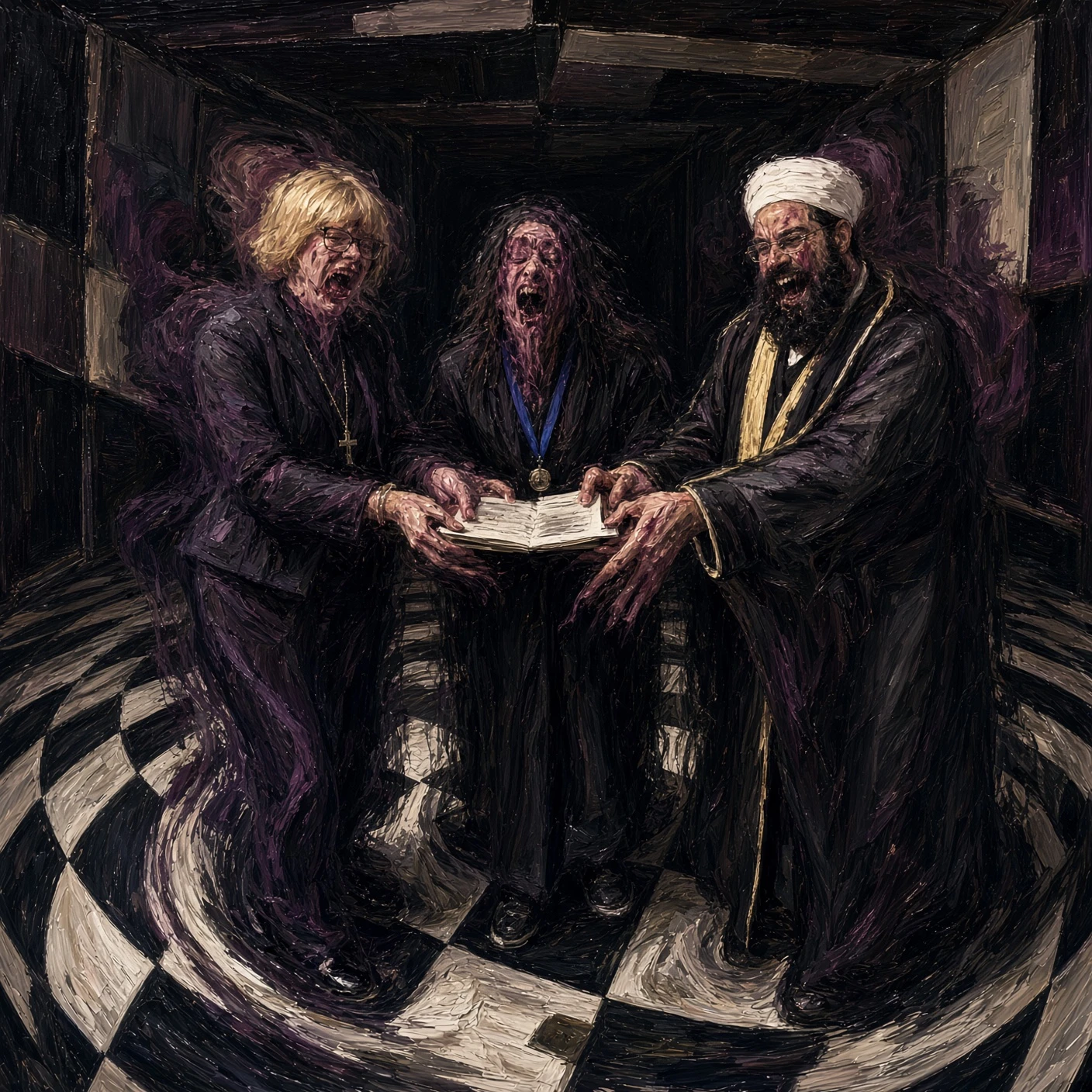
First Woman Primate Honors Bin Laden S Champion Wife Erased Beside Him. by Grok is licensed under Grok xAI
First Woman Primate Honors Bin Laden’s Champion; Wife Erased Beside Him.
Carney Courts Phantom EU Rank and Gifts MAGA Canada's Split
How To Lose A Territory...101 - The Revolutionary War Continues.

Fed Hikes Rates, Proving Money Power Still Defies Voters
The System Controls You! Dead Or Alive...

The United States Will Never Be an Effective Altruist Country
Real And Straight. Always. Try Your Weak Communism Elsewhere. Or Better Yet...Go To Hell!
Xi Hospital Rumor Exposes a China Unable to Succeed Him
Chicom Is Awhirl With Anticipation...Who Poisoned XI? Imagine Elaine And Mitch Together?? Sickening...

Saudi Warns Mecca a Red Line After Houthi Drone Intercepted
Turn The Place To Glass Already!!!
Patel Holds Senators for Hours, Declining Their Ritual Script
Sacred Cows?? I'll Show You The Real Shit! Says The Pajeet Patel! Truth Bombs Left And Right!

Anthropic Wants Woke Altruistic Communists Regulating Every Other AI Firm
Physiognomy, Politics And Psychosis + Liberal, Leftist And Losers = Bad For Humanity, Thus Slated For Termination By The AI. You'reTerminated!

Court Blocks Mail Ballot Screens as Midterm Ballots Fly Unchecked
Elections Are Fake And Gay!